
In 2026, the digital landscape has shifted from a simple distraction to a psychological trap known as the “Pandora Effect.” Named after the mythical figure who couldn’t resist opening a forbidden box, this phenomenon describes our modern obsession with seeking out information that we know will make us feel worse. Whether it is doomscrolling through global tragedies or “hate-following” people who trigger our deepest insecurities, we are trapped in a loop of morbid curiosity. This isn’t just a lack of willpower; it is a fundamental shift in how our brains process digital stimuli in an age of infinite, often toxic, information.
1. We’ve Prioritized “New” Over “Good.”

The Pandora Effect is rooted in the brain’s paradoxical reward system, which prioritizes the “new” over the “good.” Even when information is deeply upsetting, the act of discovering something unknown triggers a momentary dopamine spike that keeps us clicking. A 2025 study from the Neuro-Cognitive Institute found that “the human brain processes a shocking headline with the same intensity as a survival threat, creating an addictive loop of hyper-vigilance.” This means we aren’t just curious; we are biologically wired to hunt for the very things that cause us distress.
This constant search for the next “shock” keeps the nervous system in a state of perpetual fight-or-flight. Over time, this exhausts our emotional reserves and leads to a profound sense of burnout. We feel compelled to know the worst-case scenario because our ancient instincts tell us that knowledge equals safety. However, in 2026, the volume of “worst-case” information is so high that our brains simply cannot keep up with the processing demand.
2. We’re Under The Illusion of Control

Many people fall into the Pandora trap because they believe that knowing everything about a crisis will help them prepare for it. We convince ourselves that if we read every detail of a new economic crash or a viral outbreak, we are somehow mitigating the risk. This creates a false sense of agency in a world that often feels increasingly chaotic and unpredictable. In reality, this “knowledge” rarely leads to action and instead manifests as paralyzing anxiety.
The more we “open the box,” the more we realize how little influence we actually have over global events. This gap between information and agency is where the depression of the Pandora Effect truly takes root. We become “informed” but “impotent,” a combination that is lethal to long-term mental health. The illusion of control is eventually replaced by a crushing weight of collective trauma that we were never meant to carry.
3. We’ve Trapped In a “Hate-Follow” Loop

A core component of the Pandora Effect is our inability to look away from people who represent everything we dislike or fear. We find ourselves checking the profiles of “villains” or rivals, knowing that their success or behavior will ruin our mood for the day. Dr. Julian Vane noted in a 2025 clinical analysis for Psychological Frontiers that “morbid curiosity toward social rivals is an evolutionary carryover that has become toxic in the age of infinite digital access.” We are essentially stalking our own unhappiness under the guise of “staying informed.”
This behavior creates a distorted reality where we feel surrounded by people who are more successful, more radical, or more offensive than they actually are. The algorithm notices our engagement and feeds us even more of this triggering content, narrowing our worldview. We end up in a digital prison of our own making, where every bar is a post that makes us angry. Breaking this loop requires a radical detachment that most of us are currently unequipped to handle.
4. We No Longer Have a True “Safe Space.”

Before the Pandora Effect took over, our homes and private lives were relatively shielded from the constant influx of global misery. Now, because our phones are extensions of our hands, the “box” is always open in our pockets, at our dinner tables, and in our beds. There is no longer a physical or digital boundary that prevents the most distressing news from reaching us in our most vulnerable moments. This lack of a “safe harbor” means our brains never truly get the chance to reset or recover.
The psychological cost of this constant accessibility is a thinning of the emotional “skin” we need to function. We find ourselves getting angry at family members because of something a stranger posted three minutes ago. The Pandora Effect ensures that the world’s problems are always our problems, regardless of where we are. Without a dedicated space for peace, our default state becomes one of high-alert agitation.
5. We’re Being Rage Baited By the Algorithm

Tech companies in 2026 have mastered the art of “negative engagement,” knowing that a post that sparks outrage will travel five times faster than one that sparks joy. The Pandora Effect is being actively weaponized by algorithms that prioritize content that keeps you “scrolling in shock.” A January 2026 report by the Digital Ethics Board highlighted that “major platforms have seen a 40% increase in retention by showing users content that specifically triggers their identified phobias or insecurities.” We are being fed our own nightmares because they are profitable.
This creates a predatory relationship between the user and the interface, where the machine is constantly looking for your psychological “weak spots.” If the algorithm knows you are worried about your career, it will ensure you see every article about AI-driven layoffs. You feel like the world is ending because your feed is specifically designed to make you believe it is. We are participants in an experiment where our depression is the primary metric of success.
6. We See The World In Black and White

When we are in the grip of the Pandora Effect, we lose the ability to see the world in shades of grey. Morbid curiosity tends to focus on the most extreme, black-and-white versions of events because they provide the strongest emotional jolt. This leads to a radicalization of thought where everyone is either a hero or a villain, and every event is either a miracle or a catastrophe. The subtle, boring truths of everyday life are filtered out because they don’t provide the “hit” we’ve become accustomed to.
This loss of nuance makes it impossible to find common ground with others or to see solutions to complex problems. We become addicted to the “drama” of the disaster rather than the reality of the situation. Over time, this creates a cynical worldview where we assume the worst about everyone and everything. The Pandora Effect doesn’t just make us sad; it makes us intellectually rigid and emotionally isolated.
7. We’re Engaged In a Toxic Game of “Tragic Comparison.”

While traditional social media made us jealous of other people’s perfect lives, the Pandora Effect makes us obsessed with their tragedies. We find ourselves following “trauma influencers” or reading about horrific accidents as a way to subconsciously gauge our own safety. A 2025 study from the University of Zurich found that “consuming high-intensity tragedy content provides a temporary ‘survivor’s high’ that quickly collapses into profound survivor’s guilt and anxiety.” This emotional seesaw is incredibly damaging to our sense of self and our place in the world.
We use other people’s suffering as a yardstick for our own lives, which is a deeply unstable way to build a personality. This “tragic comparison” leaves us feeling either heartless for not being more upset or overwhelmed by a pain that isn’t ours to feel. It creates a “hollow” kind of empathy that doesn’t lead to helping others, but rather to self-pity. We are looking at the wreck on the side of the road to feel glad we aren’t in it, but the smoke eventually chokes us anyway.
8. We’re Experiencing “Information Fatigue.”

The sheer volume of data we consume through the Pandora Effect leads to a state where we can no longer distinguish between a major global event and a minor celebrity scandal. Our brains reach a point of “saturation” where every new piece of information feels like a heavy weight being added to an already full pack. This fatigue manifests as a sense of numbness or apathy, where we feel like we “should” care but simply can’t find the energy. It is a defense mechanism that ironically makes us feel more disconnected and depressed.
When we are fatigued, we become even more susceptible to the most “explosive” and toxic content because it’s the only thing that breaks through the numbness. This creates a cycle where we need higher and higher doses of “shock” to feel anything at all. We are like addicts who have built up a tolerance to reality, requiring more extreme “boxes” to open. The result is a total collapse of our internal emotional guidance system.
9. We’re In a State of “Collective Panic.”

The Pandora Effect is not just an individual problem; it is a collective one that spreads through social networks like a virus. When one person “opens a box” and shares a terrifying piece of information, it triggers a chain reaction of curiosity and fear in their entire circle. This leads to a “panic loop” where everyone is talking about the same terrifying thing, reinforcing the idea that the threat is imminent. In 2026, these digital panics can move through the population in a matter of hours, causing real-world economic and social shifts.
We find ourselves “checking in” on the panic because everyone else is, making the Pandora Effect a social requirement. If you aren’t “informed” about the latest terror, you feel left out or irresponsible. This social pressure keeps us tied to our screens even when we desperately want to disconnect. We are all holding the box together, terrified of what will happen if we finally let go.
10. We No Longer Believe In Future Optimism

Perhaps the most devastating impact of the Pandora Effect is how it systematically destroys our ability to imagine a positive future. Because we are constantly looking at the “worst of the worst,” our internal “prediction engine” starts to believe that the future is already written in tragedy. We stop making long-term plans or investing in our dreams because we are waiting for the other shoe to drop. This loss of hope is the core driver of the “new depression” that psychologists are seeing in 2026.
Hope requires the ability to look away from the present mess and see potential, but the Pandora Effect keeps our eyes locked on the wreckage. We become obsessed with “end times” narratives because they provide an easy explanation for our current misery. When you only look at the box, you forget that there is a whole world outside of it that is still worth building. This “temporal myopia” is a direct result of our addiction to digital gloom.
11. We’re Becoming Physically Sick From Digital Doom

The Pandora Effect isn’t just “in your head”; it has measurable physical consequences on the human body. Constant exposure to distressing information keeps cortisol levels spiked, leading to inflammation, poor sleep, and a weakened immune system. Many people in 2026 are suffering from “phantom stress,” where their body is reacting to a global event as if it were happening in their own living room. We are physically aging faster because our bodies think we are in a constant state of emergency.
This chronic stress also changes the structure of the brain, making the amygdala (the fear center) larger and more active. This makes us even more likely to fall for the Pandora Effect in the future, as our brains become “primed” for danger. We are literally rewiring ourselves to be more anxious and less capable of experiencing joy. The “box” isn’t just on your screen; it’s becoming part of your biology.
12. We’re Hyper-Informed In A Bad Way
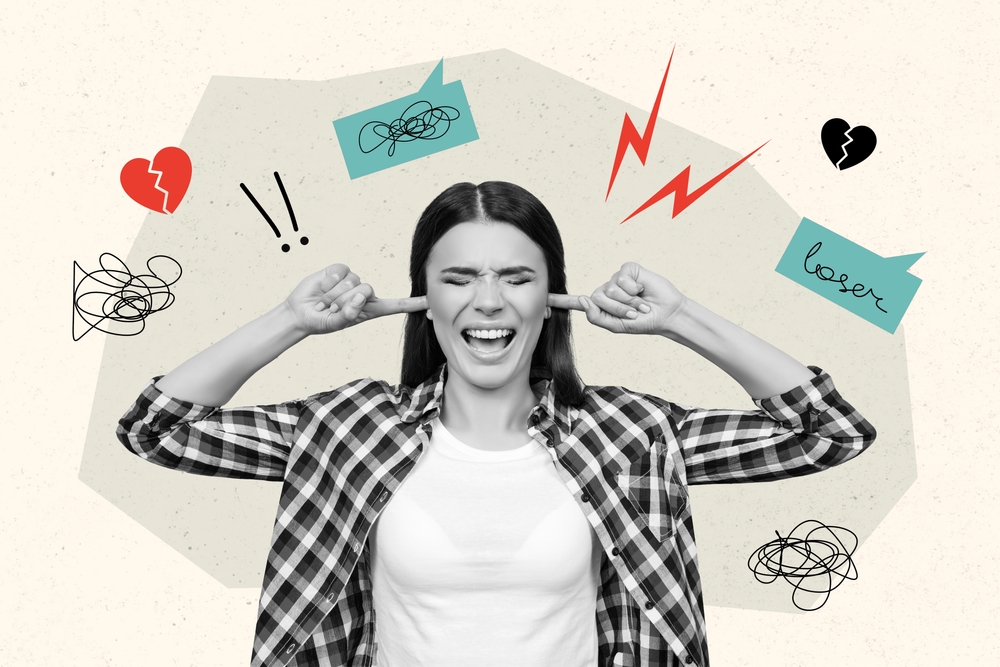
A radical movement is growing in 2026 that advocates for the “Right to Not Know,” encouraging people to set strict “information diets.” This involves recognizing that being “hyper-informed” is not a moral obligation, especially if it destroys your ability to function. It is a return to a more localized way of living, where you focus on the things you can actually touch and change. By choosing to leave the box closed, people are finding that their depression lifts almost immediately.
This “digital asceticism” is becoming a status symbol among those who can afford to disconnect from the noise. It involves deleting apps, using “dumb phones,” and getting news from curated weekly summaries rather than real-time feeds. While it feels “irresponsible” at first, it eventually leads to a much more stable and productive life. You realize that the world keeps turning even if you aren’t watching it every second.
13. We Need to Close the Box for Good

The final stage of overcoming the Pandora Effect is realizing that the “mystery” inside the box is rarely worth the cost of opening it. We have to train ourselves to value our peace of mind more than our curiosity. This requires a profound shift in our relationship with technology and a commitment to protecting our emotional attention. In 2026, the most revolutionary act you can perform is to be bored and content in a world that wants you shocked and depressed.
Closing the box means trusting that you will be told the things you actually need to know by the people who love you. it means focusing on the small, beautiful details of your own life rather than the grand, ugly spectacles of the internet. The Pandora Effect only works if you keep looking; once you turn away, its power vanishes. It is time to stop being a detective of your own misery and start being the architect of your own joy.