
The following report examines the current state of the Gaza Strip through the lens of recent humanitarian assessments and international monitoring. This is no longer a discussion about infrastructure; it is a catalog of a society that has been dismantled to its very foundations. What remains is a landscape of profound loss that challenges our understanding of urban survival in the twenty-first century. This is a story of total displacement, environmental collapse, and the human cost of a territory rendered nearly uninhabitable.
1. Over 80% of All Buildings Are Damaged or Destroyed
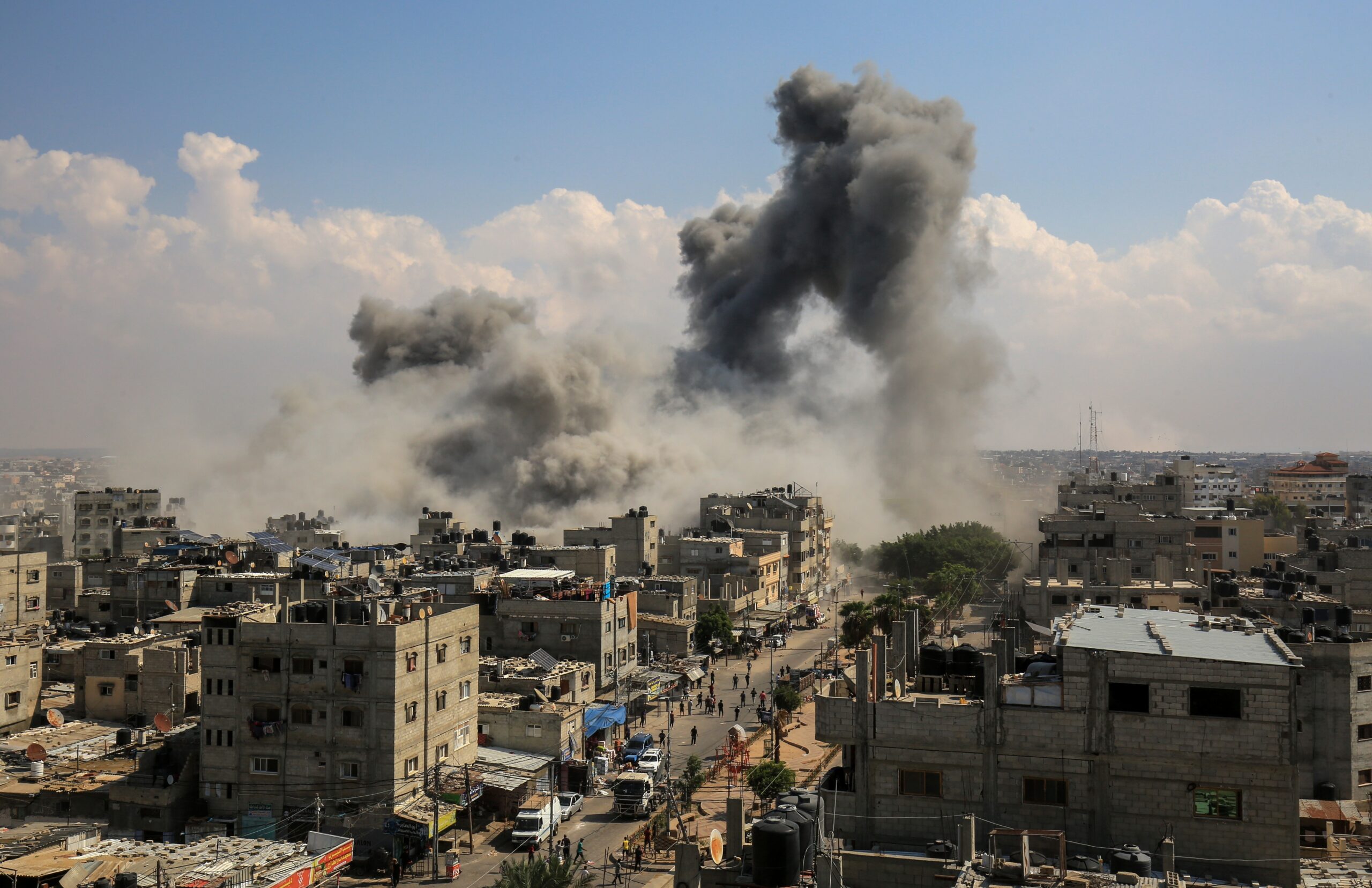
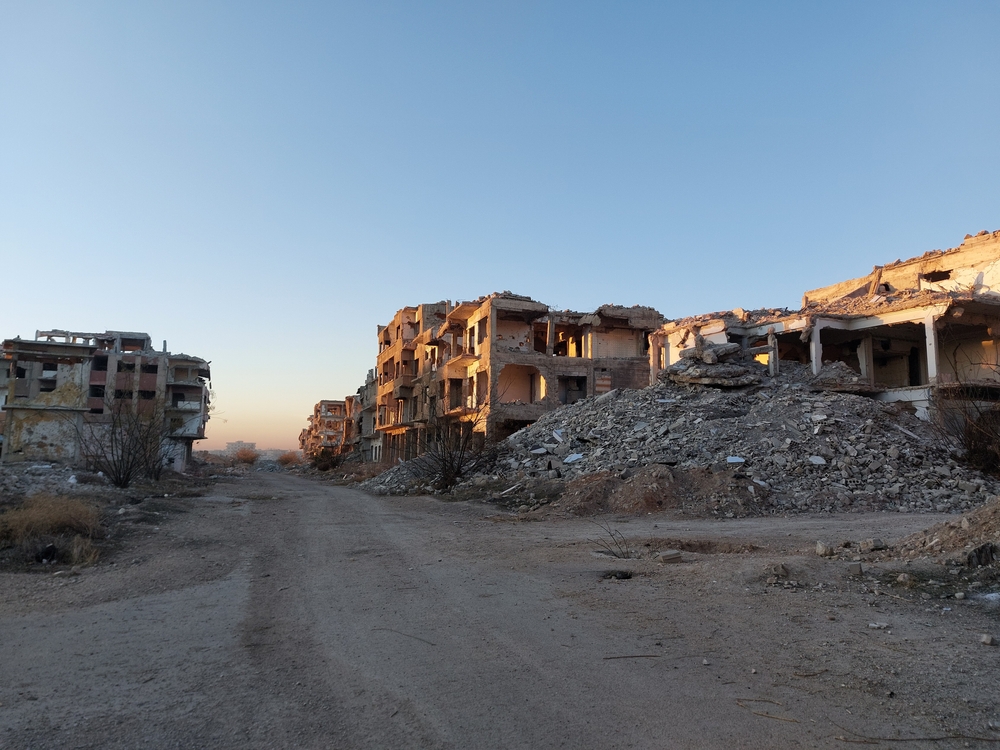
The physical footprint of Gaza has been fundamentally erased by a bombing campaign that experts describe as one of the most intense in modern history. Entire neighborhoods have been leveled, leaving behind a skyline defined by jagged concrete and twisted rebar. Schools, hospitals, and residential blocks that once housed millions have been reduced to a singular, gray graveyard of infrastructure. The scale of the rubble is so immense that it has literally remapped the geography of the territory.
A December 2025 analysis by the UN Satellite Centre (UNOSAT) confirmed that approximately 230,000 housing units have been completely obliterated. The report stated that the volume of debris is equivalent to several years’ worth of traditional construction projects across the entire globe. Analysts noted that the level of destruction has reached a “point of no return” for many urban centers. The sheer mass of the ruins makes traditional search and recovery efforts nearly impossible for the local teams.
2. The Entire Population Faces Phase 5 Catastrophic Hunger
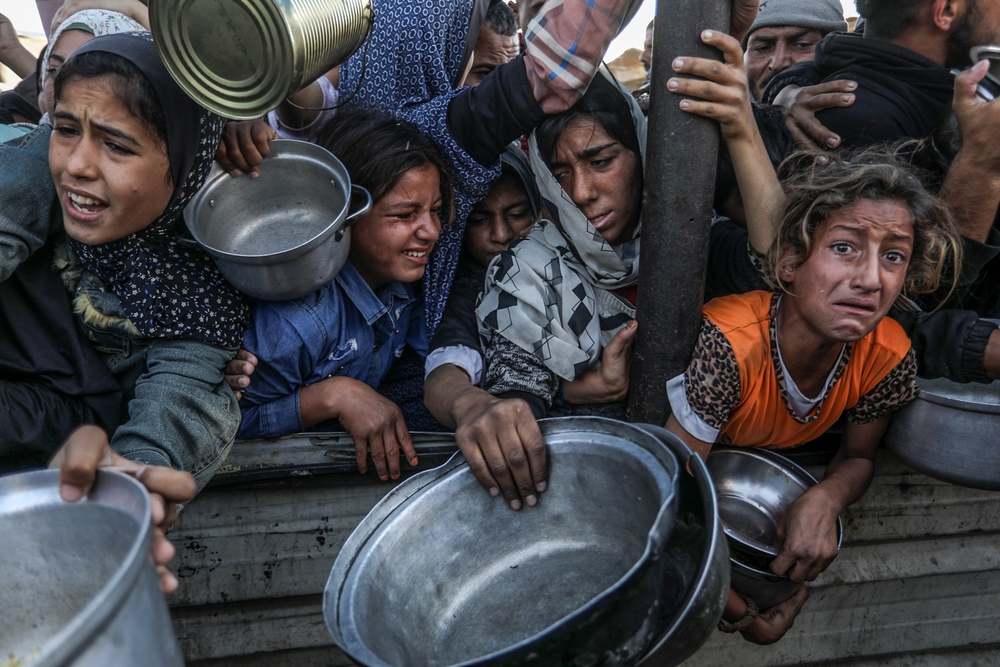
Famine is no longer a looming threat in Gaza; it is a daily reality that has gripped the most vulnerable segments of society. Markets are empty, and the few items available are priced so high that they are inaccessible to the average family. Parents are reportedly skipping meals for days at a time to ensure their children have a few scraps of bread. The biological toll of prolonged starvation is now visible in the skeletal frames of those trapped in the north.
Food security has vanished as agricultural lands have been scorched or rendered inaccessible by ongoing military operations. Fishing fleets have been grounded, and the supply chains that once brought in basic staples are almost entirely severed. This is a manufactured crisis where the lack of calories is as deadly as the munitions themselves. The psychological impact of persistent, gnawing hunger is creating a trauma that will last for generations. Survival has been reduced to a desperate, 24-hour search for a single meal.
3. There Is a Total Collapse of the Healthcare System

Hospitals in Gaza have shifted from centers of healing to overwhelmed morgues and makeshift shelters for the displaced. Surgeries are frequently performed without anesthesia, and basic medical supplies like bandages and saline have become precious rarities. Doctors are forced to make impossible choices about who receives care and who is left to succumb to their injuries. The primary medical infrastructure has been so thoroughly degraded that even minor infections are now becoming death sentences.
The World Health Organization (WHO) reported in late 2025 that only a handful of Gaza’s 36 hospitals are partially functional. Dr. Margaret Harris noted in a recent Geneva briefing that the healthcare sector is experiencing a “total systemic failure” due to the lack of fuel and electricity. The report detailed how specialized treatments for cancer and kidney failure have completely ceased across the strip. This vacuum of care means that the “silent deaths” from chronic illness are now rivaling those killed by direct violence.
4. Over 1.9 Million People Are Internally Displaced
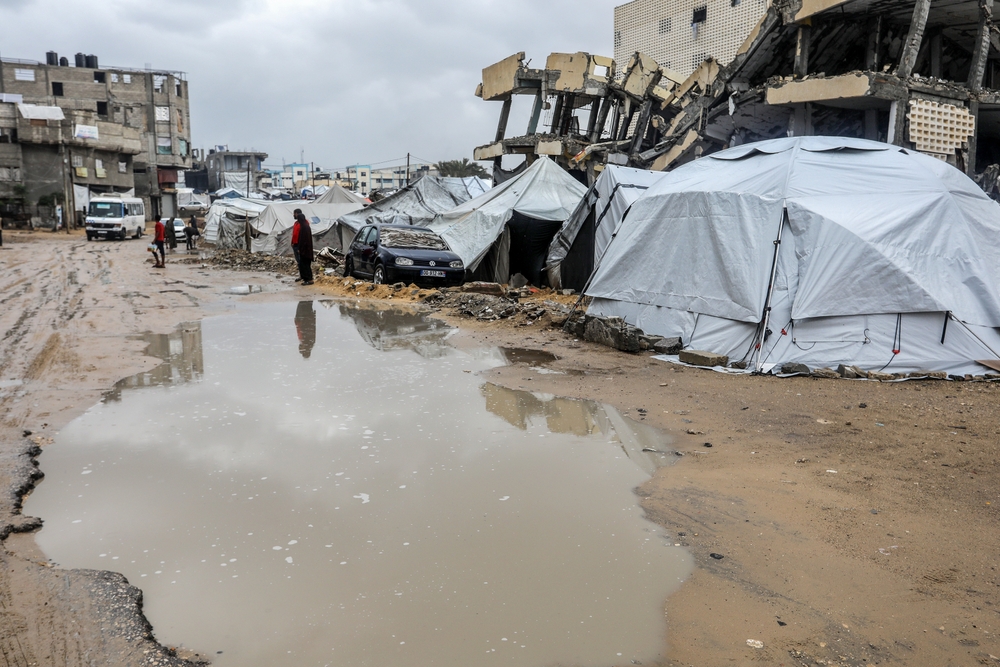
Nearly the entire population of Gaza has been uprooted, with many families forced to move five or six times in a single year. People are living in flimsy tents, overcrowded schools, or simply out in the open air under plastic sheeting. Every move involves carrying the few belongings they have left through streets filled with sewage and debris. The concept of “home” has been replaced by a permanent state of precarious, nomadic survival.
These temporary shelters offer almost no protection from the elements, leading to a surge in respiratory and skin diseases. The density in “safe zones” has reached levels that make social distancing and basic hygiene a physical impossibility. This mass displacement has severed all community ties and destroyed the social fabric of Gazan life. People are living in a state of constant hyper-vigilance, never knowing when they will be forced to move again. The psychological exhaustion of this permanent flight is becoming a defining feature of the population.
5. Water Is Being Used as a Weapon of War

Access to clean water has dropped to levels that are well below the minimum requirements for human survival and dignity. Most of the desalination plants have been shut down due to a lack of fuel, and the remaining wells are often contaminated by seawater or sewage. People are forced to stand in line for hours just to receive a few liters of brackish water for their entire family. Dehydration and waterborne illnesses are now spreading with terrifying speed through the tent cities.
A 2025 report by the Palestinian Water Authority, supported by Oxfam, found that water production in Gaza has plummeted by 95% since the conflict began. The analysis stated that the destruction of wastewater treatment facilities has caused raw sewage to flood the streets and seep into the groundwater. Experts noted that this environmental catastrophe poses a long-term threat to the health of the entire region. The lack of water for basic sanitation is fueling an unprecedented crisis of hygiene-related diseases. Every drop of water is now a hard-fought victory in a battle for basic existence.
6. The Education System Has Been Entirely Suspended
A whole generation of children in Gaza has lost nearly two years of schooling, creating a massive gap in their cognitive and social development. Schools have either been destroyed, turned into shelters, or used for military purposes, leaving no space for formal learning. The sound of classrooms has been replaced by the roar of drones and the cries of the displaced. Education is currently a luxury that the territory simply cannot afford to provide.
The loss of educational infrastructure is more than just a logistical problem; it is the destruction of a future. Children are instead learning the mechanics of survival, the names of different munitions, and the geography of displacement. The trauma of the conflict makes traditional learning impossible even if the schools were still standing. This “educational blackout” will have profound consequences for the economic and social recovery of the territory. The intellectual capital of an entire society is being eroded in real time.
7. Gaza Has Become a Graveyard for Journalists

Reporting from inside Gaza has become one of the most dangerous jobs in the world, with casualties among the press reaching record highs. Journalists are documenting the destruction of their own homes and the deaths of their own families while trying to broadcast to the world. They operate with limited power, intermittent internet, and the constant threat of being targeted by the very violence they are covering. The flow of information is being strangled by the sheer physical danger of holding a camera.
The Committee to Protect Journalists (CPJ) issued a 2025 report stating that the mortality rate for media workers in Gaza is higher than in any other conflict in history. The report noted that these journalists are often the only eyes and ears on the ground due to the ban on international media entering the strip. Their deaths represent a profound loss of local narrative and historical record. Every killed journalist is a silenced voice that was trying to provide a window into the reality of the siege. The world is seeing Gaza through a lens that is being systematically broken.
8. The “Buffer Zone” Is Shrinking the Habitable Land
The creation of expanded military “buffer zones” along the border has effectively reduced the amount of land available for housing and farming. This has pushed the dense population into even smaller, more crowded pockets of land that are already struggling to cope. These zones are often characterized by a “scorched earth” policy where everything—from trees to homes—has been razed to the ground. The physical size of Gaza is effectively shrinking while the population remains trapped.
This reduction in land has exacerbated the competition for resources and space among the displaced. It has also destroyed the agricultural heartland that provided a modicum of food self-sufficiency for the territory. The loss of this land is not just a temporary military measure but a permanent alteration of the landscape. It creates a “no-man’s land” that serves as a constant reminder of the territory’s enclosure. The borders are closing in, physically and psychologically, on those within.
9. Thousands of Children Are Now Unaccompanied
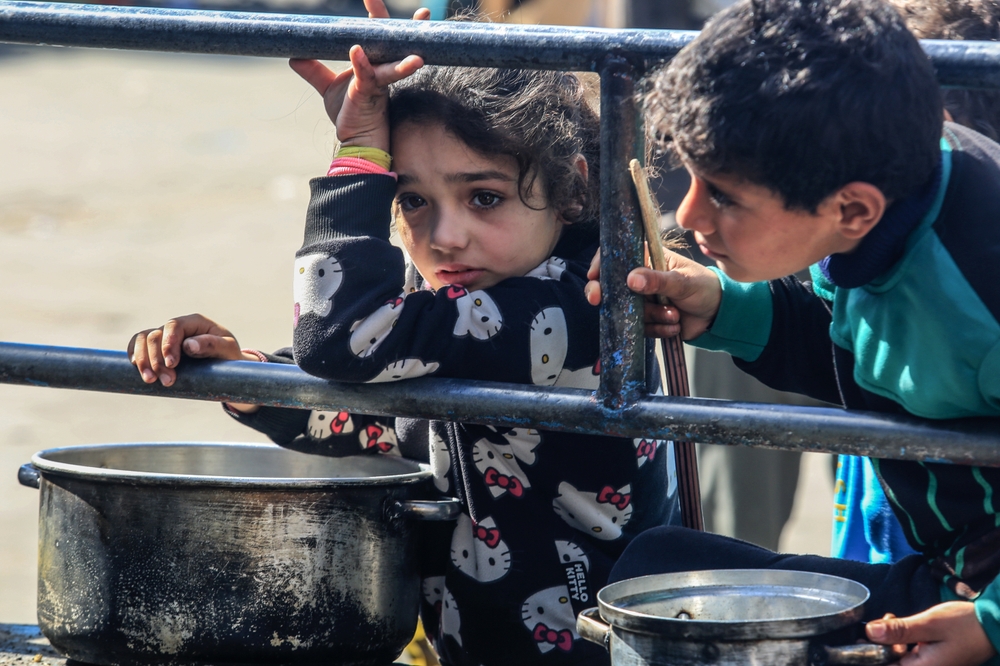
The chaos of the conflict and the high casualty rates have left thousands of children without parents or immediate family. These “unaccompanied minors” are wandering the camps, relying on the kindness of strangers who are themselves struggling to survive. They have witnessed horrors that no child should ever see and are now facing the world with no support system. This is a crisis of orphanhood on a scale that the local social structures cannot possibly manage.
The term “WCNSF”—Wounded Child, No Surviving Family—was coined by medical staff to describe this heart-wrenching new demographic. These children often suffer from severe PTSD, malnutrition, and a total loss of identity and safety. Without parental guidance, they are at high risk for exploitation and long-term psychological collapse. The sheer number of children without caretakers is a testament to the indiscriminate nature of the violence. Their silence is the loudest critique of the ongoing catastrophe.
10. The Environmental Collapse Is Permanent
The chemical residues of explosives are poisoning Gaza’s environment, the overflow of sewage, and the accumulation of solid waste. The soil in formerly productive farming areas is now contaminated with heavy metals that will take decades to remediate. The air is thick with the dust of pulverized concrete and the smoke from constant fires. This environmental degradation is creating a long-term public health crisis that will outlast the current conflict.
The UN Environment Programme (UNEP) published a preliminary assessment in 2025 detailing the “ecocide” occurring within the territory. The report warned that the destruction of the aquifer and the coastal ecosystem is nearly irreversible without massive international intervention. The accumulation of millions of tons of rubble has created a landscape that is both hazardous and toxic. This is not just a war on people, but a war on the very land that sustains them. The future of Gaza’s ecology has been compromised for a generation.
11. The Economy Has Reached Total “De-Development.”

Gaza’s economy has transitioned from a struggling blockade-era system to a state of total collapse where traditional commerce has vanished. Most small businesses have been destroyed, and the majority of the population has no source of income whatsoever. The few people who still have money find that it has almost no purchasing power due to rampant hyperinflation. The territory is now entirely dependent on a trickle of aid that is often blocked or diverted.
This “de-development” means that the skills and industries that once existed are being systematically erased. The lack of electricity and internet has made even digital work impossible, cutting off the last lifeline for many young Gazans. The resulting poverty is so deep that it has moved beyond a lack of money to a lack of basic human dignity. The economic recovery of Gaza, once the fighting stops, is estimated to take at least 70 years. This is the total liquidation of a society’s productive capacity.
12. There Is No More Escape
The borders of Gaza have become absolute, with almost no one being allowed to leave, even for life-saving medical treatment. The few who managed to escape through the Rafah crossing earlier in the conflict are now separated from their families with no hope of return. Those inside feel as though they are trapped in a “kill zone” where the only exit is death. This total enclosure creates a sense of profound claustrophobia and despair among the population.
The psychological weight of being unable to protect one’s family or find safety is crushing the collective spirit of the territory. People describe Gaza as a “pressure cooker” where the tension is constantly rising with no outlet. The sense of abandonment by the international community is palpable in every conversation. This total isolation means that the trauma is self-reinforcing, with no external perspective or relief. Gaza is an island of suffering that the rest of the world is watching from a distance.
13. Rebuilding Will Take Decades and Billions

Even if a permanent ceasefire were to be declared today, the task of making Gaza habitable again is staggering in its complexity. The removal of the rubble alone is estimated to take over a decade using a massive fleet of heavy machinery. Reconstructing the power grid, the water systems, and the housing stock will require a level of international funding that has rarely been seen. The human cost of this rebuilding process—the time lost and the lives interrupted—can never be fully repaid.
The World Bank’s 2025 Interim Damage Assessment estimated the cost of reconstruction at over $50 billion and climbing. The report emphasized that without a fundamental shift in the political status of the territory, any rebuilding will be a temporary fix in a cycle of destruction. The sheer logistical nightmare of importing construction materials through restricted crossings makes the timeline nearly impossible to predict. For the people of Gaza, “after the war” is a distant, hazy concept that feels as unreachable as the moon. The wreckage of today is the foundation for a very uncertain tomorrow.