
Navigating an entire continent without getting lost is a remarkable feat, even for the most seasoned traveler. Yet, some animals do this effortlessly, relying on an internal GPS that scientists are still striving to understand fully. These navigational masterminds traverse vast distances, facing challenges that would leave any human bewildered. Here are 13 animals that make continent-wide journeys with a precision that puts our GPS devices to shame.
1. Monarch Butterflies
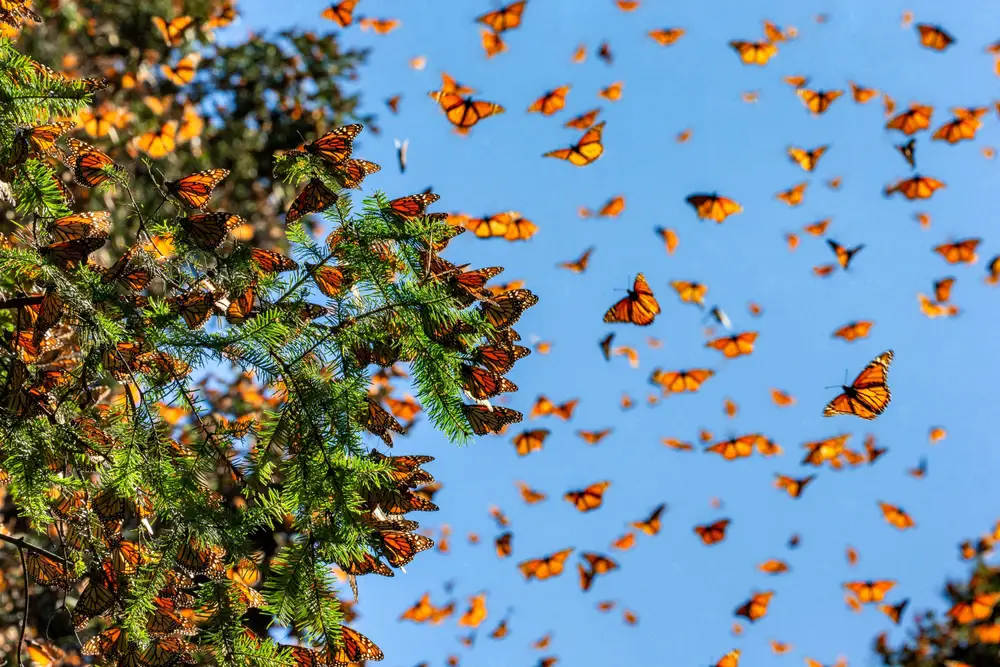
Every year, millions of monarch butterflies embark on an epic journey from North America to central Mexico, covering thousands of miles. This migration is fascinating because no single butterfly completes the entire round trip. Instead, it spans several generations, each building on the previous one. The innate ability of these insects to navigate such distances is attributed to a combination of environmental cues and a genetic compass.
Research published in the journal *Science* reveals that monarchs use the angle of the sun in conjunction with a circadian clock to guide their migration. This internal mechanism enables them to account for the sun’s changing position throughout the day. Their reliance on these natural cues underscores the complexity and precision of animal navigation. It’s a reminder of how much remains to be discovered about the science behind animal journeys.
2. Arctic Terns
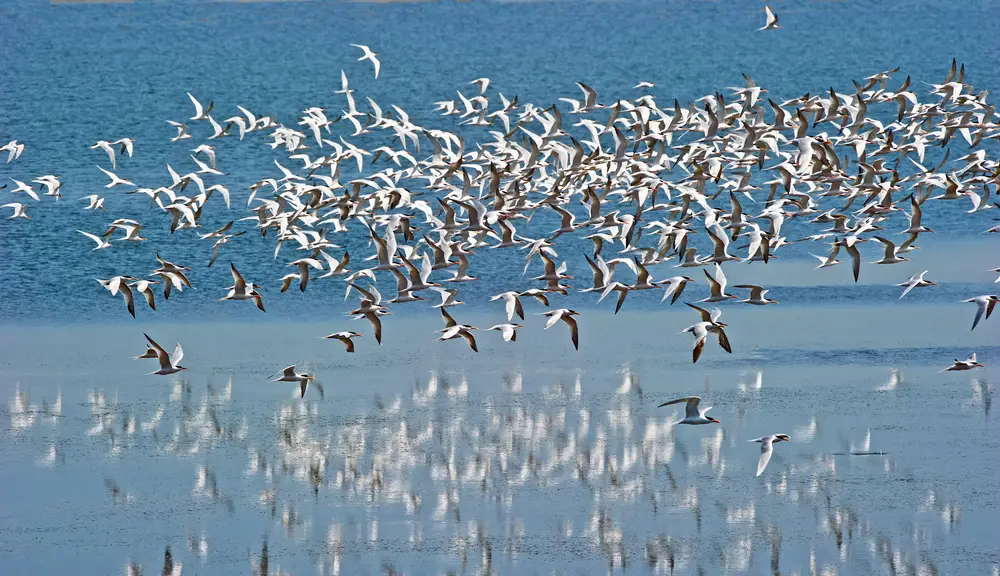
Known for their astonishing long-distance flights, Arctic terns hold the record for the longest migration in the animal kingdom. These birds travel from their breeding grounds in the Arctic to the Antarctic and back each year—a round-trip journey of about 44,000 miles. Their migration path follows a zigzag pattern, allowing them to take advantage of global wind patterns. This energy-efficient travel strategy ensures they can sustain such lengthy voyages.
Arctic terns leverage their acute vision and sense of geomagnetic fields to navigate across the globe. They can detect polarized light patterns that help them find their way even when the sun is obscured. These birds also rely on their extensive knowledge of the landscape, honed over years of travel. Their journey is a testament to the incredible endurance and navigational prowess of migratory animals.
3. Humpback Whales
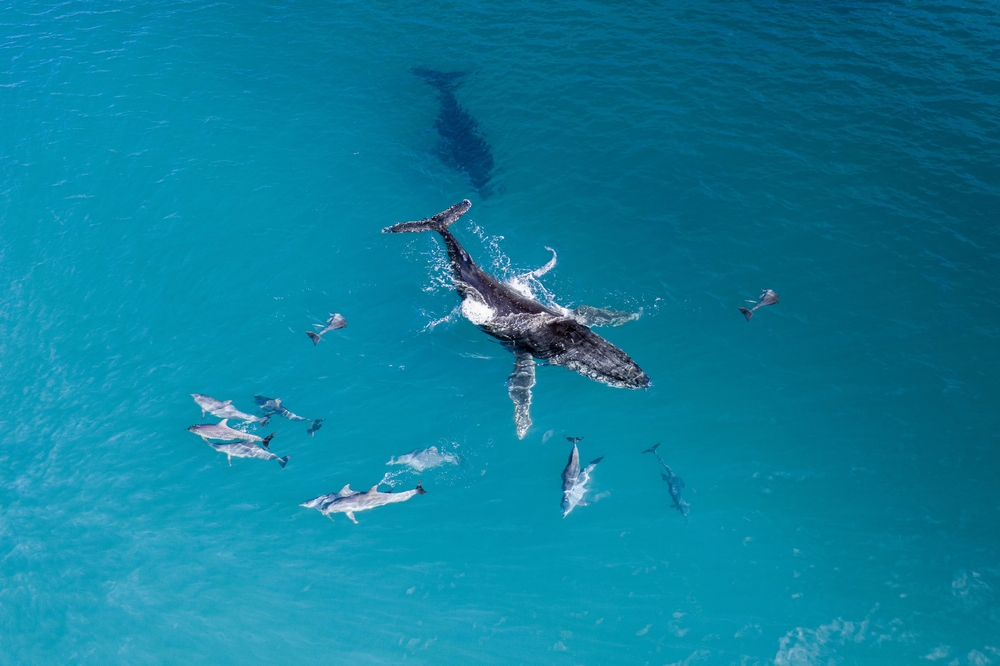
Humpback whales are known for their long migrations, traveling up to 16,000 miles annually. These marine giants migrate from polar feeding grounds to tropical breeding waters, covering vast stretches of ocean. Their migration is a complex interplay of instinct, environmental cues, and social learning. Humpback whales rely on a combination of the Earth’s magnetic field and the position of the stars for navigation.
According to the journal *Marine Mammal Science*, humpback whales also use vocalizations to communicate and potentially guide one another during migrations. Their songs can travel great distances underwater, serving as a beacon for other whales. This combination of natural navigation tools ensures they reach their destinations each year. The intricacy of their journey highlights the sophistication of whale migration strategies.
4. Caribou
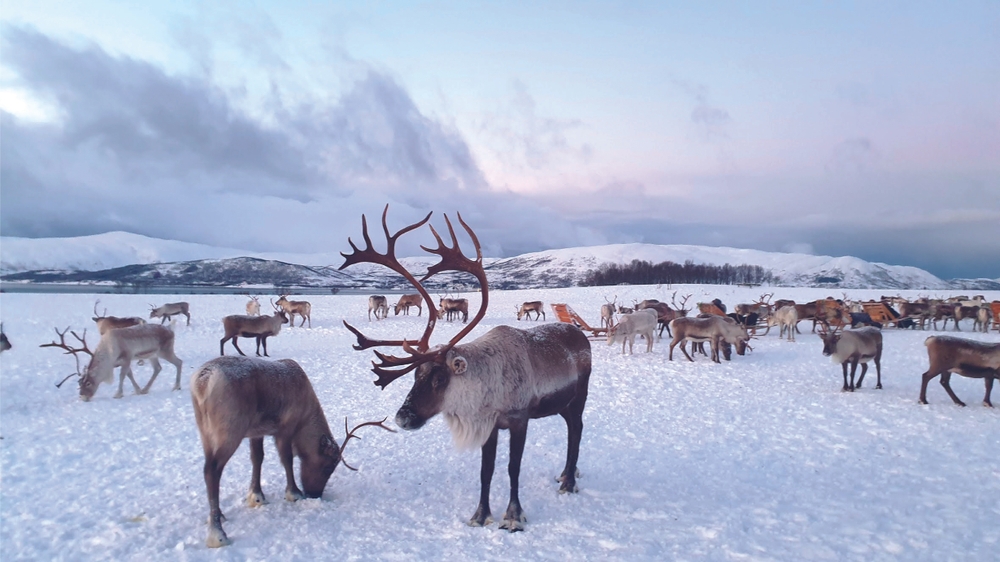
Caribou, or reindeer, are famous for their mass migrations across the tundra of North America and Eurasia. These herds travel up to 3,000 miles annually, moving between calving and wintering grounds. Caribou migrations are driven by the seasonal availability of food, primarily lichen, and the need for suitable breeding conditions. During their journey, they face harsh weather, predators, and challenging terrain.
These animals have adapted to navigate through vast landscapes using a combination of memory and environmental cues. Caribou possess an exceptional sense of smell that aids in locating food buried beneath the snow. Additionally, they are excellent swimmers, allowing them to cross rivers and lakes during their migration. Their resilience and adaptability make them iconic symbols of the wild north.
5. Green Sea Turtles

Green sea turtles embark on one of the most remarkable migrations in the marine world, traveling thousands of miles across oceans to reach their nesting beaches. These turtles demonstrate an impressive ability to navigate using the Earth’s magnetic field. Each location has a unique magnetic signature, which the turtles use as a map to find their way home. Despite the vastness of the ocean, they manage to return to the exact beach where they were born.
A study published in the journal *Current Biology* highlights how green sea turtles’ navigation relies on a combination of magnetic cues and olfactory signals. They can detect subtle changes in the Earth’s magnetic field to guide their journey. The precision of their navigation is awe-inspiring, considering the challenges posed by ocean currents and vast distances. Their migratory success is central to their survival and reproduction.
6. Wildebeest
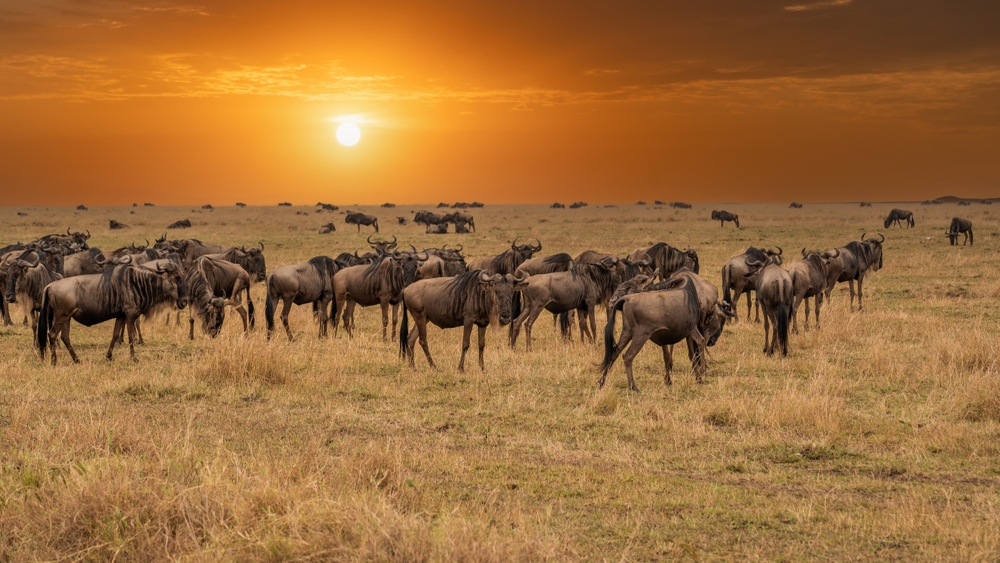
The wildebeest migration is one of the most spectacular wildlife events on the planet, involving over 1.5 million animals. These ungulates travel across the African savannah in a continuous loop, following the rain and the growth of new grass. Their journey covers approximately 1,200 miles and is fraught with dangers, including predators and treacherous river crossings. Despite these challenges, the migration is essential for the survival of the herds.
Wildebeest rely on environmental cues like thunderstorms and the scent of rain to guide their movement. Their highly developed sense of smell helps them detect fresh pasture over long distances. The synchronized movement of the herd ensures greater protection against predators. This mass migration is a dynamic and ever-changing spectacle of nature’s cycles.
7. Bar-Tailed Godwits
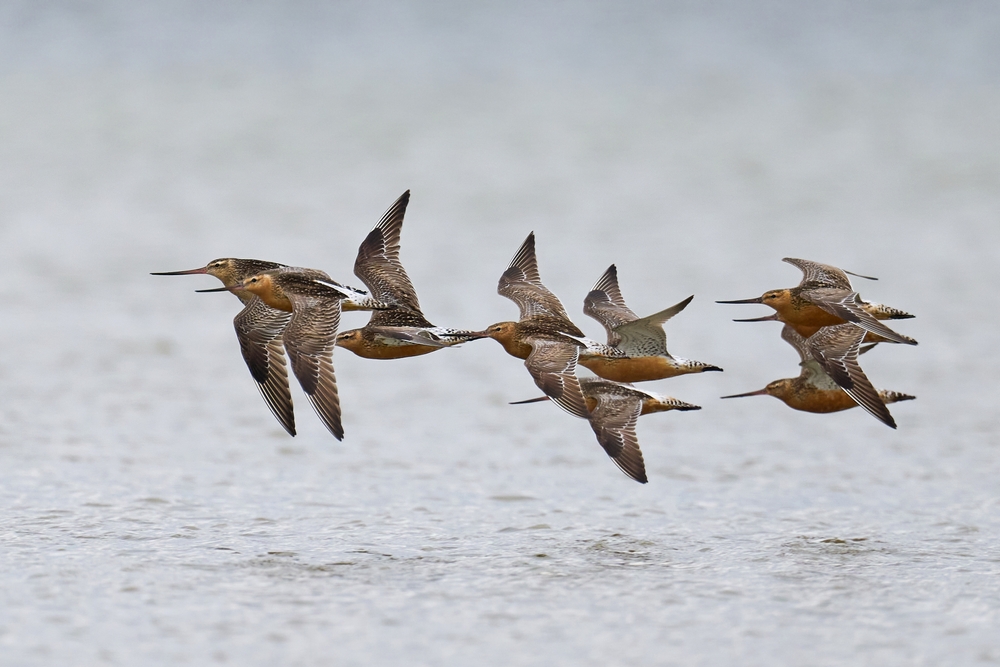
Bar-tailed godwits are renowned for their non-stop flights across the Pacific Ocean, traveling from Alaska to New Zealand. These birds achieve an incredible feat, flying over 7,000 miles without stopping to rest or eat. Their remarkable endurance is supported by their ability to store large amounts of fat before migration. This reserves energy for their continuous journey, where they lose nearly half their body weight.
Research in the journal *Proceedings of the Royal Society B* reveals that godwits use the sun, stars, and Earth’s magnetic field for navigation. Their ability to maintain a precise course across featureless oceans is nothing short of extraordinary. Godwits also adjust their altitude to make use of favorable winds, conserving energy throughout their flight. This precision ensures their survival and the continuation of their migratory tradition.
8. Leatherback Sea Turtles

Leatherback sea turtles are known for their extensive migratory journeys, often crossing entire ocean basins. These turtles travel thousands of miles from their feeding grounds to nesting beaches, displaying a remarkable sense of navigation. The largest of all sea turtles, leatherbacks navigate using the Earth’s magnetic field as a guide. This innate skill allows them to traverse vast and open oceanic expanses.
Their migration is driven by the search for jellyfish, their primary food source, and suitable nesting sites. Leatherbacks face numerous threats during their journey, including marine debris and fishing nets. Despite these challenges, their migratory patterns have persisted for millions of years. Their journey is a remarkable testament to the endurance and navigational abilities of ancient marine creatures.
9. Sooty Shearwaters
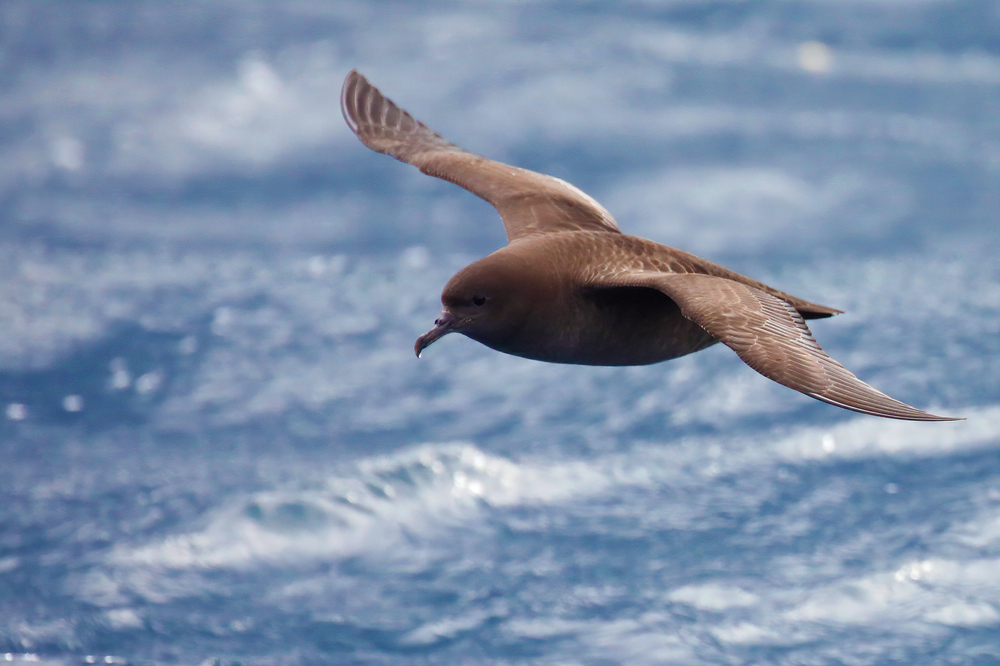
Sooty shearwaters undertake one of the most extensive migrations of any bird species, traveling around 40,000 miles annually. These seabirds journey from breeding sites in the Southern Hemisphere to feeding grounds in the Northern Hemisphere. Their migration spans the Pacific Ocean, taking them on a circular route that covers incredible distances. Shearwaters are known for their impressive flying skills, often gliding for hours on wind currents.
Their navigation relies on a combination of celestial cues and the magnetic field, allowing them to traverse vast oceanic distances. Sooty shearwaters have an acute sense of smell, aiding them in locating food sources over open water. Their ability to cover such extensive distances highlights the adaptability and resilience of migratory birds. This journey is a testament to the endurance and navigational precision of these ocean travelers.
10. European Eels
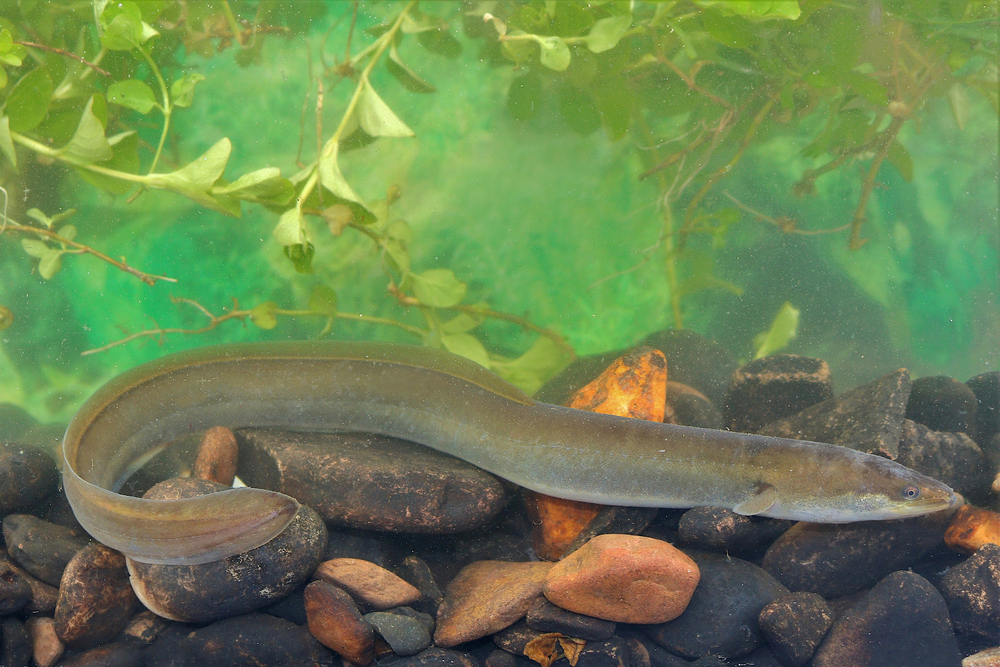
European eels have one of the most complex migration patterns in the animal kingdom, traveling between freshwater rivers and the Sargasso Sea. Born in the Sargasso Sea, young eels—known as glass eels—navigate to the rivers of Europe and North Africa. After spending years maturing in freshwater, they undertake a massive journey back to their birthplace to spawn. This migration covers thousands of miles and involves navigating between drastically different habitats.
An acute awareness of environmental cues and ocean currents guides their journey. European eels possess an internal compass that helps them detect the Earth’s magnetic field. Despite facing numerous obstacles, including dams and pollution, their migratory instinct remains strong. The complexity of their life cycle and migration underscores the adaptability and resilience of these fascinating creatures.
11. Painted Lady Butterflies

Painted lady butterflies embark on a remarkable migration from North Africa to Europe, covering thousands of miles. Unlike monarchs, painted ladies can complete their round-trip journey within a single generation. They rely on favorable wind currents to aid their long-distance travel. Despite their delicate appearance, these butterflies are among the most widespread species, found on every continent except Antarctica.
Changes influence their migration in temperature and food availability, driving them northward in spring and southward in autumn. Painted ladies are equipped with a keen sense of direction, utilizing the sun as a compass to guide their journey. Their ability to travel such vast distances is a testament to the resilience and adaptability of these colorful insects. This migration highlights the intricate interplay between environmental factors and animal behavior.
12. Sockeye Salmon

Sockeye salmon are renowned for their incredible upstream migration from the ocean to freshwater spawning grounds. This journey covers hundreds of miles and involves navigating through strong currents and waterfalls. Sockeye salmon return to the exact river where they were born, guided by an acute sense of smell and geomagnetic cues. They undergo remarkable physiological changes to adapt from saltwater to freshwater environments.
Their migration is a crucial part of their life cycle, allowing them to reproduce and ensure the survival of their offspring. Despite facing numerous threats from overfishing and habitat destruction, sockeye salmon exhibit an unwavering determination to reach their destination. Their journey is a powerful reminder of the interconnectedness of marine and freshwater ecosystems. The persistence and precision of their migration are awe-inspiring.
13. African Elephants
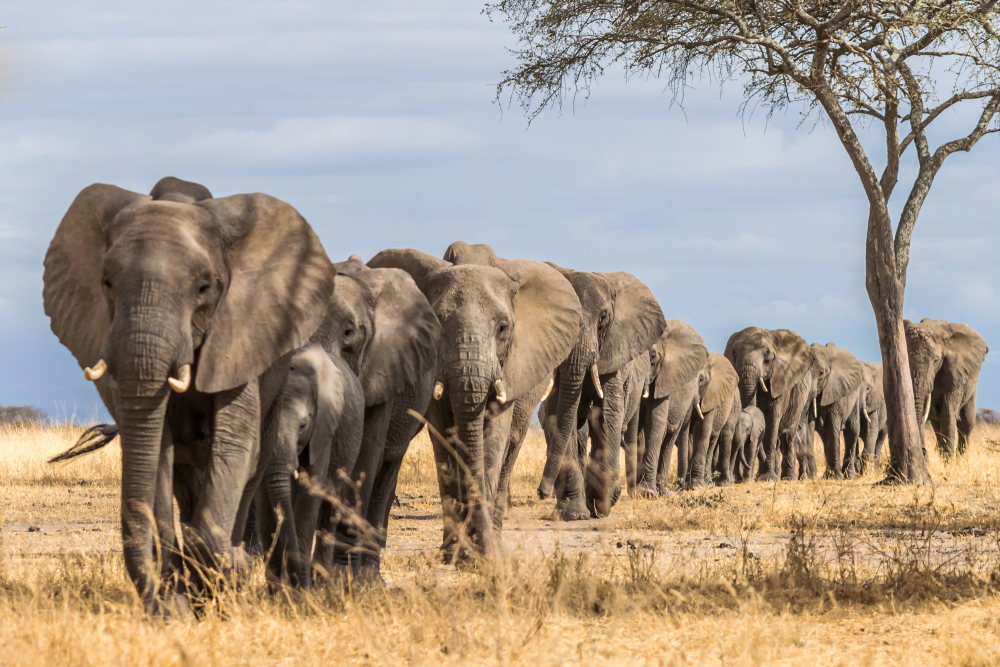
African elephants embark on large-scale migrations across the savannah, searching for food and water. Their migration routes are influenced by seasonal rainfall and the availability of resources. Elephants are highly social animals, relying on the wisdom of older matriarchs to guide the herd through vast landscapes. Their long-distance movements are critical for ecosystem health, as they facilitate seed dispersal and landscape maintenance.
Elephants have an extraordinary memory, allowing them to recall distant water sources and migratory routes. Their ability to communicate through low-frequency sounds helps coordinate group movements over large distances. Despite facing threats from poaching and habitat loss, elephants continue their ancient migratory traditions. Their journey is a testament to the resilience and intelligence of these majestic animals.