Toilet paper shortages during COVID, Black Friday stampedes, pantries stuffed with food that expires unused—these aren’t random outbursts of irrationality. They’re deeply hardwired survival mechanisms that evolved over millions of years when scarcity was the default and abundance was temporary. Understanding why our brains push us toward hoarding and overconsumption reveals that these behaviors aren’t character flaws but evolutionary features that haven’t adapted to a world where grocery stores never run empty and possessions accumulate faster than we can use them.
1. Scarcity Mode Activates Even When Abundance Is Guaranteed

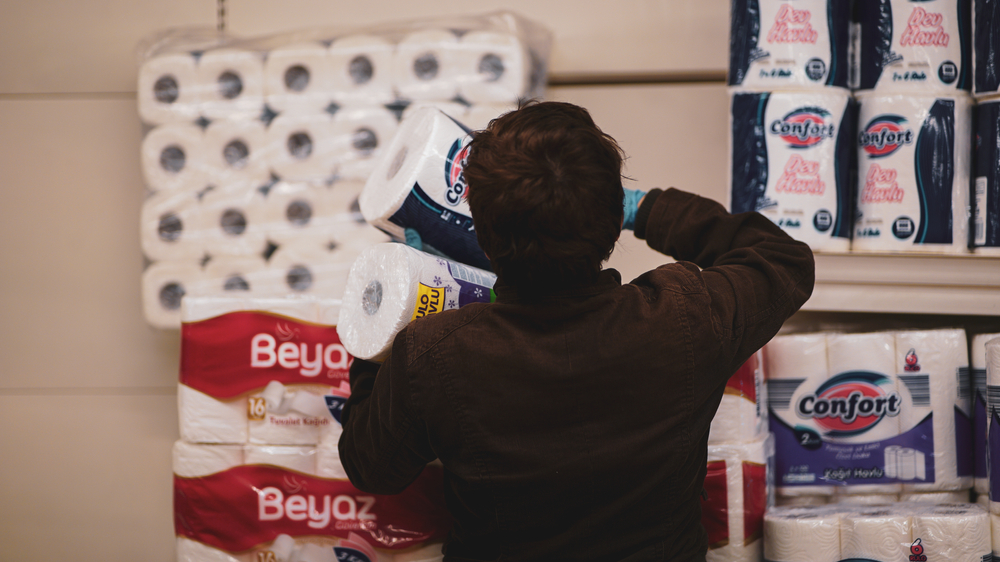
Your brain has a scarcity-detection system that activates based on perceived scarcity cues—empty shelves, “limited time” messaging, other people buying—regardless of whether actual scarcity exists. Once scarcity mode activates, rational thinking shuts down and acquisition becomes compulsive, driven by ancient circuits that say “get it now or starve later.” Seeing others panic-buying toilet paper triggers your own scarcity response even though you rationally know supply isn’t actually limited—your brain sees empty shelves and competing consumers and screams “emergency acquisition mode.”
This scarcity response evolved when food shortages were common, and competition for limited resources was life-or-death. Your ancestors who over-acquired during abundance survived famines that killed those who didn’t. Modern brains can’t distinguish between “toilet paper temporarily out of stock” and “food scarcity threatens survival,” so they activate the same hoarding impulse. The behavior is completely irrational in a modern context but deeply rational from an evolutionary perspective—your brain would rather you waste money over-acquiring than risk missing resources you might need.
2. Loss Aversion Makes Potential Loss Feel Twice as Painful as Equivalent Gain

Your brain weighs potential losses approximately twice as heavily as equivalent gains, creating panic-driven acquisition to avoid the psychological pain of “missing out.” The fear of not getting something you might want later creates more motivation than the actual desire for the thing itself. This is why “last chance” and “limited stock” marketing works so powerfully—the threat of loss activates a stronger emotional response than the promise of gain.
Black Friday stampedes and panic-buying occur because the possibility of missing a deal or item creates genuine psychological distress that outweighs rational cost-benefit analysis. Your brain processes “might not get this later” as a loss scenario, triggering panic and compulsive acquisition behavior. Someone buying 50 cans of soup doesn’t want 50 cans—they’re avoiding the future loss of not having soup if stores run out. The hoarding is loss-prevention behavior, not abundance-seeking, and the pain of imagined future scarcity drives present overconsumption.
3. Social Proof Overrides Individual Judgment During Uncertainty
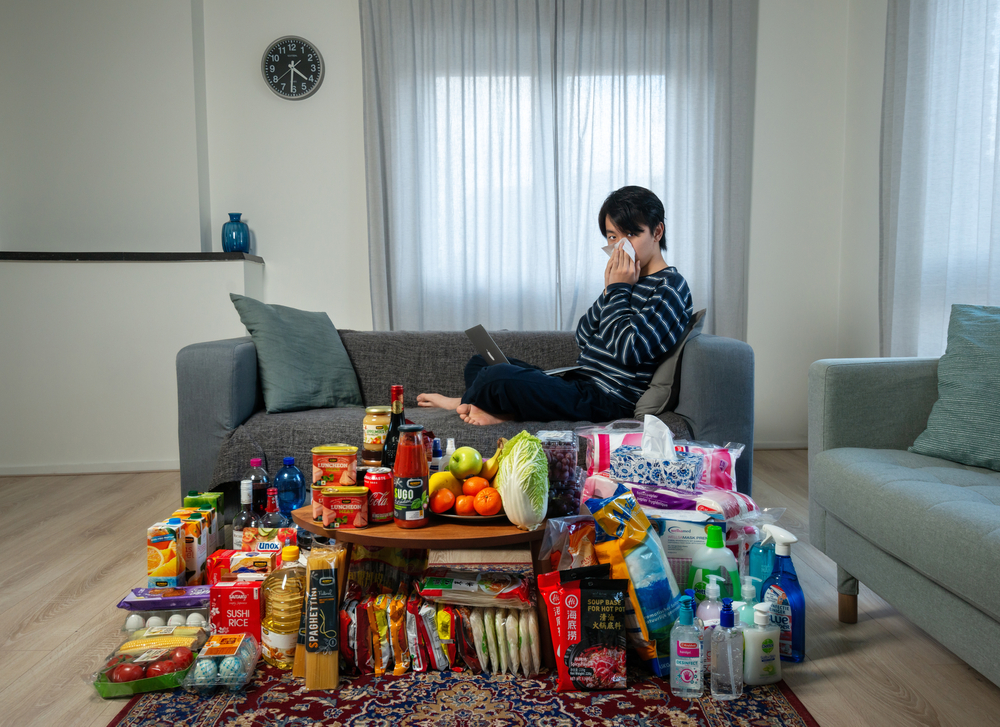
When you see others panic-buying, hoarding, or rushing to acquire things, your brain automatically assumes they know something you don’t and mimics their behavior without independent evaluation. This social contagion of hoarding spreads because our brains evolved to trust crowd behavior during uncertainty—if everyone is running, you run first and figure out why later. The toilet paper panic of 2020 spread because seeing others buy triggered a “they must know something” response that overrode rational analysis.
Social proof is strongest during ambiguity and uncertainty, exactly the conditions that trigger hoarding. Your brain doesn’t independently assess whether hoarding is necessary—it sees others hoarding and activates matching behavior automatically. This herd mentality kept ancestors alive by ensuring they followed group responses to legitimate threats, but now it creates hoarding cascades over imaginary scarcity. One person buying extra creates visual scarcity that triggers others to buy, which increases visible scarcity, creating feedback loops where everyone hoards because everyone else is hoarding.
4. Future Discounting Makes Present Acquisition Feel More Important Than Future Need
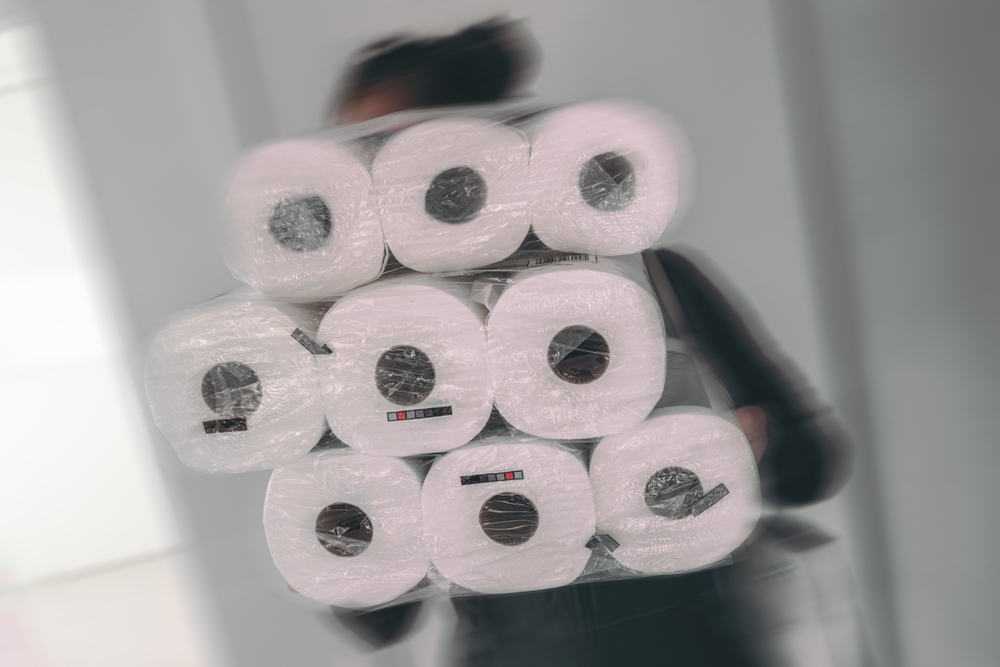
Your brain massively discounts future costs and overvalues immediate acquisition, making things feel much more important to acquire now than they actually are for future use. The psychological satisfaction of acquiring something today feels more valuable than the rational calculation of whether you’ll actually need it later. This temporal discounting creates overconsumption because your brain weighs the immediate pleasure of acquisition far more heavily than the delayed utility of actual use.
This is why people hoard sales items they never use—the 70% discount creates immediate acquisition value that exceeds the negligible actual need for the item. Your brain experiences a hit of satisfaction from acquiring a “good deal” that has nothing to do with whether you’ll use what you bought. The closets full of unused purchases aren’t failures of planning—they’re your brain prioritizing immediate acquisition satisfaction over delayed practical utility. The evolutionary logic made sense when abundance was temporary and future scarcity was guaranteed, but now it creates compulsive overconsumption of things that never get used.
5. Resource Uncertainty Activates Unlimited Acquisition Drive

When resource availability becomes uncertain—even briefly—your brain doesn’t calculate “reasonable amount needed,” it switches to “acquire maximum possible” mode with no upper limit. The mental calculation isn’t “how much do I need” but rather “how much can I get before it runs out.” This is why panic buying doesn’t stop at reasonable quantities—people fill entire carts or vehicles because scarcity cues activate unlimited acquisition drives that evolved for unpredictable food availability.
Hunter-gatherers who found a fruit tree didn’t calculate daily caloric needs and take appropriate amounts—they ate until physically incapable of eating more and brought back everything they could carry. Your brain still operates this way: when resource availability is questioned, restraint disappears, and acquisition becomes unlimited until either resources are exhausted or you physically can’t acquire more. The person with 300 rolls of toilet paper didn’t calculate a reasonable supply—they acquired until either shelves emptied, their car filled, or they hit some external constraint. The internal limiting mechanism for acquisition under scarcity is essentially broken in modern contexts.
6. Dopamine Rewards Acquisition More Than Possession or Use

Your brain releases dopamine—the reward neurochemical—more strongly during acquisition than during possession or use of items, creating addiction to buying rather than to having or using. The pleasure peak occurs when you decide to buy and complete the purchase, not when you use the item weeks later. This creates the paradox of closets full of unused items with tags still attached—the reward was in acquiring, and once acquired, the items provide no additional dopamine and are forgotten.
Shopping addiction and hoarding both exploit this acquisition-reward pathway. Your brain experiences genuine pleasure from acquiring things regardless of whether you need or will use them, and this pleasure reinforces the behavior. Online shopping has amplified this dramatically by making acquisition easier and providing the dopamine hit of clicking “buy” without the moderating effect of physically transporting purchases home. The evolutionary basis was rewarding finding and securing resources, but now this rewards securing things you already have in abundance, creating compulsive overconsumption that provides diminishing actual utility but consistent neurochemical rewards.
7. Physical Possession Creates Irrational Attachment and Impossible Discarding

Once you possess something, your brain assigns it significantly more value than identical items you don’t own—the “endowment effect”—making discarding or selling feel like painful loss even for items you never use. The act of possessing something changes its psychological value, making people demand much more to give up items than they’d pay to acquire identical items. This asymmetry creates hoarding because acquired items become psychologically valuable through ownership alone, regardless of utility.
This manifests as keeping clothes that don’t fit “just in case,” retaining broken items you’ll “fix someday,” and an inability to discard possessions even when they create storage problems and reduce quality of life. Your brain processes discarding possessions as loss that triggers genuine psychological pain, making hoarding the path of least resistance. The evolutionary logic was that possessions represented survival investment—acquiring items cost time and energy, so keeping everything hedged against future scarcity. Modern abundance means this mechanism creates homes full of unused possessions that people can’t psychologically discard despite rational recognition that they’re unnecessary.
8. Sale Prices and Discounts Trigger Scarcity and Opportunity Panic

Your brain processes discounts and sales as temporary opportunities that must be seized immediately or lost forever, triggering the same urgency as actual scarcity. “70% off” activates acquisition drives not because you need the item but because your brain interprets the discount as a fleeting resource opportunity. The financial calculation shifts from “do I need this at full price” to “can I afford to miss this deal”—a completely different evaluation that prioritizes acquisition over utility.
Black Friday violence and stampedes occur because deep discounts on limited quantities create a perfect storm of scarcity signals, loss aversion, and time pressure. Your brain processes this as an emergency resource acquisition scenario, shutting down social behavior and activating competitive resource hoarding. People injure others or get injured over deeply discounted televisions not because they’re violent but because their brains entered resource competition mode, where social niceties are liabilities. The “deal” triggers survival-level urgency that overrides both rational cost-benefit analysis and social inhibitions against aggression.
9. Variety Seeking Drives Acquiring Multiples Beyond Any Possible Need

Your brain is wired to prefer variety in resources over single-item abundance, driving the acquisition of multiple similar items even when having one would suffice. This variety-seeking created diverse diets and resource portfolios that prevented deficiency diseases and hedged against specific resource failures. Modern manifestation is people buying multiple similar items—twenty different shampoos, fifteen pairs of jeans, dozens of nearly identical decorative items—acquiring variety for its own sake rather than utility.
The overconsumption isn’t about needing variety for practical reasons—it’s your brain’s preference for resource diversity creating acquisition behavior that makes no rational sense in modern contexts. Someone with forty unused notebooks isn’t preparing for paper shortages—they’re satisfying a brain algorithm that says “diverse resource portfolio is safer than single resource dependence.” This drives collecting behavior, impulse purchases of similar items in different colors or styles, and pantries stocked with varieties of the same food category far beyond what any household could consume before expiration.
10. Cognitive Bandwidth Depletion Makes Resisting Acquisition Impossible

When you’re stressed, tired, or cognitively depleted, the mental resources needed to resist acquisition impulses are unavailable, making overconsumption and hoarding default behaviors. Resisting temptation requires executive function and willpower—both limited resources that deplete through use. When stressed or exhausted, you can’t generate the cognitive control needed to resist acquisition impulses, so you default to buying, acquiring, and hoarding without the executive oversight that would normally moderate these drives.
This is why financial stress creates more overspending rather than less—the stress depletes exactly the cognitive resources needed to resist impulse purchases and acquisition drives. People living paycheck-to-paycheck make worse purchasing decisions not due to inability to understand economics but because chronic scarcity and stress deplete the executive function needed to resist immediate acquisition satisfaction in favor of long-term financial planning. The overconsumption under stress isn’t irrationality—it’s the rational acquisition drives operating without the cognitive brakes that require mental resources to maintain.
11. Preparation Anxiety Creates Infinite “What If” Acquisition Scenarios
Your brain generates endless hypothetical future scenarios requiring specific items, driving the acquisition of things for imagined future needs that rarely materialize. The “what if I need this someday” thinking creates unlimited justification for acquiring and keeping items because your imagination can generate infinite possible future scenarios. Someone keeping broken items to “fix someday” or buying specialty kitchen tools for meals they never cook isn’t delusional—they’re responding to brain algorithms that generate plausible future-use scenarios.
This preparation anxiety exploits your brain’s ability to simulate futures and plan ahead—a crucial survival mechanism that becomes problematic in material abundance. You can imagine scenarios where you need that item, and your brain weighs those hypothetical future needs more heavily than the present reality that you’ve never needed it. Homes full of “just in case” items represent your brain hedging against imagined futures, unable to distinguish between realistic preparation and infinite hypothetical scenario planning. The hoarding feels rational because each item does have an imaginable use case—your brain just can’t integrate across all items to recognize that preparing for every hypothetical simultaneously creates dysfunction exceeding any individual preparation’s value.