
Cats have a reputation for being mysterious and aloof, but they’re constantly communicating through a sophisticated system of silent signals most owners never learn to read. These non-vocal cues carry nuanced meaning about emotional state, social status, comfort, and intention that vocalization alone couldn’t convey. Learning to decode silent cat communication transforms your understanding of your pet from an enigmatic creature to one whose inner life becomes surprisingly readable.
1. The Slow Blink – Feline Sign Language for Trust
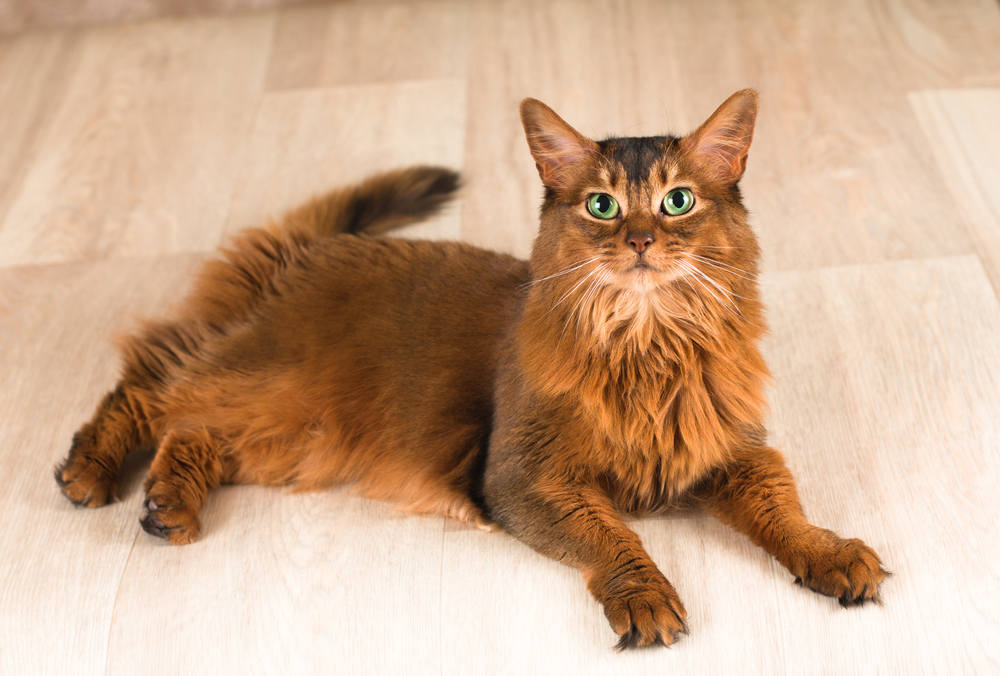
The slow blink is arguably the most significant silent communication cats make, representing a deliberate lowering of defensive alertness that signals deep trust and affection. A cat who closes their eyes slowly in your presence is communicating that they feel safe enough to temporarily reduce visual vigilance, the feline equivalent of a smile. Humans who slow blink back at cats are participating in genuine cross-species communication that cats recognize and often reciprocate.
Research by animal behaviorist Karen McComb confirmed that slow blinking creates positive associations and increases approach behavior in cats toward unfamiliar humans. Cats who slow blink regularly at owners have typically established secure attachment relationships where they view humans as safe and trustworthy. The communication is so reliable that learning to slow blink at unfamiliar cats can establish initial trust faster than any other human behavior.
2. Tail Position and Movement – The Emotional Barometer
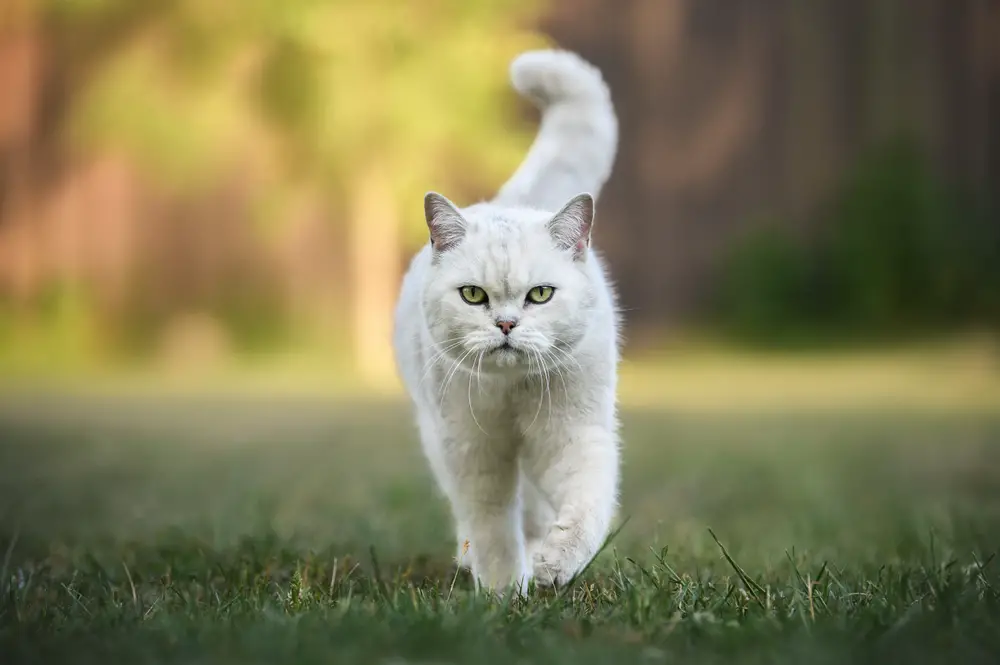
A tail held vertically while walking toward you is among the clearest positive signals cats make, communicating confidence, friendliness, and social interest without ambiguity. The tail-up position is typically accompanied by a slight curl at the tip, creating the feline equivalent of a happy wave that cats use exclusively with individuals they feel positively toward. Kittens use this signal with their mothers, and adult cats who maintain it with humans have essentially extended family group status to their owners.
Tail position changes communicate emotional shifts in real time—a confident vertical tail that slowly lowers indicates increasing uncertainty or discomfort, while a tail tucked beneath the body signals fear or submission. The puffed tail indicating fear or aggression is well known, but the slow sideways flick of an otherwise still tail communicates irritation long before more obvious warning signs appear. Reading tail position continuously rather than in isolation provides essentially live emotional state monitoring.
3. Ear Position and Rotation – The Attention and Intention Compass

Cats can rotate each ear independently up to 180 degrees, and the position of each ear communicates both what a cat is paying attention to and their emotional state. Forward-facing ears indicate interest, engagement, and positive anticipation, while ears rotated sideways indicate uncertainty or mild discomfort before any other visible sign appears. Flattened ears pressed against the skull communicate fear or aggression and represent a definitive warning that should always be respected.
The independence of ear movement is particularly informative—a cat with one ear forward and one back is simultaneously monitoring two different stimuli, revealing split attention. Subtle rotations backward while a cat appears otherwise relaxed indicate low-level stress that owners who watch only body position would completely miss. Tracking ear position throughout interactions provides early warning of emotional state changes that allow someone to adjust their behavior before reaching thresholds that trigger defensive responses.
4. Head Bunting and Cheek Rubbing – Territory and Affection Combined
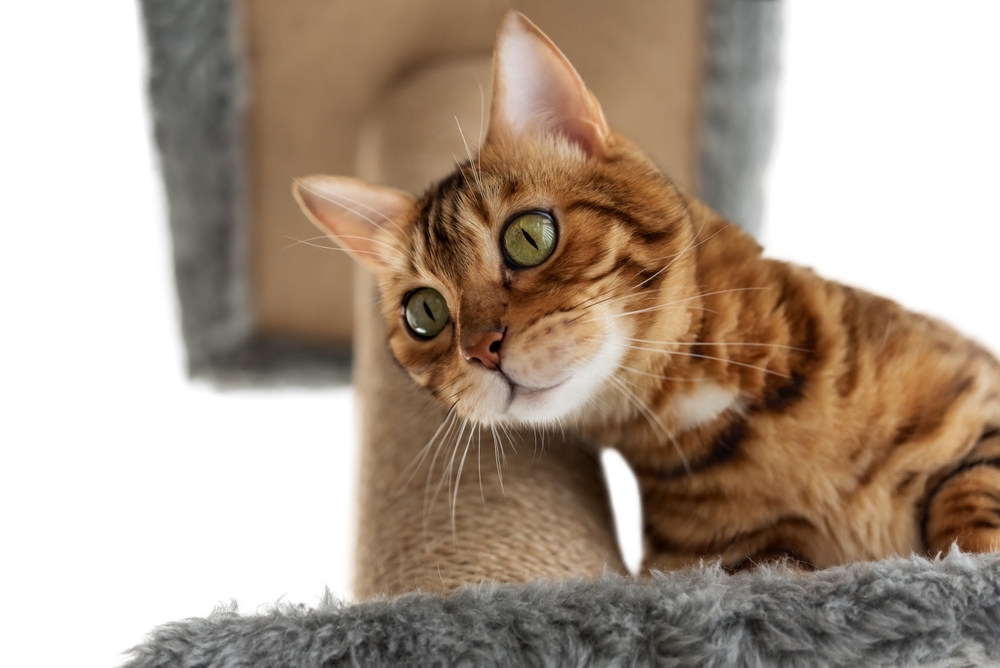
Head bunting—pressing the top of the head firmly against a person or object—combines affection with scent marking in a communication that simultaneously says “I trust you” and “you belong to my territory.” The forehead and cheeks contain scent glands that deposit pheromones during bunting, meaning the gesture carries a chemical message invisible to humans but readable by other cats. A cat who bunts regularly with you has claimed you as part of their social group and territory in the most sincere feline gesture of belonging.
Cheek rubbing operates similarly but communicates ongoing maintenance of established social bonds rather than initial claiming. Cats who cheek rub against owners daily are essentially refreshing their assessment of the relationship and confirming continued positive association. The intensity and frequency of these behaviors reliably indicates how central you are to that cat’s social world.
5. Kneading – Communicating Deep Comfort and Security

Kneading—alternately pushing paws against soft surfaces—originates from kitten nursing behavior and is retained in adult cats exclusively during states of profound contentment and security. When a cat kneads on you specifically, they’re associating you with the same primal comfort and safety that their mother provided, the deepest expression of positive feeling cats make. The behavior is entirely involuntary when deeply triggered, meaning cats can’t fake kneading any more than humans can fake genuine contentment.
The intensity of kneading correlates with depth of contentment—gentle kneading indicates comfort while vigorous kneading with eyes closed indicates a near-trance state of security and pleasure. Some cats drool while kneading, a further indicator of the depth of relaxation being communicated. Understanding kneading as profound emotional communication rather than just a cute habit reveals how significant your relationship with the cat genuinely is.
6. The Belly Display – The Trust Test Most People Fail
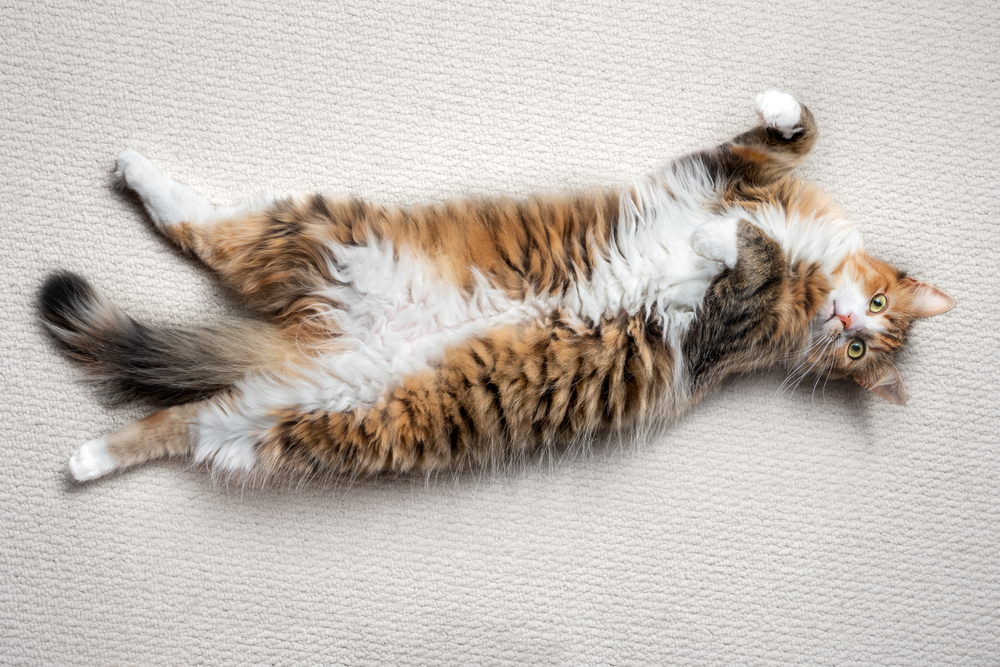
A cat rolling onto their back to display their belly communicates high trust and comfort, but it’s the communication that most humans fundamentally misread by immediately attempting to rub the exposed belly. Unlike dogs who genuinely invite belly rubs through this position, cats are typically communicating “I trust you enough to be vulnerable” rather than “please touch my stomach.” The misinterpretation leads to scratched hands and confused cats who thought they’d communicated successfully.
The belly display is most accurately read as an emotional communication about the relationship quality rather than a request for physical contact. Some cats do enjoy belly rubs, but they communicate that specifically through additional cues—relaxed legs, exposed front paws, slow blinking—rather than the roll alone. Responding to the belly display with a slow blink rather than an immediate hand movement demonstrates you’ve understood the actual communication.
7. Sitting Orientation – The Direction of Preference

Where a cat chooses to sit and which direction they face communicates their social preferences and feelings about household relationships with remarkable precision. A cat who always positions themselves facing toward a specific person is communicating that person is their primary attachment figure and preferred social partner. Cats who sit with their back to someone they’re comfortable with are communicating deep trust since turning away from someone requires confidence they pose no threat.
The back-to position is often misread as indifference when it’s actually the opposite—cats don’t expose their backs to threats or disliked individuals. Noticing where your cat consistently chooses to position themselves throughout the day creates a spatial map of their social relationships and preferences. Changes in orientation patterns often communicate relationship changes or health issues before more obvious symptoms appear.
8. Blinking Rate and Eye Dilation – The Arousal Indicators
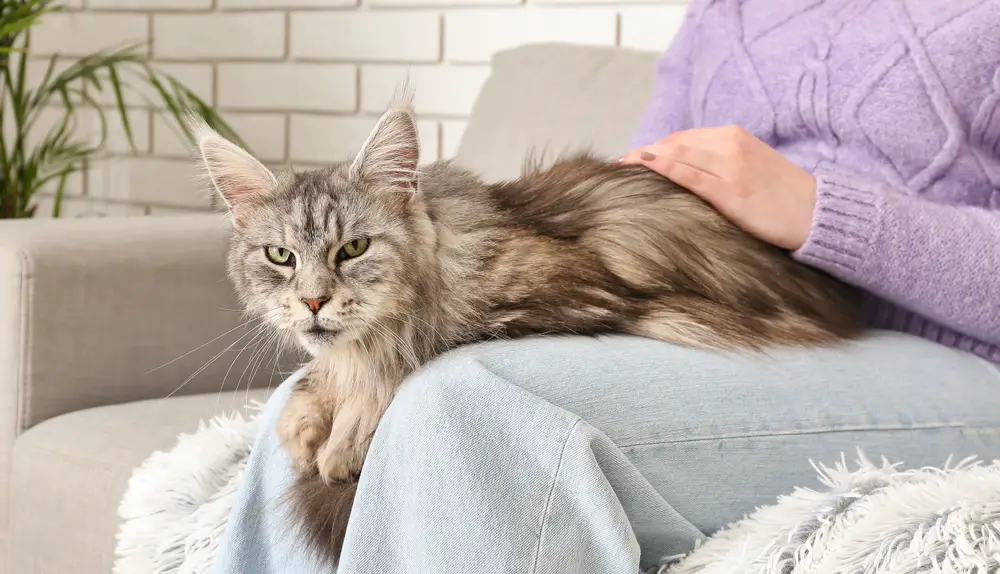
Cats blink slowly and regularly when comfortable, and blinking frequency drops dramatically while pupils dilate as arousal—either positive or negative—increases. Widely dilated pupils in normal lighting indicate either fear, excitement, or playful arousal, and context determines which, while constricted pupils in calm settings indicate contentment and comfort. The combination of blink rate and pupil size together provides a reliable arousal meter that operates continuously.
Reading these signals prevents common interaction mistakes—approaching a cat with dilated pupils and low blink rate in a tense context is approaching an animal that’s already in high arousal, making negative outcomes more likely. A cat with dilated pupils making play behaviors communicates positive arousal that invites interaction, while identical pupils during tension communicate readiness for defensive action. The distinction between positive and negative arousal requires reading pupils alongside body language rather than in isolation.
9. The Head Tilt – Engagement and Processing Signals
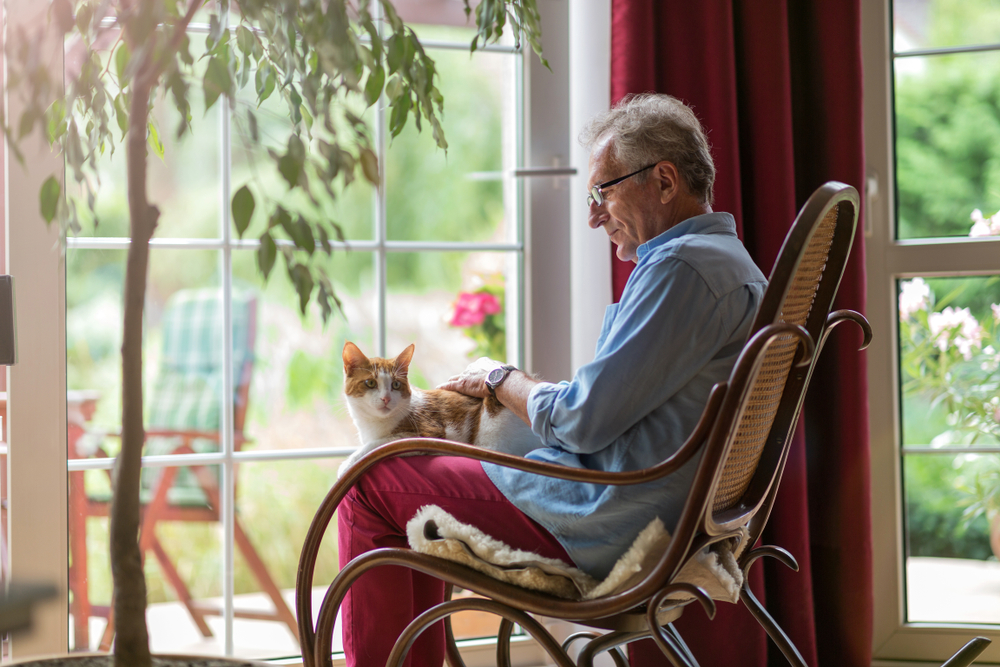
A cat tilting their head while observing you is communicating active engagement and processing of social information, indicating they’re treating your communication as meaningful and attempting to decode it. The head tilt appears most often when cats hear tonal patterns that don’t match familiar sounds, suggesting they’re applying effort to understanding rather than dismissing the stimulus. It’s a particularly flattering communication because it indicates the cat finds you interesting enough to invest cognitive effort in understanding.
The direction of head tilt sometimes reflects which ear is better able to process a particular frequency range, but socially it communicates the same attention and engagement regardless of direction. Cats who tilt their heads frequently during human communication have typically developed strong social bonds where human communication feels meaningful rather than irrelevant. The absence of head tilts during interaction can indicate either profound familiarity where interpretation is unnecessary or social disengagement, where the cat isn’t attending to your communication.
10. Grooming Behavior Toward Humans – Social Bonding Communication

When cats lick human skin or hair, they’re extending allogrooming behavior normally reserved for cats they’re bonded with within their social group. The communication is unambiguous—you’ve been accepted as a genuine social partner at the level of trusted feline companionship. Cats don’t groom individuals they’re merely tolerating; the behavior requires and communicates genuine positive social bond.
The location a cat chooses to groom communicates specific things about their perception of the relationship. Grooming the head and face—typically reserved for most-trusted individuals among cats—indicates a higher-status bond than grooming hands or arms. Reciprocating by gently finger-grooming a cat’s facial fur during these interactions communicates understanding and acceptance of their social invitation.
11. Bringing Gifts – Communication of Shared Resources
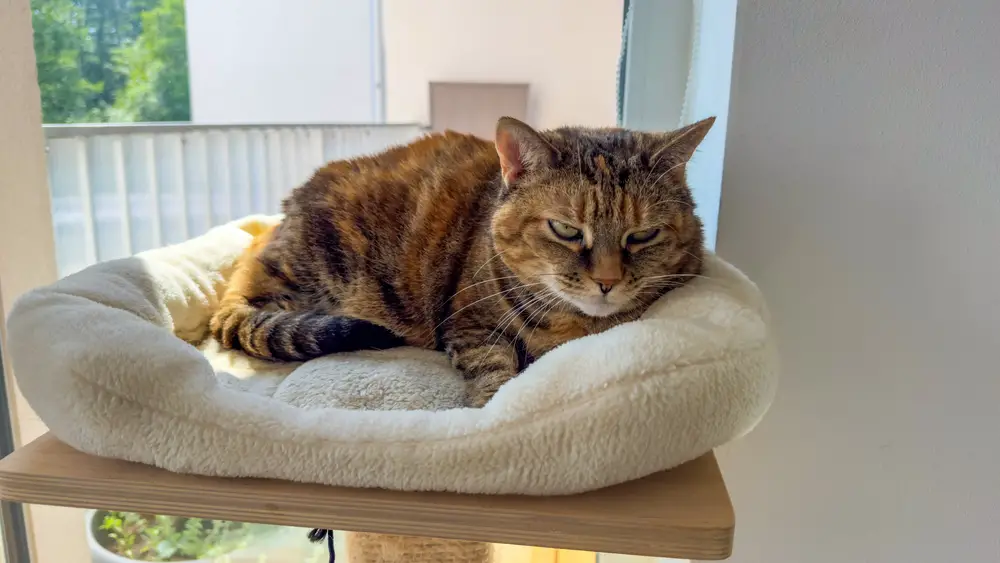
Cats who deposit prey, toys, or objects at your feet are communicating that they consider you part of their social group deserving of shared resources, drawing on the same instinct that drives cats to provision dependent offspring or bonded group members. The gift-giving is particularly meaningful because resource sharing is a significant commitment in solitary predators who evolutionarily had little incentive to share. Reacting with disgust or immediate disposal communicates rejection of the social gesture in ways that confuse and potentially hurt cats who made a genuine offering.
The appropriate response to gift-giving acknowledges the communication, even if you immediately dispose of the item afterward. Briefly acknowledging the gift—touching it, making eye contact with the cat, using a positive vocal tone—satisfies the cat’s social communication without requiring you to keep dead mice. Cats who regularly bring gifts have elevated you to genuine social partner status rather than merely tolerating your presence in their territory.
12. Play Behavior Patterns – Relationship Assessment Through Play
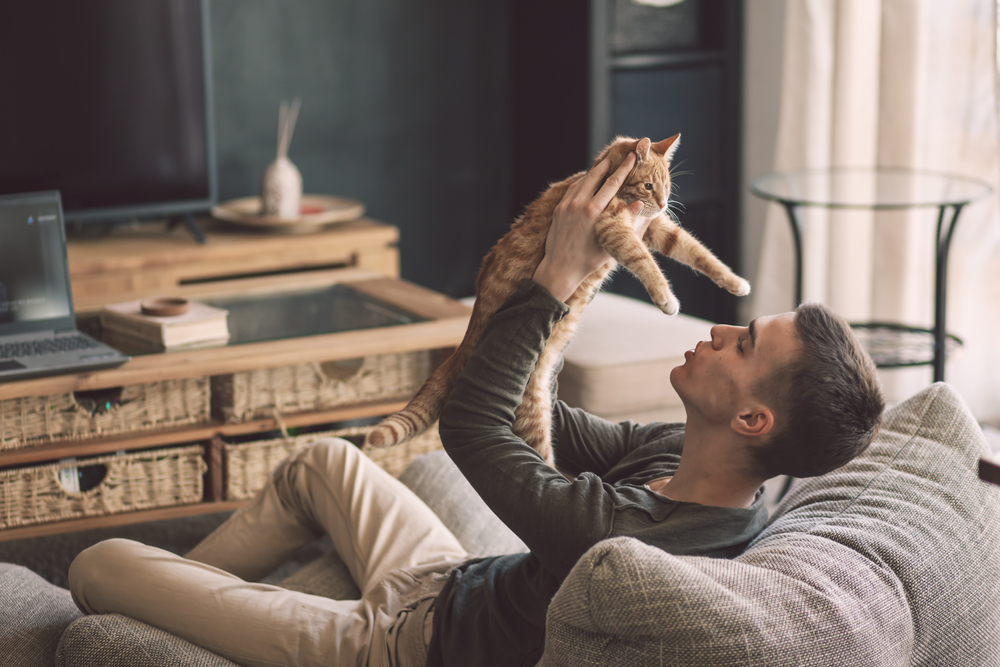
How a cat initiates and maintains play communicates their social assessment of the relationship and how comfortable they feel expressing themselves with you. Cats who initiate play with humans by batting at moving feet or hiding and pouncing have decided you’re both safe enough for vulnerability and interesting enough for social investment. Play initiation represents a significant social communication since cats don’t play with individuals they fear or distrust.
The style of play a cat chooses communicates their current emotional state with precision—gentle batting indicates low arousal and comfortable engagement, while intense grabbing and kicking indicates high arousal that can tip to overstimulation. Cats who begin play sessions gently and gradually increase intensity are communicating the arc of their emotional engagement and providing continuous feedback about their state. Reading play intensity as emotional communication rather than just behavior prevents the escalation to biting that confuses owners who missed the intermediate signals.
13. Sleeping Location Choice – The Trust Hierarchy Map
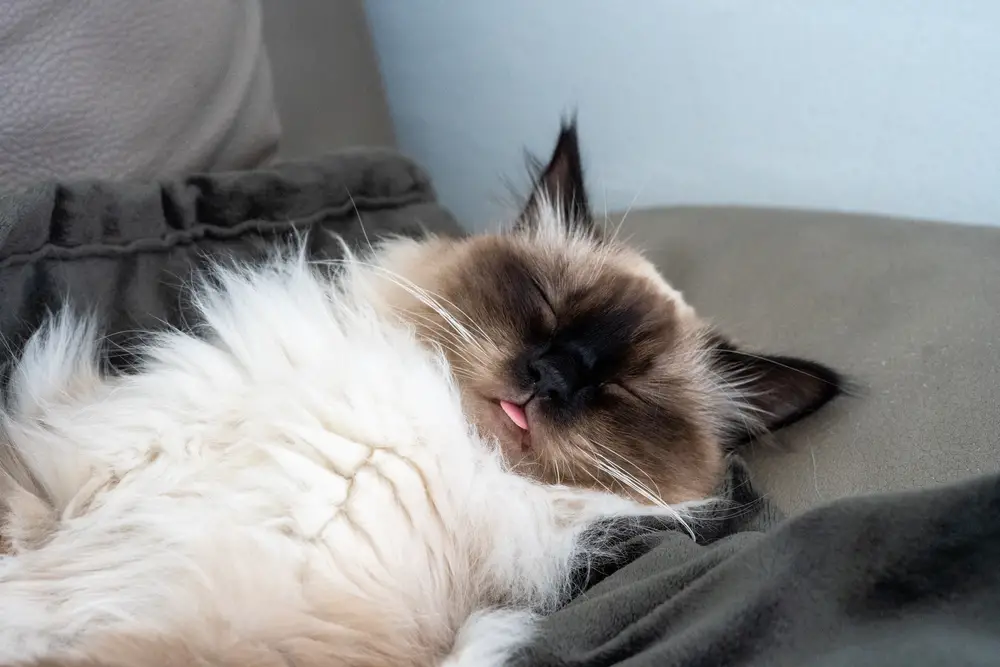
Where cats choose to sleep relative to humans in the household communicates their relationship assessments more honestly than any other single behavior. Sleeping on or directly against a person communicates maximum trust and social bond—vulnerability during sleep is the deepest possible trust signal a cat can extend. Sleeping in the same room but not on the person indicates trust and positive association combined with maintained independence, while sleeping in entirely separate areas indicates either very independent personality or genuine social distance.
Changes in sleeping location communicate relationship shifts before owners usually consciously notice changes. A cat who begins sleeping on a previously avoided family member is communicating a relationship improvement that the person may not have registered yet. Consistently noting sleeping positions across all household members creates the most accurate available map of a cat’s actual social feelings about each person.
14. The Halloween Pose Versus the Curve – Fear and Invitation
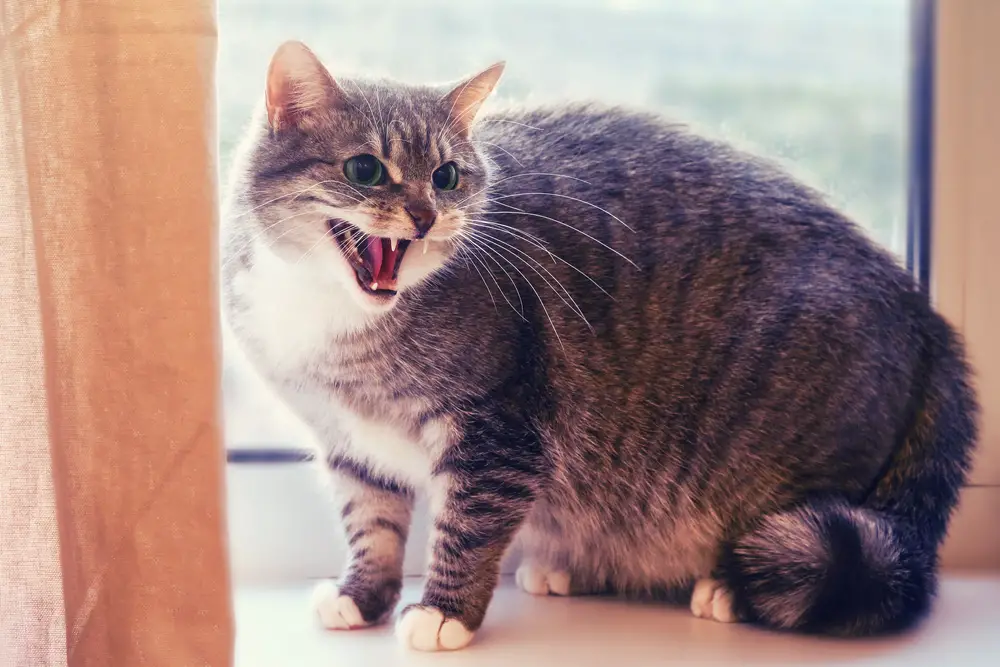
The arched back and piloerectioned fur of the classic Halloween cat pose communicates fear-based aggression with unmistakable clarity, but the gentle curved stretch cats make before approaching someone communicates the opposite—anticipatory pleasure and social openness. The stretch-and-approach communicates “I’m relaxed enough to address physical needs in your presence and approaching you is a positive prospect.” Distinguishing between the Halloween arch and the approach stretch reveals two completely opposite emotional states that look superficially similar to inattentive observers.
The approach stretch often precedes affectionate behaviors and represents a preparation and communication sequence—the cat is announcing their intention to engage before arriving. Cats who consistently stretch before approaching specific people have ritualized the communication into a reliable greeting pattern. Recognizing and responding positively to the stretch-and-approach sequence reinforces the communication channel and encourages cats to use it consistently.