Evolution generally favors efficiency, survival advantages, and traits that enhance reproductive success, yet certain animals possess characteristics that seem counterproductive, unnecessarily complex, or downright detrimental to survival. These creatures break the rules that govern natural selection—they’re too slow to escape predators, too fragile for their environments, too energy-intensive to maintain, or equipped with features that appear to serve no purpose beyond making life harder. The fact that these animals not only exist but in some cases thrive challenges simple narratives about evolution and reveals that the path to survival is far stranger and more circuitous than “survival of the fittest” suggests.
1. Sunfish (Mola Mola) – The Ocean’s Floating Disaster
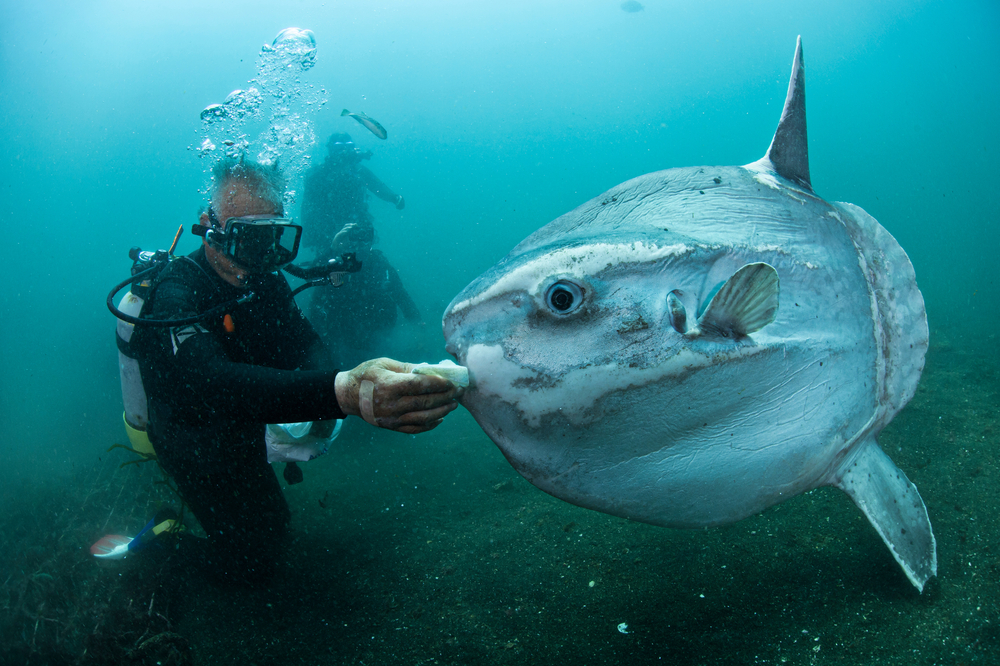
Sunfish are essentially swimming heads weighing up to 5,000 pounds with no real tail, weak swimming abilities, and bodies covered in parasites they can’t remove without help from cleaner fish. They produce 300 million eggs because their survival rate is so catastrophically low, with most offspring dying before maturity. These creatures are so poorly designed they can die from stress, get confused, and strand themselves in currents they can’t escape, and occasionally jump out of the water and land on boats, killing themselves from impact.
Their diet consists mainly of jellyfish, which are nutritionally almost worthless, requiring them to eat enormous quantities just to survive. They have tiny mouths relative to their body size, move slowly despite living in open ocean with fast predators, and their Latin name “Mola Mola” literally means “millstone” because they look like floating rocks. Evolutionarily, everything about sunfish suggests they should have gone extinct millions of years ago—they’re too slow, too stupid, too vulnerable, and too inefficient. Yet they persist in oceans worldwide, somehow successful despite being what appears to be nature’s cruel joke.
2. Koalas – Evolutionary Dead End With Poisonous Food
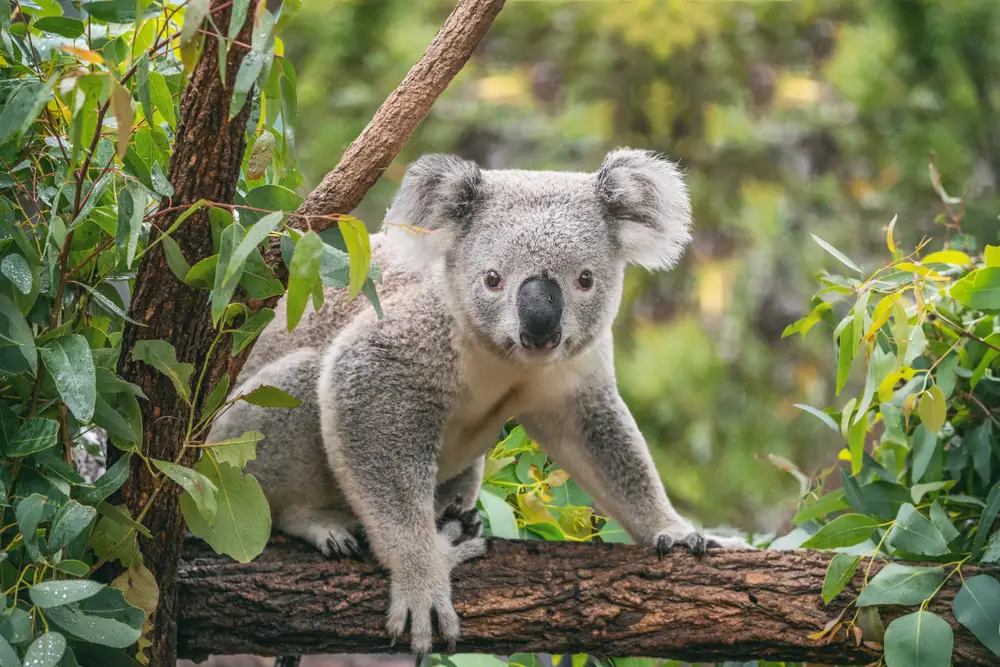
Koalas survive exclusively on eucalyptus leaves that are toxic to almost every other animal, nutritionally deficient, and require specialized digestion that makes koalas lethargic and vulnerable. They sleep 18-22 hours daily because eucalyptus provides so little energy, and their brain-to-body ratio has shrunk over evolutionary time because maintaining brain tissue is too energy-expensive for their terrible diet. Adult koalas have smooth brains with minimal surface folding, indicating reduced cognitive capacity—they’re literally too stupid to recognize eucalyptus leaves as food if they’re not on a branch.
Their specialized diet means habitat loss is catastrophic since they can’t adapt to other food sources, and they suffer from chlamydia at epidemic rates, affecting 50-90% of populations in some areas and causing blindness, infertility, and death. They have one of the lowest genetic diversity levels of any mammal, making them vulnerable to diseases and environmental changes. Koalas represent an evolutionary trap—over-specialization to the point of dysfunction. Any species that can starve to death surrounded by food it doesn’t recognize, has rampant venereal disease, and possesses smooth brains shouldn’t exist, yet koalas persist in Australia despite their comprehensive biological failure.
3. Sloths – Defying Every Survival Principle
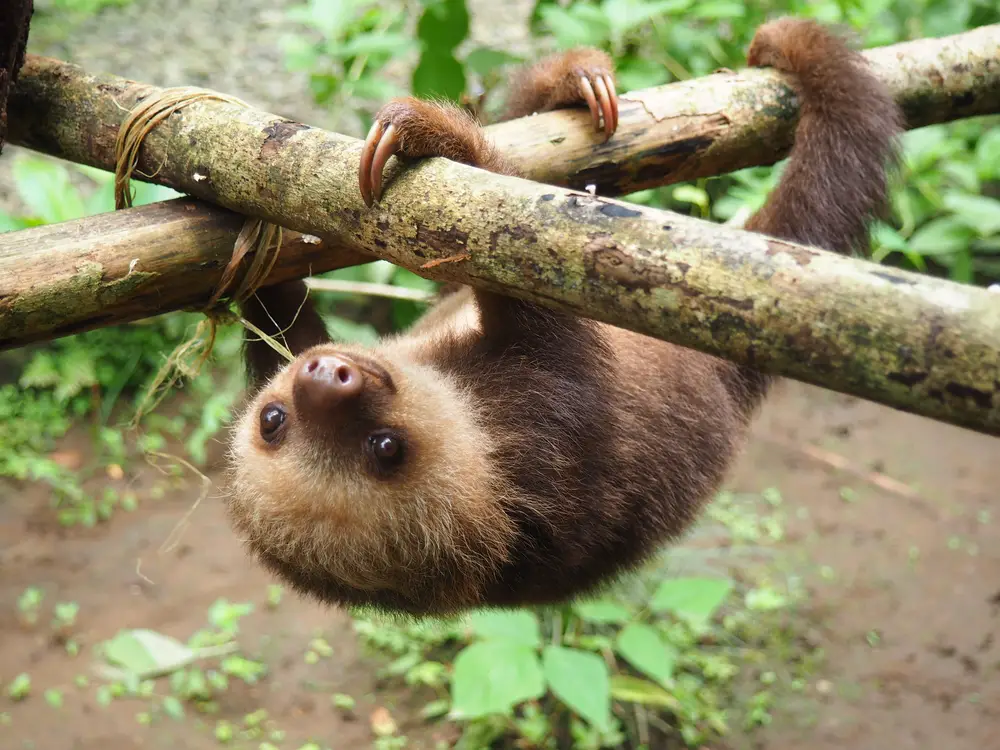
Sloths move so slowly that algae grows on their fur, they can’t regulate body temperature effectively, and they climb down from trees once weekly to defecate—the most dangerous activity they undertake since half of sloth deaths occur during this ground-level vulnerability. Their metabolism is so slow that food can take a month to digest, they can starve to death on a full stomach if temperatures drop too low, and they sometimes mistake their own arms for tree branches and fall to their deaths.
Three-toed sloths have extra neck vertebrae, allowing 270-degree head rotation, which seems useful until you realize it evolved because they’re too slow to move their bodies to look around. They’re terrible swimmers despite spending time in water, have weak immune systems, making them susceptible to disease, and their energy conservation strategy is so extreme that they often don’t have enough energy to escape predators. Everything about sloths screams “evolutionary disaster”—they’re slow in fast-predator environments, weak, nearly blind, and their survival strategy is essentially “hope predators don’t notice me.” Yet sloths have existed for 64 million years, outlasting countless more impressive species.
4. Naked Mole Rats – Cancer-Immune Wrinkly Nightmares
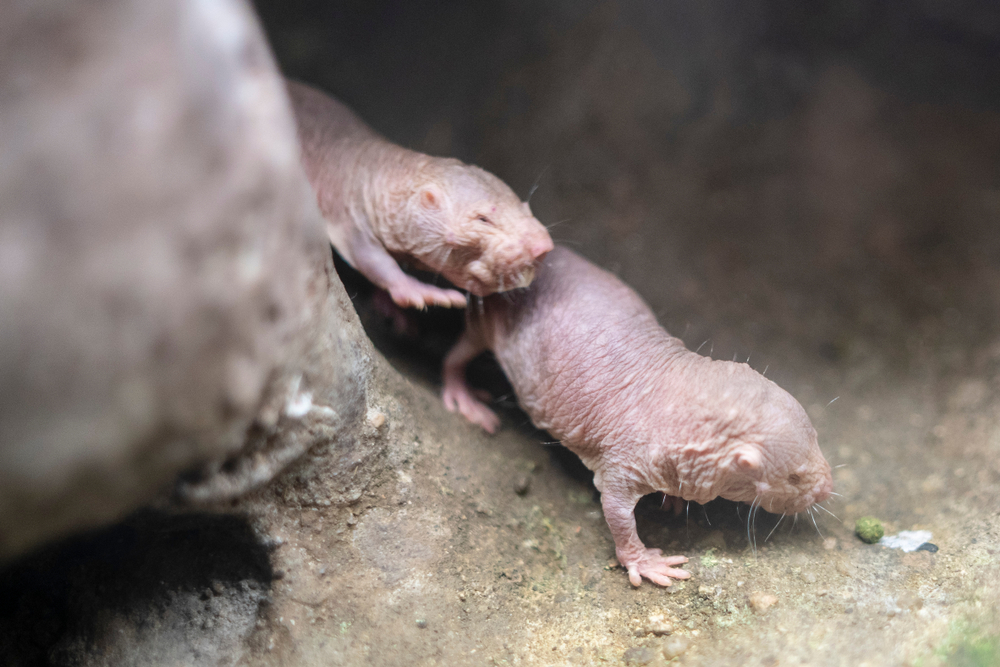
Naked mole rats are cold-blooded mammals—a contradiction since mammals are defined as warm-blooded—living in underground colonies with eusocial structures like insects, which mammals aren’t supposed to have. They’re nearly immune to cancer despite living 30 years (exceptional for rodents), feel almost no pain, can survive 18 minutes without oxygen, and live in carbon dioxide concentrations that would kill other mammals in minutes. Their weirdness extends to having the Queen as the only breeding female, workers who are essentially sterile slaves, and absolutely no fur despite being called “rats.”
Their teeth protrude outside their lips so they can dig without getting dirt in their mouths, they can move their teeth independently like chopsticks, and they’re essentially blind, navigating by touch and smell. Their skin lacks neurotransmitters for certain pain types, making them resistant to acid and capsaicin that torture other animals. Evolutionarily, they’ve broken mammalian rules—cold-blooded, eusocial, pain-resistant, cancer-immune, and looking like ambulatory thumbs. They shouldn’t be viable as a mammalian body plan, yet they thrive in East African underground colonies, having evolved traits that seem to belong to insects, reptiles, and mammals simultaneously.
5. Platypus – The Evolutionary Prank
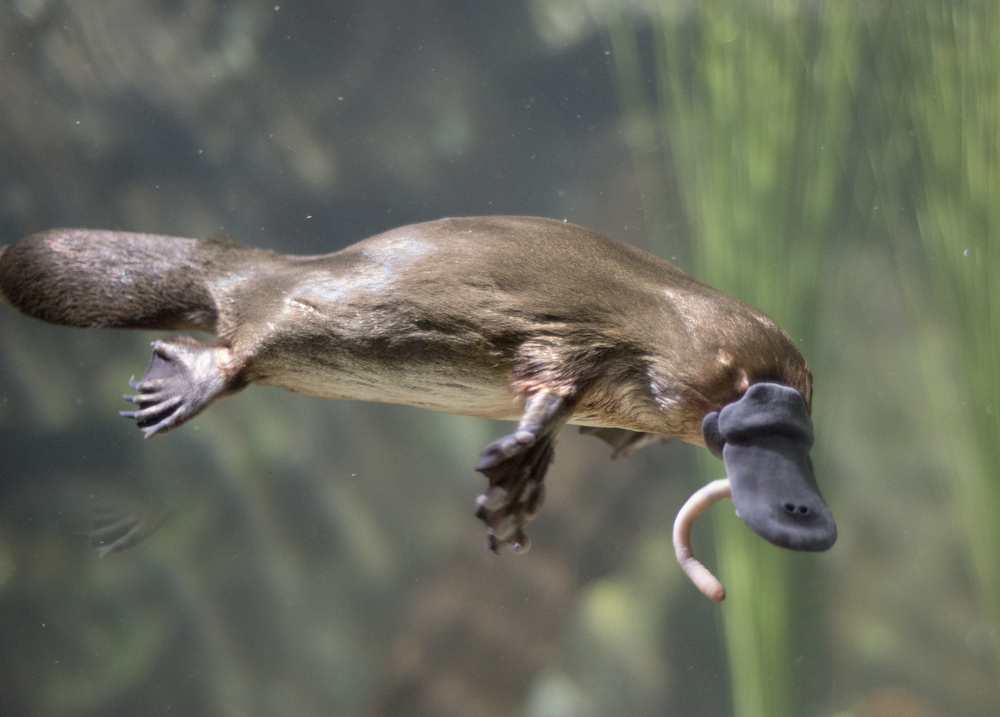
Platypuses are venomous mammals that lay eggs, have electroreception, possess duck bills, beaver tails, otter feet, and when first discovered, scientists thought they were taxidermy hoaxes. They’re one of only five remaining monotremes (egg-laying mammals), representing an evolutionary branch so weird it seems like nature was experimenting with leftover parts. Males have venomous spurs on hind legs that serve no clear purpose beyond territorial disputes, and the venom causes excruciating pain in humans that can last for weeks and doesn’t respond to morphine.
They have no stomach—food passes from the esophagus directly to the intestines—and they detect prey using electroreceptors in their bills that sense muscle contractions, a trait found in sharks but not other mammals. Platypuses have 10 sex chromosomes compared to two in most mammals, and their genome is a bizarre mixture of bird, reptile, and mammalian DNA. They feed underwater but can’t swallow there, storing food in cheek pouches until surfacing. Everything about platypuses suggests they shouldn’t exist—they’re mammals that lay eggs, produce venom, detect electricity, and have duck bills. The fact that they survived while countless more “sensible” species went extinct is evolution’s middle finger to logic.
6. Pandas – The Vegetarian Bears That Can’t Digest Vegetables
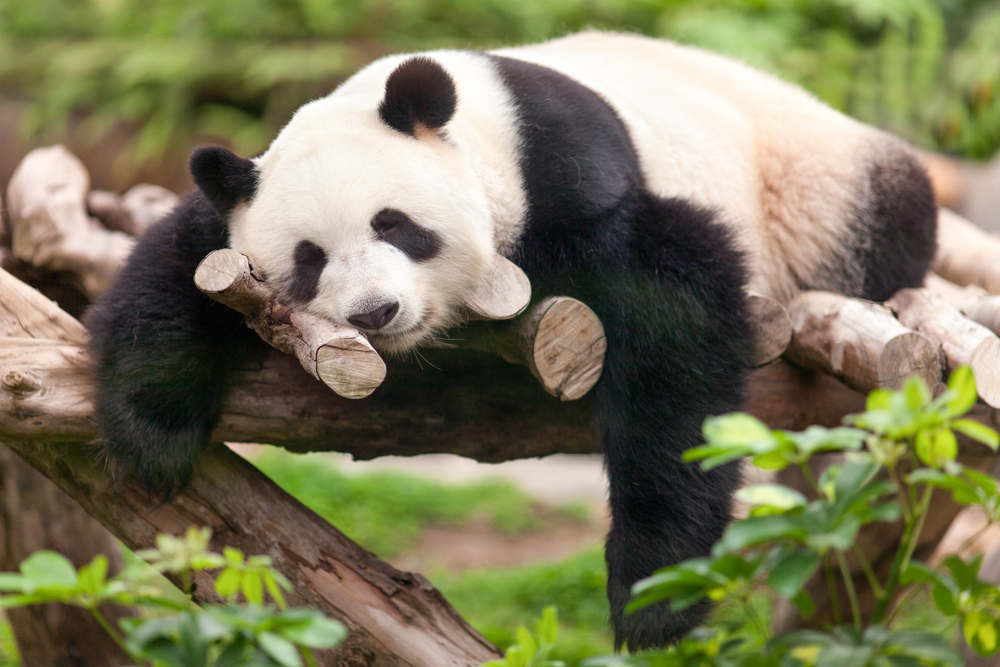
Giant pandas are carnivores with digestive systems designed for meat that exclusively eat bamboo, which they can barely digest, requiring them to eat 26-84 pounds daily and spend 14 hours eating to get minimal nutrition. They have the digestive tract of carnivores—short intestines, no cecum for plant fermentation—making them spectacularly inefficient at processing their chosen food. Their “thumb” is actually an enlarged wrist bone, creating an awkward, inefficient grasping structure for manipulating bamboo.
Pandas are famously uninterested in mating, with females fertile only 24-72 hours annually and males often failing to understand the mechanics of reproduction in captivity. They’re terrible parents, often abandoning one twin if two are born, and cubs are born absurdly underdeveloped—pink, blind, and 1/900th the mother’s weight. Evolutionarily, choosing a diet you can’t digest, being sexually incompetent, and producing offspring you sometimes forget to care for should lead to extinction. Yet pandas persist, saved partly by human intervention and partly by sheer dumb luck that their terrible survival strategy somehow works in limited bamboo forests where nothing wants to compete for nutritionally worthless food.
7. Axolotls – The Salamanders That Never Grow Up
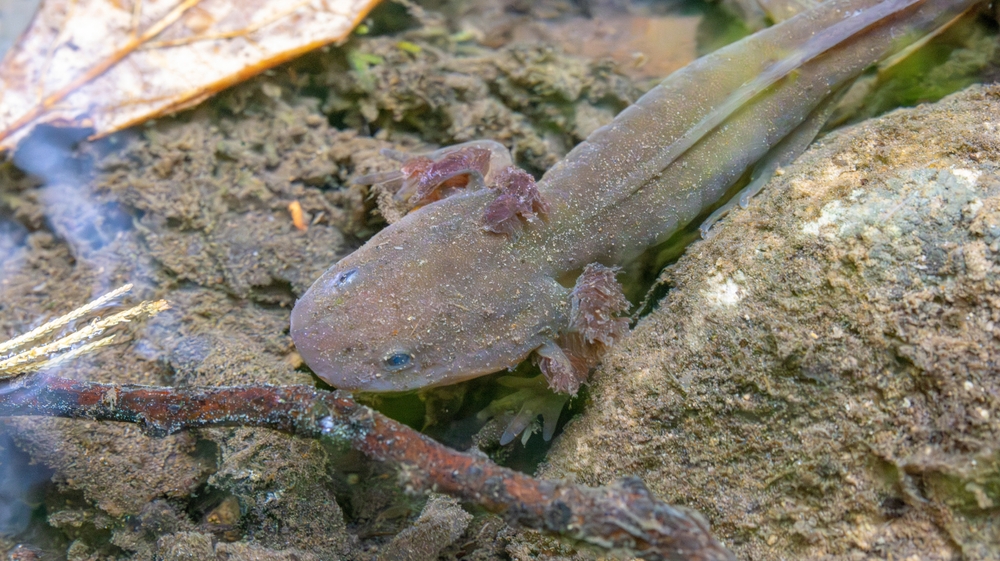
Axolotls reach sexual maturity while remaining in larval form with external gills, exhibiting neoteny—they’re essentially breeding babies that never metamorphose into adult salamanders. They can regenerate entire limbs, spinal cords, hearts, and parts of their brains—capabilities most animals lost evolutionarily because maintaining that regenerative potential is energy-expensive and usually unnecessary. They’re critically endangered in the wild, surviving only in specific Mexican lake systems, yet they’re thriving in captivity and research labs worldwide.
The evolutionary oddity is that they’ve abandoned the normal salamander life cycle, remaining aquatic larvae forever instead of metamorphosing to terrestrial adults. They can be induced to metamorphose with hormone treatments, but this often kills them because they’re not adapted to terrestrial life. They’re essentially locked in an evolutionary holding pattern—too specialized in neoteny to successfully become adult salamanders, but this strategy somehow worked in their specific lake environment. The fact that a species survives by refusing to grow up and maintaining juvenile characteristics into sexual maturity seems like evolutionary failure, yet axolotls have persisted for millions of years.
8. Kakapo – The Flightless Parrot That Forgot How to Bird
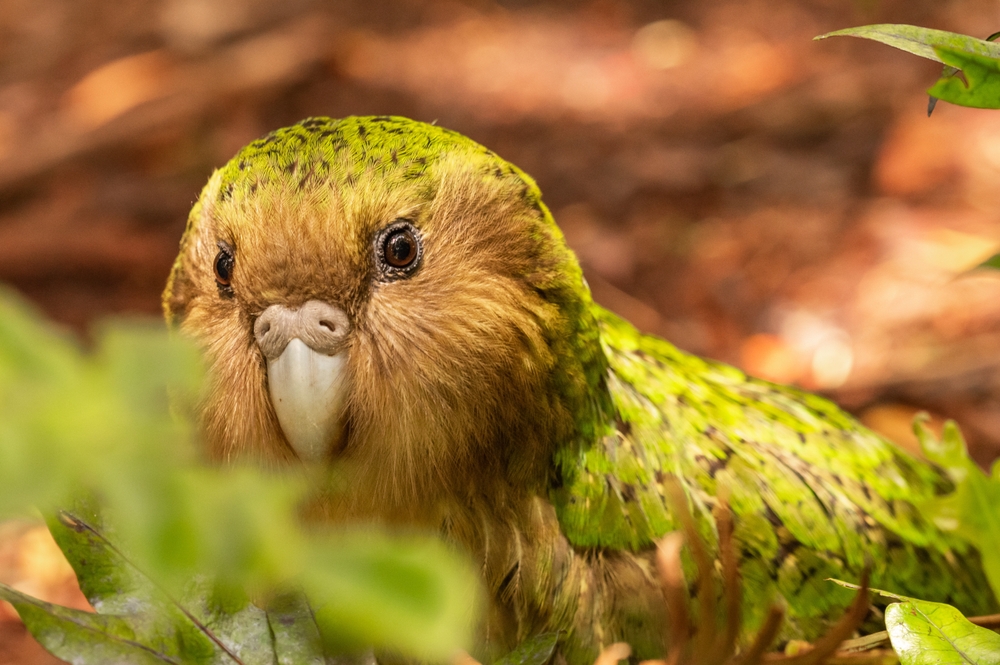
Kakapos are nocturnal, flightless, ground-dwelling parrots that smell like flowers and honey, making them incredibly easy for introduced predators to find and kill. They’re critically endangered with fewer than 250 individuals, largely because their survival strategy evolved in New Zealand’s predator-free environment and completely fails when mammals are introduced. Males compete for mates by making booming calls from bowl-shaped depressions, essentially advertising their locations to predators while expending enormous energy on displays that often attract no females.
They can live 90+ years but breed infrequently, only when specific native trees fruit, which might be every 2-5 years. Females often abandon nests if disturbed, and chicks develop slowly, remaining vulnerable for months. Kakapos lost the ability to fly—their wings are essentially vestigial—removing their primary escape mechanism while retaining parrot behaviors like climbing trees, from which they sometimes fall because they can’t fly. Everything about kakapos suggests species in terminal decline—flightless birds on the ground, strongly scented, slow-breeding, and completely naive to predators. They exist only because of intensive human conservation efforts, representing an evolutionary path that dead-ended when the environment changed.
9. Blobfish – The Depression Incarnate
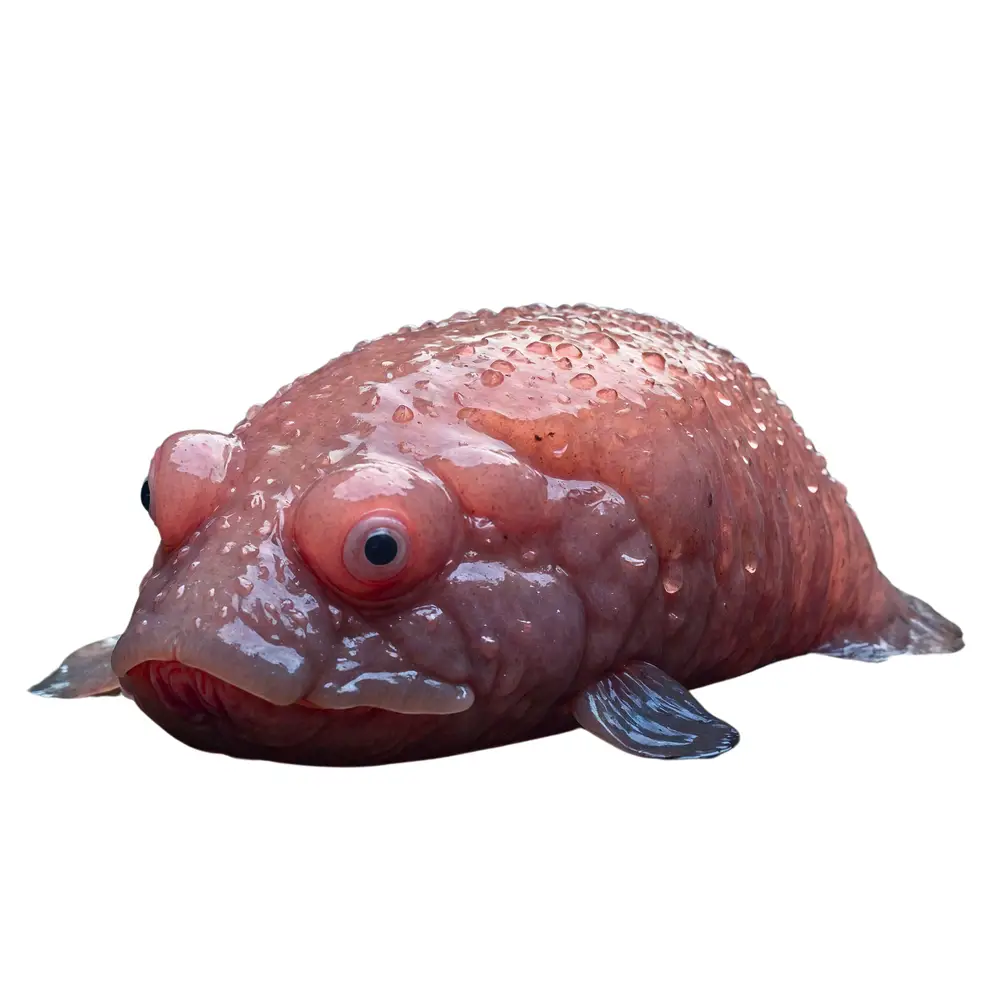
Blobfish live at depths of 2,000-4,000 feet where pressure is 60-120 times higher than at sea level, and their bodies are gelatinous masses with minimal muscle and skeleton, designed to float passively, waiting for food to drift by. They look normal at depth but become the famous, sad, melting appearance when brought to the surface because their bodies are adapted for extreme pressure. Their survival strategy is essentially “be too disgusting and inaccessible for predators to bother,” combined with extreme energy conservation.
The evolutionary puzzle is how a species survives with almost no skeleton, minimal muscle, no swim bladder, and a feeding strategy of “hope food floats past my mouth.” They can’t actively hunt, can barely move, and their reproduction involves simply laying eggs on the ocean floor and hoping some survive. Their blob-like form is so specialized for deep-sea pressure that they can’t survive in any other environment, making them evolutionarily trapped in one of Earth’s most extreme habitats. The fact that being a passive, gelatinous blob successfully kept this species alive suggests survival strategies can be far more passive and pathetic than competition and fitness narratives suggest.
10. Aye-Aye – The Nightmare Primate With a Wire Finger
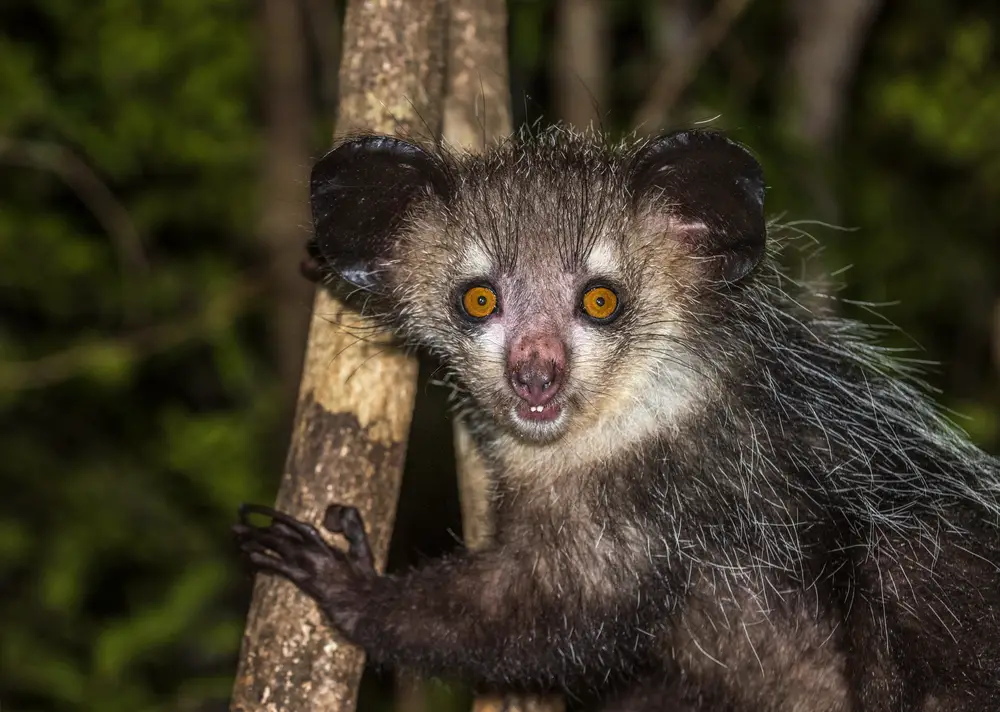
Aye-ayes are lemurs with rodent-like continuously growing incisors, bat-like ears, and a skeletal middle finger used to tap trees and extract grubs—a combination of features that seems designed by committee using parts from different species. Their specialized third finger is absurdly long and thin, moved by muscles independent from other fingers, and used to tap trees up to eight times per second while listening for hollow chambers containing larvae. They then gnaw through wood with rodent teeth and extract grubs with the wire-like finger.
Evolutionarily, developing rodent teeth independently (convergent evolution) seems inefficient when you’re a primate, and the hyper-specialized finger limits other manipulative abilities. Aye-ayes are considered bad omens in Madagascar and are often killed on sight, creating human-caused selection pressure against their survival. Their nocturnal lifestyle, creepy appearance, and unusual feeding strategy make them vulnerable, and their low population numbers and habitat loss suggest this evolutionary path may be failing. Yet aye-ayes persist, filling an ecological niche so specific—extracting wood-boring larvae using echolocation and a skeleton finger—that nothing else does it, proving that evolution sometimes rewards the weird and specific over the generally competent.
11. Hagfish – The Slime Eel Without a Jaw
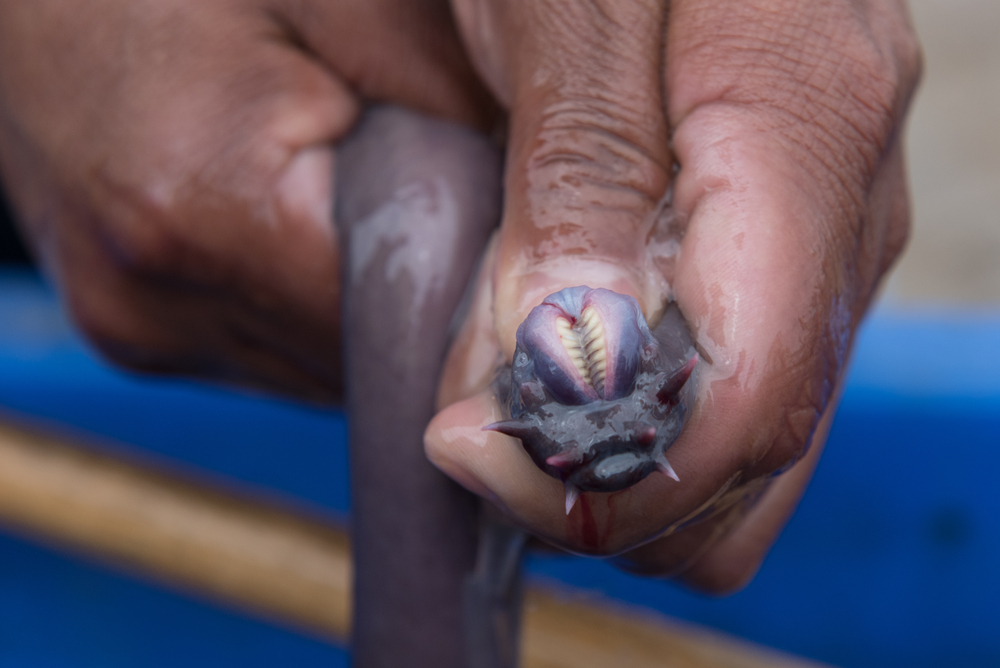
Hagfish are jawless fish that have remained essentially unchanged for 300 million years, producing absurd amounts of slime when threatened—one hagfish can turn a 5-gallon bucket of water into slime in minutes. They have no true eyes, just light-sensing spots; they lack scales, jaws, and stomach; they tie themselves in knots to tear flesh from carcasses; and they can absorb nutrients through their skin. Their slime expands 10,000 times its original volume when hydrated and can suffocate predators, but it can also suffocate the hagfish itself if they can’t escape their own slime.
Their survival strategy is to burrow into dead or dying animals on the ocean floor and eat from the inside out, sometimes forming writhing masses of hagfish inside whale carcasses. They have a minimal skeleton—mostly cartilage—and their heart is a simple tube rather than a chambered organ. They can survive months without food and tolerate low oxygen environments that kill most fish. Evolutionarily, being a jawless slime tube that occasionally suffocates itself seems like poor design, yet hagfish have outlasted countless more advanced species. They represent a body plan so ancient and strange it predates most modern fish characteristics, yet it works well enough to persist for hundreds of millions of years.
12. Mantis Shrimp – The Colorblind Creature With the Best Eyes
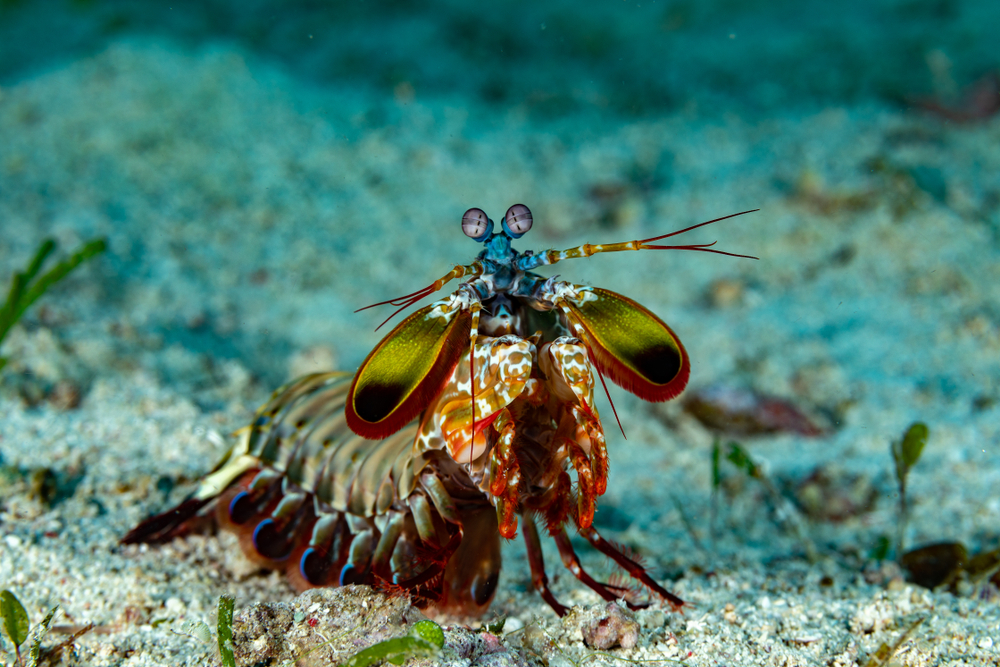
Mantis shrimp have the most complex eyes in the animal kingdom with 16 color receptors (humans have three) and can see polarized and ultraviolet light, yet research suggests they might be functionally colorblind and terrible at actually differentiating colors. Their club-like appendages strike with the force of a .22 caliber bullet, creating cavitation bubbles that produce light and heat, but this weapon frequently damages the mantis shrimp itself, requiring constant repair and regrowth. They’re aggressive, territorial, and often attack their own reflections.
The evolutionary puzzle is why develop the most sophisticated eyes in nature if you’re going to be bad at color discrimination, and why evolve a weapon so powerful it damages you with every use. Mantis shrimp also have three separate regions in their eyes, essentially seeing with six pupils simultaneously, creating visual processing complexity that seems unnecessary for a crustacean. They’re successful predators despite these apparent inefficiencies, suggesting that evolution doesn’t always optimize perfectly but instead creates weird, overcomplicated solutions that work just well enough. The mantis shrimp is nature’s example of extreme over-engineering—absurdly complex eyes they barely use properly and weapons that hurt themselves.
13. Hoatzin – The Bird With Cow Stomachs and Baby Claws
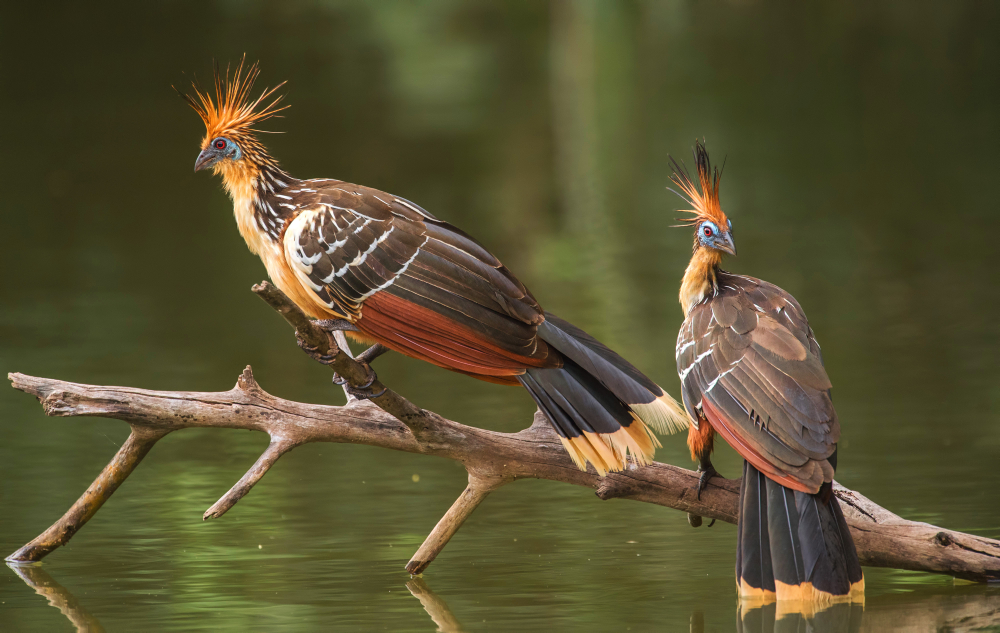
Hoatzins are South American birds that digest food like cows, using foregut fermentation that produces such strong odors they’re called “stinkbirds.” Their chicks are born with claws on their wings that they use to climb trees, dropping into water and swimming to escape predators before climbing back up—essentially infant birds with functional hands on their wings. Adults are such poor fliers due to their fermentation digestive system that they’re clumsy and vulnerable, yet they’ve survived in this form for millions of years.
The evolutionary oddity is that they’re birds with mammalian digestive systems, losing flight efficiency for the ability to digest leaves like ungulates. Their crop is so enlarged for fermentation that it displaces the keel and flight muscles, making them the only bird whose flight is significantly impaired by their digestive strategy. The baby wing claws disappear as chicks mature, representing a vestigial trait from their dinosaur ancestors that somehow remained useful enough to persist. Hoatzins are evolutionary misfits that combined bird, dinosaur, and cow traits into a package that smells terrible, flies poorly, and somehow works well enough to persist in Amazon and Orinoco basins.
14. Leafy Sea Dragon – The Worst Camouflaged Standout
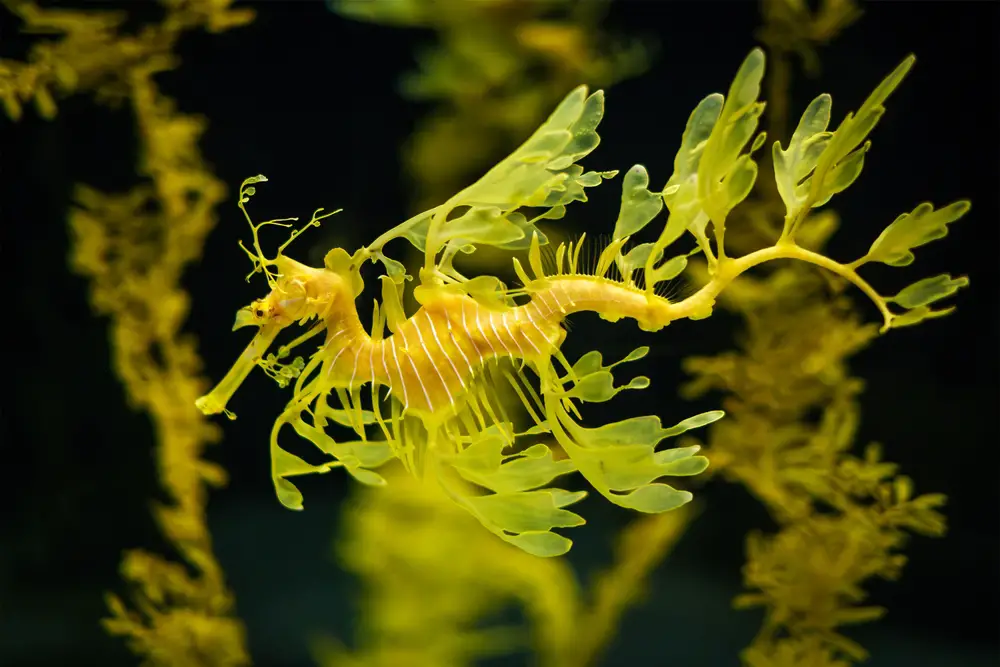
Leafy sea dragons are covered in ornate leaf-like appendages that make them look like floating seaweed, perfect camouflage except they’re bright yellow, orange, or purple—colors that make them stand out dramatically against actual seaweed. They’re related to seahorses and equally terrible swimmers, propelled by nearly-transparent fins that move so rapidly they’re almost invisible, creating the appearance of floating without propulsion. Males carry eggs on their tails and can die from the stress of pregnancy.
The evolutionary confusion is why develop elaborate leaf-like camouflage and then color it in ways that defeat the entire purpose of looking like vegetation. They eat constantly because they have no teeth or stomach, just a snout that sucks up tiny crustaceans, and their ornate appendages seem to hinder swimming more than help. They’re found only in a narrow range off southern Australia’s coast, suggesting their highly specialized form works only in extremely specific conditions. Leafy sea dragons represent decoration taken to dysfunctional extremes—so focused on looking interesting that they sacrificed swimming ability, defensive capabilities, and effective camouflage.
15. Slow Loris – The Cute Venomous Death Ball
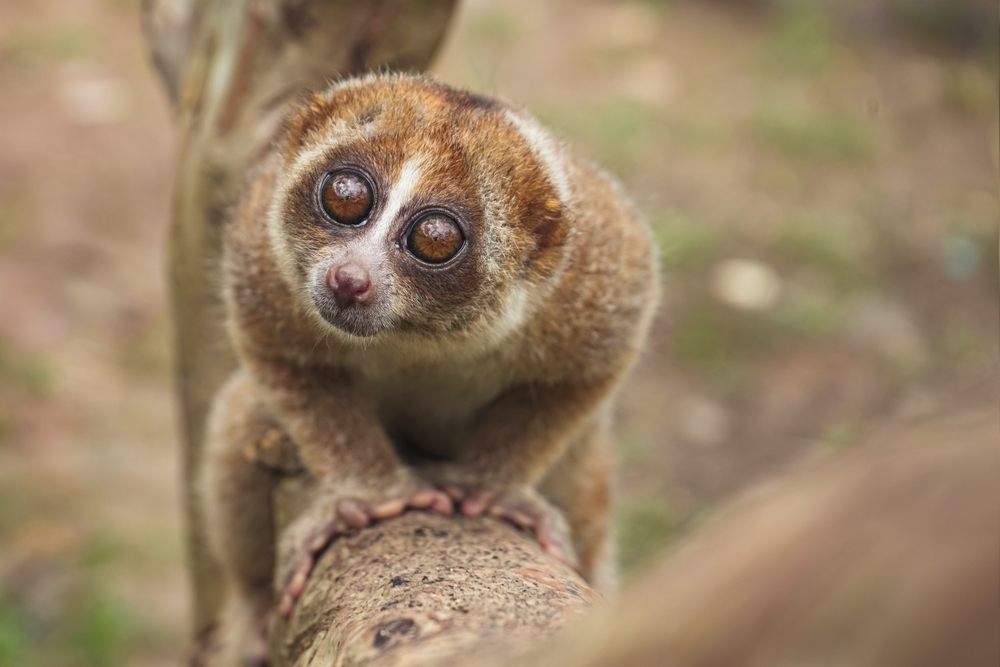
Slow lorises are the only venomous primates, producing toxin in glands near their elbows that they lick and mix with saliva before biting, but the venom doesn’t kill predators—it just causes painful inflammation and allergic reactions that seem evolutionarily pointless. They move incredibly slowly, are nearly blind, and their defense strategy when threatened is to raise their arms and freeze, relying on venom they barely use effectively. Their large eyes and cute appearance have made them victims of illegal pet trade, where their teeth are often removed with pliers, causing infection and death.
The evolutionary puzzle is why be venomous if you’re too slow and docile to effectively use it, why have massive eyes if you’re essentially blind, and why exist as a slow-moving primate in forests filled with fast predators? They’re nocturnal, solitary, and eat mostly tree sap and insects, requiring them to move through canopies where falls are fatal despite their slow climbing. The combination of venom, slowness, poor vision, and vulnerability seems like accumulated evolutionary mistakes, yet slow lorises have persisted across Southeast Asia. They prove that sometimes survival doesn’t require being fast, strong, or smart—just weird and toxic enough that predators find alternatives less confusing.