
To most Americans, dingoes sound like Australia’s version of coyotes—wild dogs that mostly keep to themselves and occasionally bother livestock. That comparison feels intuitive, but it’s misleading. Dingoes occupy a very different ecological role, behave differently around humans, and pose risks that don’t line up neatly with what Americans expect from North American wildlife. The danger isn’t that dingoes are monsters—it’s that people underestimate them.
1. Dingoes Are Apex Predators
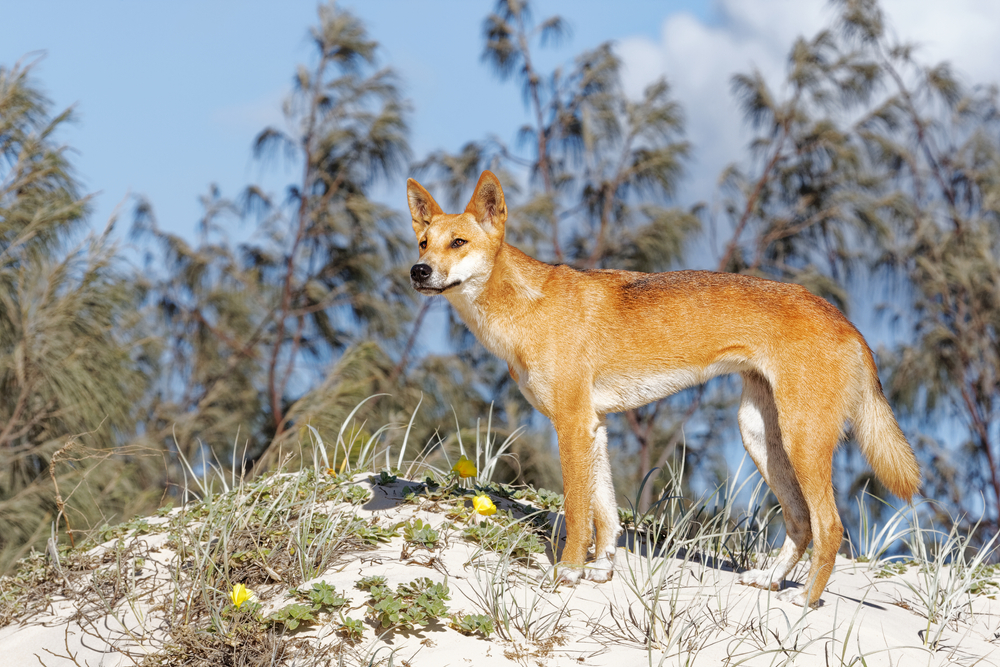
Coyotes survive largely by adapting to human environments, feeding on small animals, trash, and whatever they can safely access. Dingoes, by contrast, function as apex predators across much of Australia, meaning they actively hunt large prey and shape entire ecosystems.
According to research from the Australian government’s Department of Agriculture and CSIRO, dingoes regulate populations of kangaroos, wallabies, and even invasive species. That role requires confidence, coordination, and a willingness to confront animals larger than themselves. Apex predators behave very differently from scavengers, especially when assessing risk.
2. They Don’t Have The Same Fear Of Humans
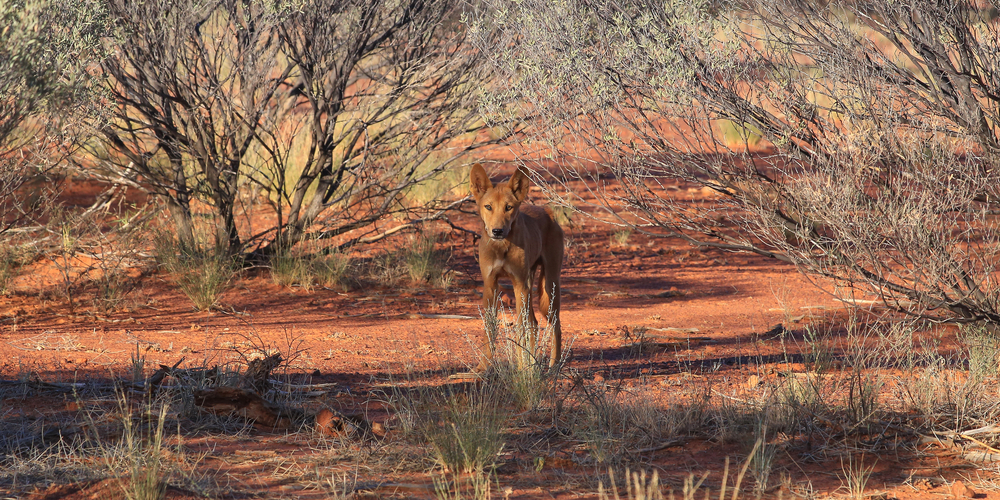
Coyotes in the U.S. have spent decades being hunted, trapped, and pushed out of human spaces. That pressure has reinforced avoidance behaviors. Dingoes haven’t experienced the same level of sustained human persecution across their range.
As a result, dingoes are more likely to observe humans closely rather than flee automatically. That curiosity can escalate into boundary-testing behavior, especially in tourist-heavy areas where people unintentionally reinforce proximity.
3. They’re More Willing To Assess Humans As Prey
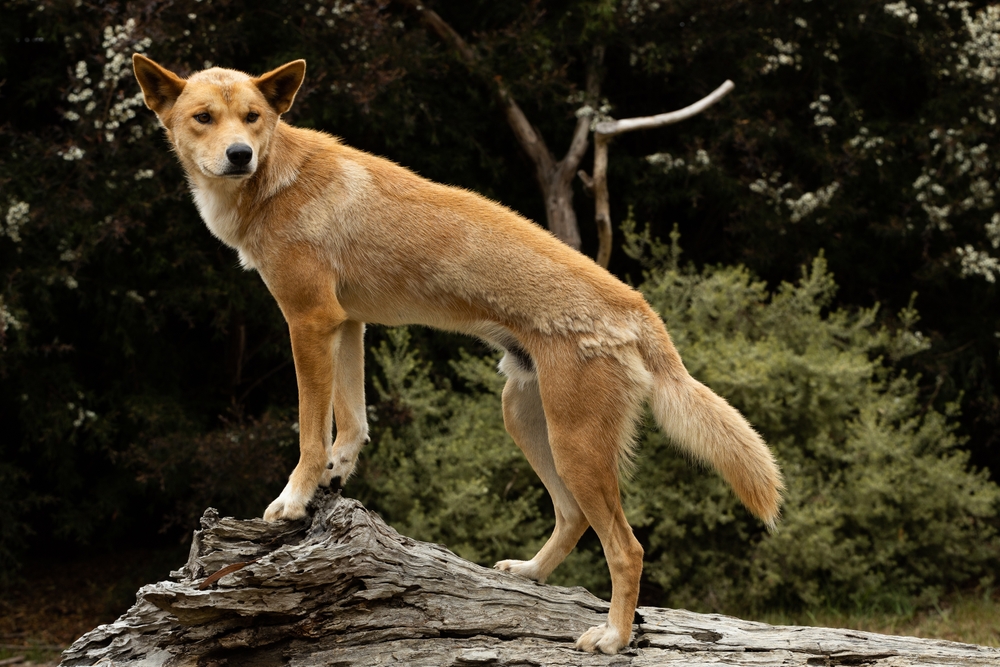
One of the most uncomfortable differences is how dingoes evaluate risk. Coyotes generally see adult humans as threats, not targets. Dingoes, particularly in packs, are more likely to assess humans—especially children—as potential prey under certain conditions.
This isn’t speculation. Investigations into fatal and near-fatal dingo attacks, including coronial inquests following incidents on K’gari (Fraser Island), found patterns of stalking behavior, testing movements, and escalation consistent with predatory assessment. Australian wildlife authorities have repeatedly warned that treating dingoes like timid wild dogs leads to dangerous misjudgments.
4. They Hunt Cooperatively More Often Than Coyotes
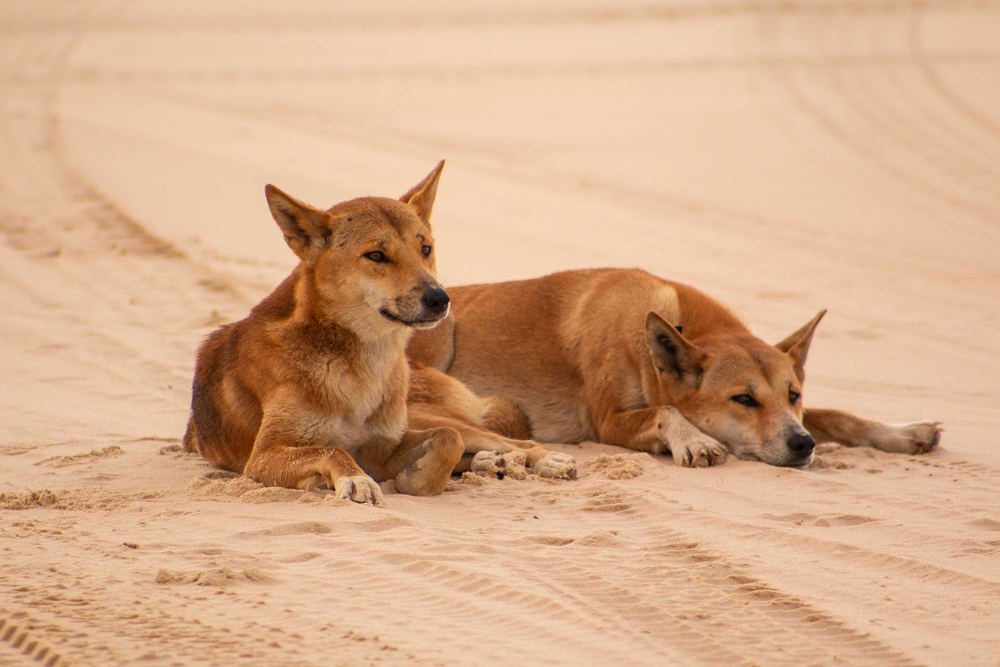
While coyotes can hunt in pairs or family groups, dingoes regularly hunt in coordinated packs. That cooperation allows them to take down larger animals and makes their behavior more strategic.
In human-adjacent areas, pack dynamics can amplify risk. A single dingo lingering near people may not be the full picture—others may be nearby, observing. This doesn’t mean attacks are inevitable, but it does mean the margin for error is smaller than Americans tend to assume.
5. They Learn From Human Interaction Faster Than Coyotes
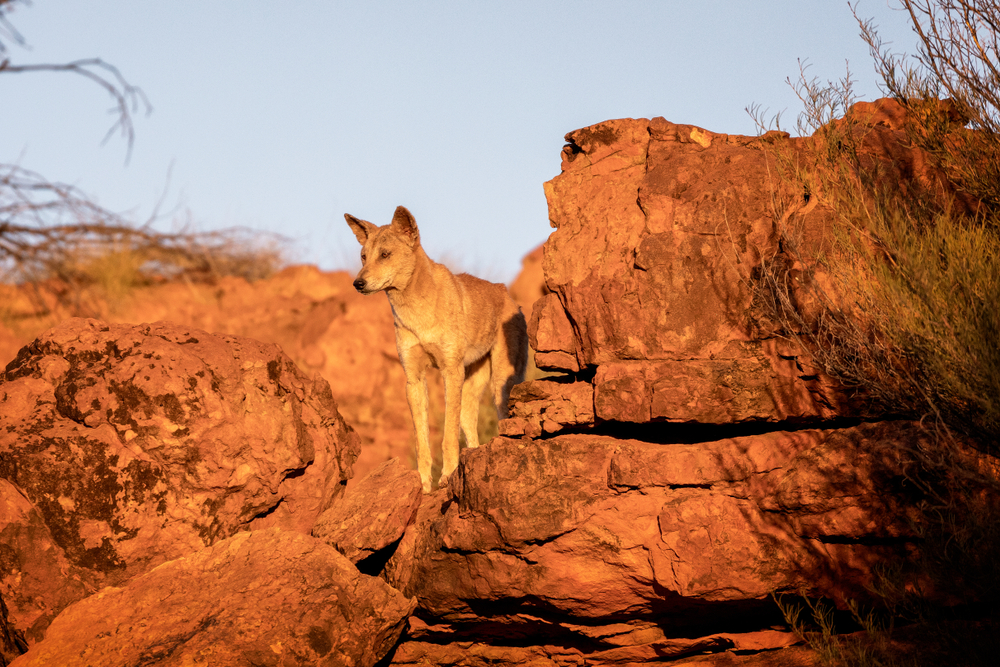
Dingoes are highly intelligent and quick to adapt when human behavior creates opportunity. When people feed them directly or indirectly—through trash, food scraps, or campsites—dingoes don’t just lose fear. They actively learn patterns: when people appear, where food is accessible, and which behaviors produce rewards.
Australian National Parks research has shown that dingoes in tourist areas rapidly alter their behavior in response to human activity, becoming more assertive and territorial. This learning curve is much steeper than what’s typically observed in coyotes, which tend to remain opportunistic rather than strategic. Once dingoes associate humans with resources, reversing that conditioning becomes extremely difficult.
6. They’re More Likely To Target Children
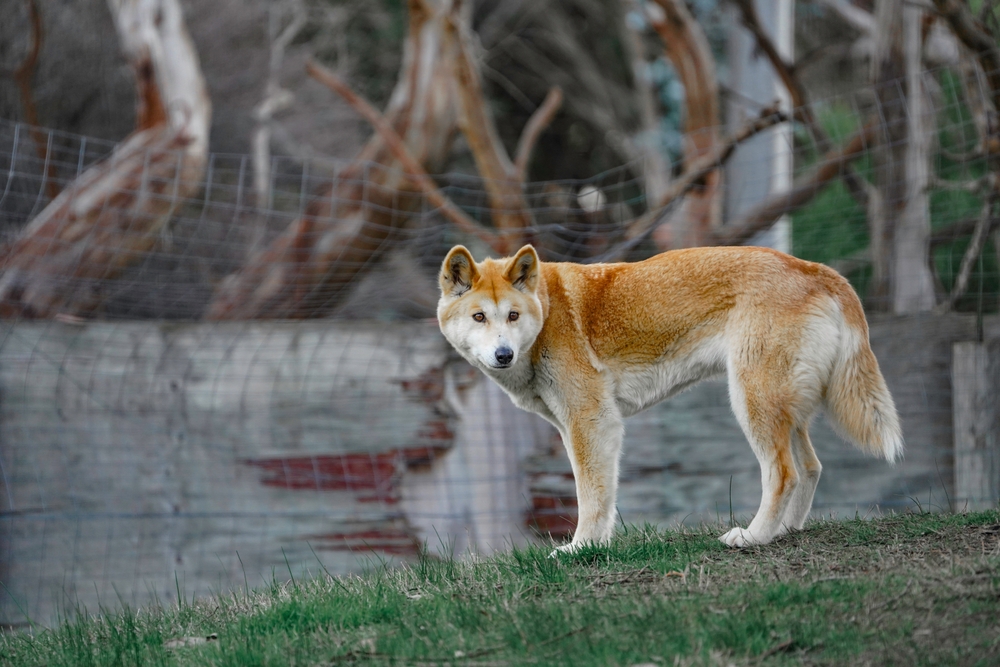
This is one of the most unsettling distinctions. Coyotes very rarely target humans, and when they do, it’s usually linked to extreme habituation or disease. Dingoes, however, have repeatedly targeted children in documented incidents.
Children are smaller, less predictable in movement, and more likely to trigger prey-recognition behaviors. In several investigated cases, dingoes were observed circling, following, or isolating children before escalating. This doesn’t make dingoes uniquely evil—it makes them more willing to apply predatory logic to humans under certain conditions.
7. They Have A Long History Of Fatal Human Attacks
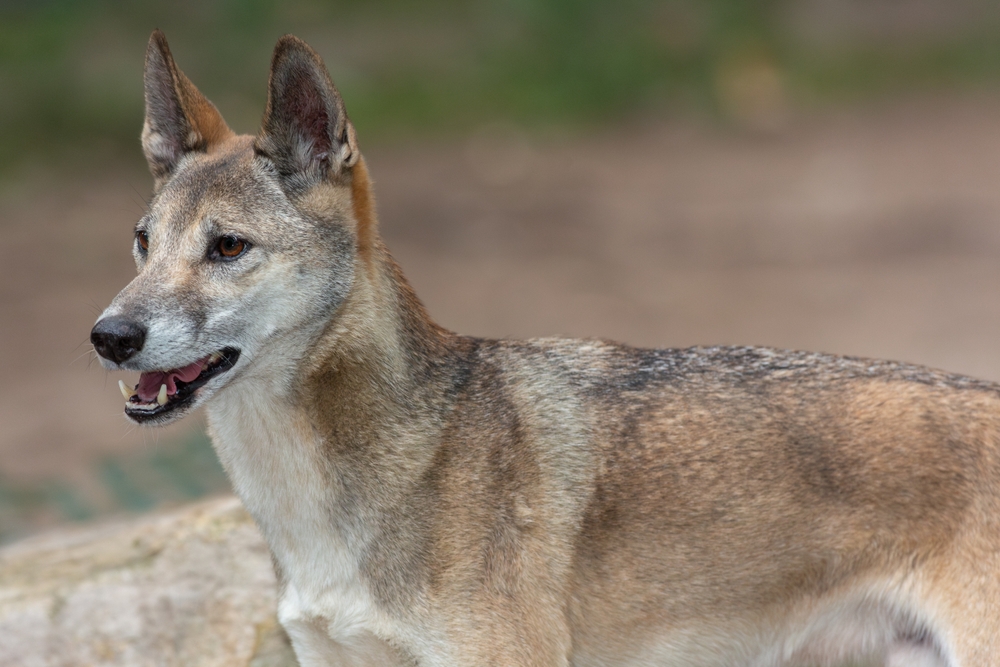
While fatal coyote attacks are extraordinarily rare in North America, Australia has a documented history of dingo-related deaths and serious injuries. The most well-known case—the death of Azaria Chamberlain in 1980—was initially dismissed because the public couldn’t believe a dingo would kill a human infant.
Later investigations and forensic evidence confirmed that a dingo attack was responsible. Since then, additional fatal and near-fatal incidents have been recorded, particularly in areas where dingoes became habituated to humans. Australian coronial reports and wildlife authorities consistently emphasize that underestimating dingo behavior has contributed to these outcomes.
8. They Test Boundaries Instead Of Avoiding Conflict
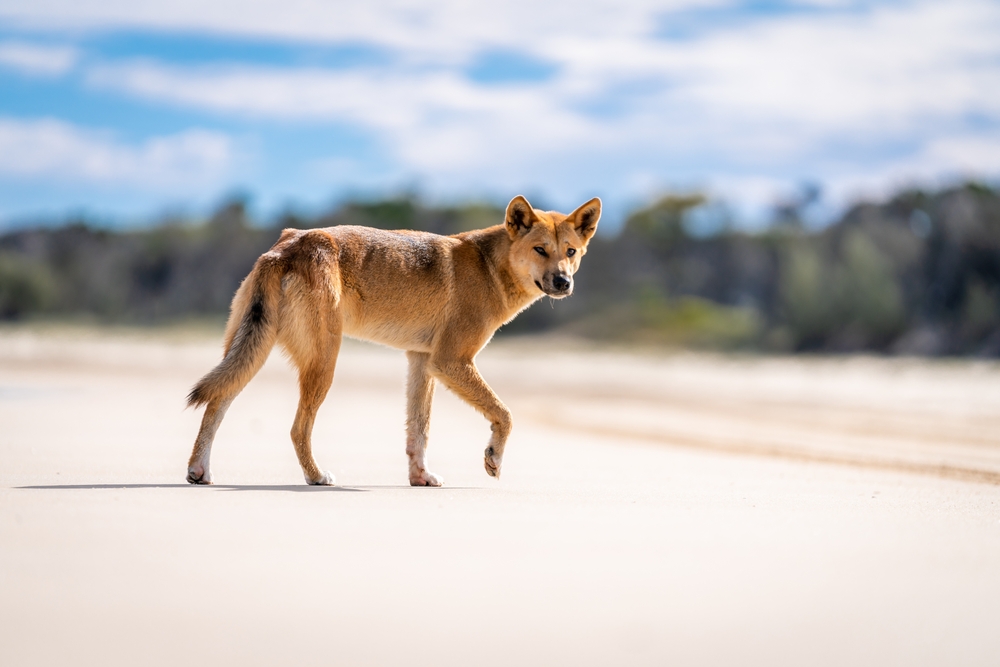
Coyotes tend to flee when confronted. Dingoes are more likely to stand their ground, observe, and test responses. This can look like lingering, following at a distance, or approaching and retreating repeatedly.
To humans unfamiliar with predator behavior, this can seem harmless or even playful. In reality, it’s often an assessment. Dingoes are gathering information about size, reactions, and vulnerability. That difference in interaction style makes casual encounters far riskier than people realize.
9. They Defend Territory More Aggressively
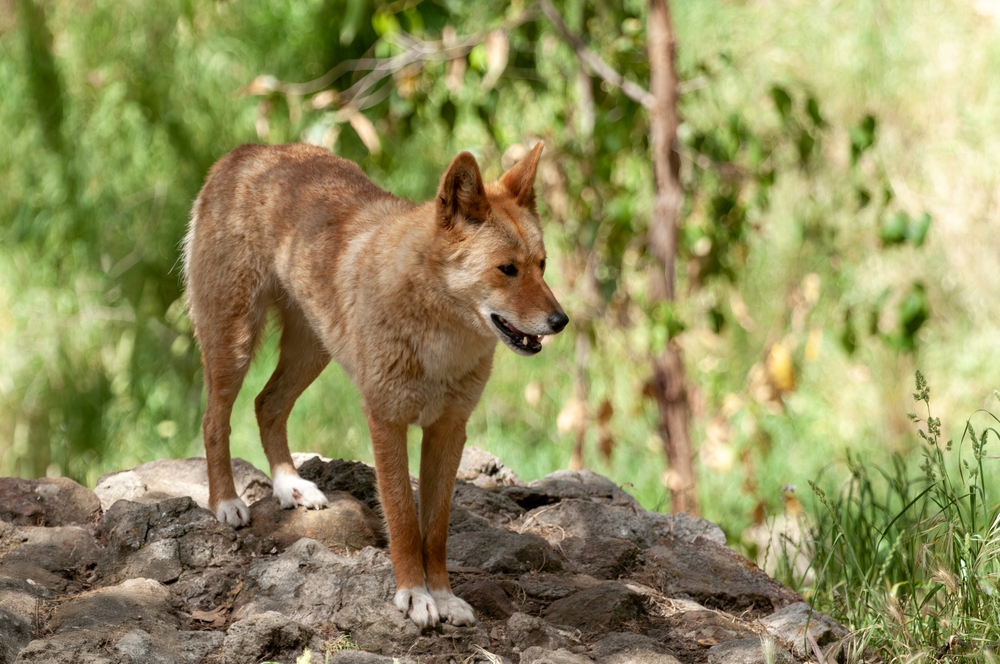
Coyotes often overlap territories and avoid direct conflict when possible. Dingoes, especially dominant breeding pairs, are more territorial and more willing to defend space.
In national parks and coastal regions, this can put hikers, campers, and families unknowingly inside defended areas. A dingo behaving aggressively may not be reacting to food at all—it may be responding to perceived intrusion, which changes how quickly situations escalate.
10. They’re Physically Built For Endurance Hunting
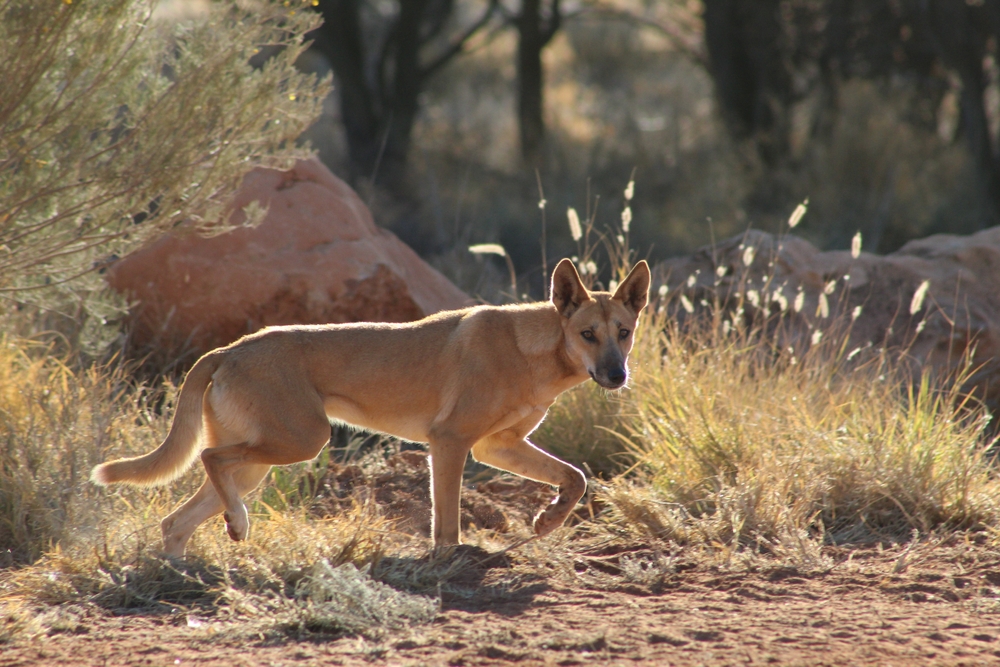
Dingoes have leaner frames, longer legs, and greater stamina than coyotes. They’re built to pursue prey over distance rather than relying on quick ambush or scavenging.
This endurance capability means they don’t need to rush decisions. They can follow, observe, and wait. From a human safety perspective, that patience makes misjudgment more dangerous than with animals that rely on quick strikes or retreat quickly when challenged.
11. They Exist In Ecosystems With Fewer Human Deterrents

Coyotes live in environments saturated with roads, fences, noise, and human pressure. Dingoes often inhabit open landscapes where human deterrence is inconsistent or absent.
That environmental difference shapes behavior. Dingoes aren’t constantly reinforced to avoid people, vehicles, or camps. In some regions, they are the dominant land predator, not a marginal survivor navigating human sprawl.
12. Americans Project Familiar Logic Onto An Unfamiliar Predator
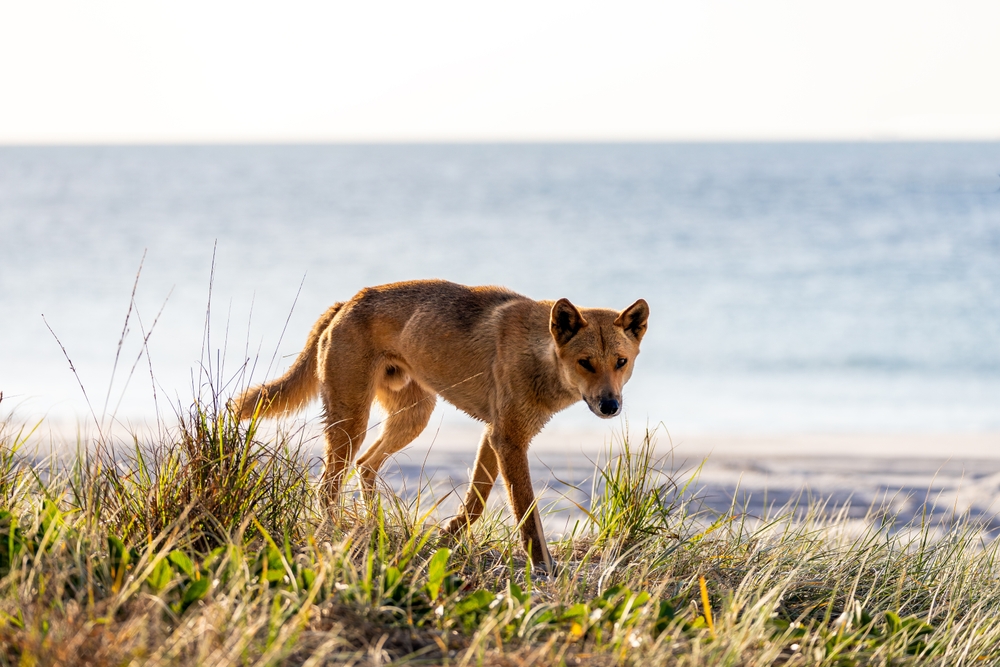
The most dangerous factor isn’t the dingo itself—it’s the assumption that it behaves like animals Americans already understand. Coyotes, wolves, and foxes come with mental models shaped by decades of public messaging.
Dingoes don’t fit neatly into those categories. Treating them like shy wild dogs leads people to misread warning signs, dismiss early aggression, and stay too long in risky situations. The problem isn’t fear—it’s false familiarity.