
Dogs don’t “guess” when you’re about to walk through the door—they predict it. Long before keys turn or locks click, most dogs are already alert, positioned, and emotionally primed for your return. What feels like intuition is actually a layered mix of sensory awareness, pattern recognition, and emotional memory. Here’s how dogs consistently know you’re coming home before you even realize it yourself.
1. They Track Time Through Patterns
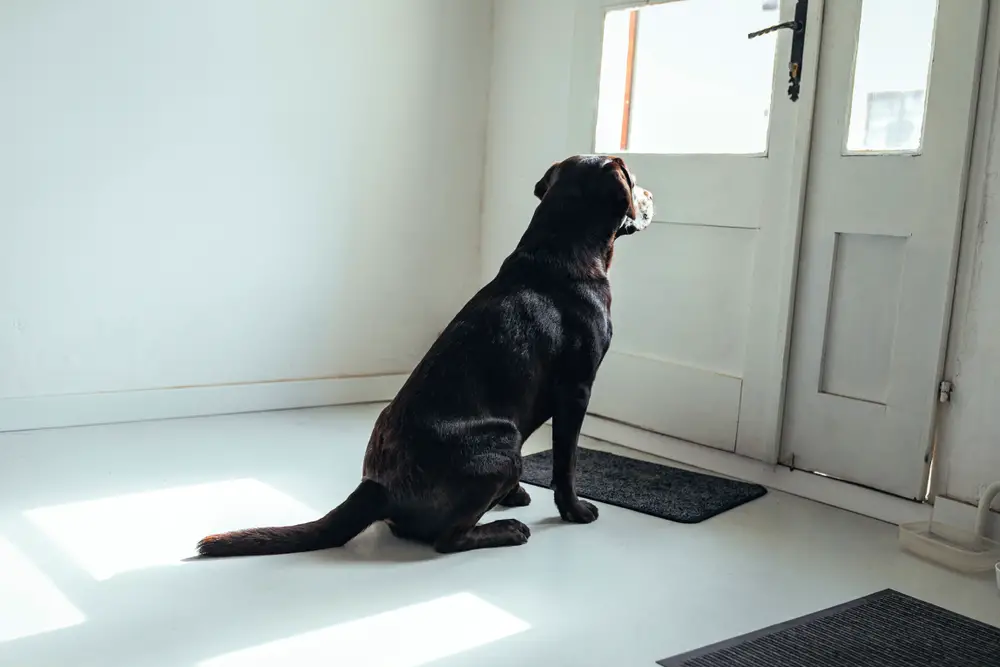
Dogs don’t experience time abstractly, but they experience it through patterns that repeat every single day. Feeding schedules, walk times, work departures, and evening routines form a predictable rhythm in their nervous system. When enough cues align, your return becomes statistically inevitable in their internal model of the day.
Canine cognition research shows dogs rely heavily on associative learning rather than linear timekeeping. Your return is one more expected event in a long chain of sensory signals. The closer the day gets to its familiar endpoint, the stronger their anticipation becomes. They aren’t guessing—they’re following a learned timeline.
2. They Hear Every Little Sound
Dogs hear frequencies humans miss entirely, including distant traffic shifts, elevators, footsteps, and engine patterns. These background sounds change predictably depending on the time of day. When familiar acoustic patterns emerge, dogs associate them with your imminent arrival.
A 2022 study in Animal Cognition found that dogs can distinguish between highly similar environmental sound patterns tied to specific people. Your commute creates a recognizable auditory fingerprint. Dogs don’t need to hear you directly—they hear the world preparing for you. That awareness flips a mental switch.
3. They Smell You Long Before You Arrive

Your scent doesn’t stop at your body—it travels through air currents and settles throughout the environment. Dogs detect changes in scent concentration that signal your proximity. This happens well before you reach the front door.
Research into canine olfaction confirms dogs can detect individual human scents over surprisingly long distances. As your scent grows stronger, anticipation builds. Their reaction isn’t sudden—it’s cumulative. By the time you arrive, they’ve already “felt” you approaching.
4. They Monitor Energy Shifts

Dogs are highly sensitive to changes in household atmosphere, even when no one else is home. Sounds outside, air movement, and vibration patterns subtly shift as people return to populated areas. Dogs register these changes immediately.
Animal behavior research shows dogs respond strongly to environmental transitions, not isolated events. When the house begins to “wake up” externally, dogs associate that shift with your return. Their body language changes first. Their behavior follows.
5. They Know How You Move
Every person has a distinct way of walking, stopping, and moving through space. Dogs memorize these patterns through repeated exposure. Even from a distance, familiar movement rhythms stand out.
Studies on canine perception show that dogs can identify individuals by gait alone. Your steps don’t sound like anyone else’s. Once that pattern registers, excitement begins. Recognition precedes confirmation.
6. They Listen For Your Voice

Dogs recognize your voice instantly, even at low volume or from a distance. Voices travel differently than footsteps and often reach dogs first. A single familiar tone can trigger anticipation.
A 2023 study on auditory recognition in dogs showed they process familiar voices faster than unfamiliar ones. Recognition activates emotional memory. That emotional shift changes behavior immediately. Waiting begins.
7. They Obsess At The Door
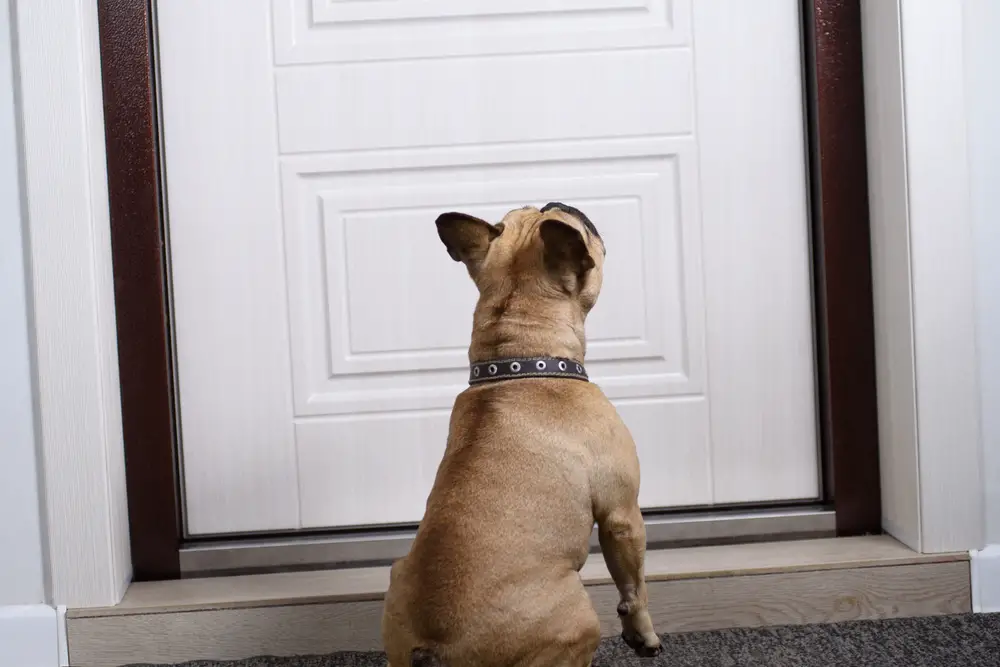
Doors become emotional focal points for dogs. As expectation rises, attention narrows. Dogs don’t stare randomly—they wait deliberately.
Behavioral observation studies show that dogs increase door-focused attention as expected arrival times approach. This isn’t anxiety—it’s preparation. Their nervous system is aligning with the prediction. Stillness becomes readiness.
8. They Can Emotionally Trace You

Dogs pick up on emotional traces left in a space after you leave. Your stress, calm, or excitement lingers subtly in the environment. Changes in that emotional “tone” signal transitions.
Human-animal interaction research suggests dogs are highly sensitive to emotional scent markers. When those markers shift, anticipation grows. Your presence feels close. The emotional atmosphere changes first.
9. They Learn Through Repetition
Dogs don’t rely on instinct alone—they rely on learned outcomes. The more consistently you return at similar times, the more accurate their prediction becomes. Pattern replaces uncertainty.
Learning theory research confirms that dogs excel at predictive modeling through repetition. Each successful prediction reinforces the behavior. Confidence grows over time. Accuracy sharpens naturally.
10. They Pay Attention To The Other Pets

Dogs pay close attention to the behavior of other pets. When another animal becomes alert, dogs follow suit. Anticipation spreads socially.
Social learning research shows that dogs mimic emotional cues from other animals. A single alert can ripple through the household. Collective expectation builds. Readiness multiplies.
11. They Can Detect The Car

Buses, cars, elevators, and foot traffic follow daily rhythms. Dogs learn which sounds matter and which don’t. Familiar sequences trigger recognition.
Environmental pattern studies show animals detect consistent transportation cues. Your arrival fits into that rhythm. The environment tells the story before you do. Dogs listen carefully.
12. They Lean Into Memory

Dogs rely on accumulated experience, not hope or instinctive guessing. Memory provides reliability. Prediction feels safe when it’s been right before.
Canine cognition research confirms dogs prioritize memory-based decision-making. They don’t wonder—they anticipate. Confidence replaces uncertainty. By the time you arrive, they already know.