
There is a growing, quiet rebellion occurring in living rooms and kitchens across the country as people reclaim the practical resilience of previous generations. We are ditching the subscription services for skills that don’t require a login or a monthly fee. This isn’t just about nostalgia; it is about a radical return to self-sufficiency in an increasingly automated world. From the lost art of the handwritten letter to the simple magic of mending a favorite sweater, here are the 13 things people used to do for themselves that need to make a comeback.
1. Plant A Kitchen Garden

The reliance on global supply chains for every single sprig of parsley has led to a renewed interest in the “kitchen garden” as a form of local security. Even a few pots of herbs on a windowsill or a single tomato plant on a balcony can reconnect you to the seasonal rhythms of the natural world. Growing your own food, even in tiny amounts, provides a level of nutritional quality and flavor that a supermarket shelf can rarely match. It is a daily reminder that the earth is capable of providing for us if we are willing to put in a little bit of dirt-under-the-fingernails work.
This movement toward “hyper-local” food is a direct response to the rising costs and environmental impacts of industrial agriculture. A 2024 report on urban homesteading found that families who grow even 5% of their own produce report higher levels of food satisfaction and lower stress. The act of gardening forces you to slow down, observe the weather, and appreciate the complex biology that goes into a single salad. It is a return to the “victory gardens” of the past, but with a modern focus on mental health and ecological harmony. Your backyard is not just a patch of grass; it is a potential source of nourishment and a classroom for self-reliance.
2. Write Letters And Post Them
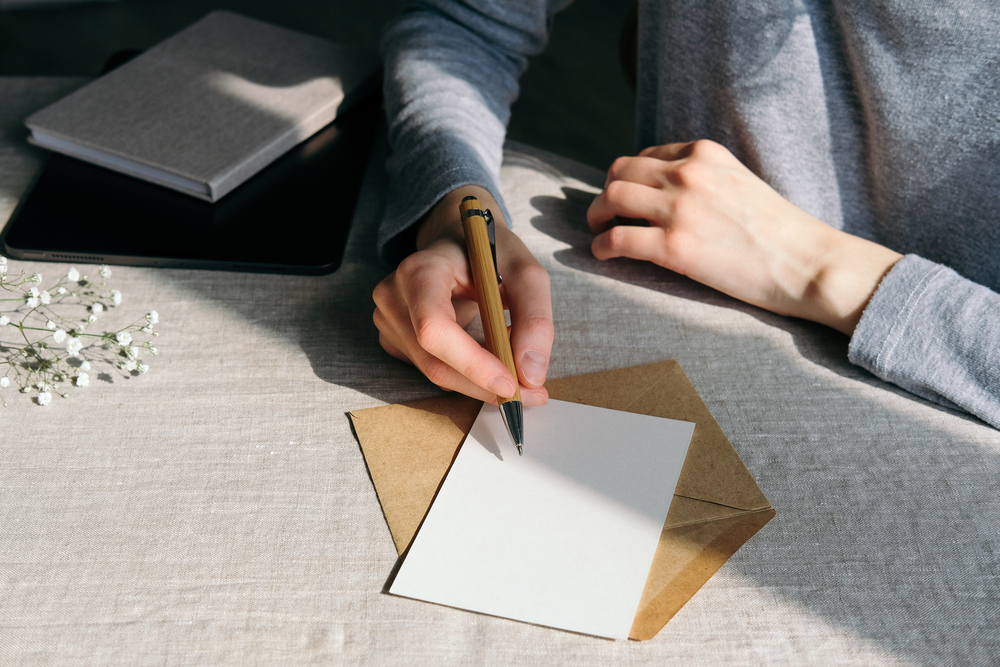
In an era of instant “pings” and ghosting, the deliberate act of putting pen to paper has become the ultimate luxury and a profound social statement. Sending a letter shows that you were willing to invest time, focus, and a postage stamp into a single person without the expectation of an immediate reply. It creates a physical artifact of a relationship that can be tucked into a drawer or a shoebox for decades, unlike a digital thread that can be deleted with a swipe. People are finding that the “slow” nature of snail mail fosters a depth of connection that a group chat simply cannot replicate.
The resurgence of the “penpal” aesthetic is being driven by a collective exhaustion with digital maximalism and the ephemeral nature of online life. A 2025 analysis by Pinterest Predicts noted a 110% increase in searches for “snail mail gifts” as Gen Z and Millennials seek more tangible ways to express affection. This trend suggests that we are moving away from the “shallow work” of messaging and toward a more intentional form of communication. By reclaiming the letter, we are reclaiming our attention spans and our ability to be present for the people who matter most. It is a return to a time when a “notification” was something you waited for by the mailbox with genuine anticipation.
3. Repair Their Own Clothes
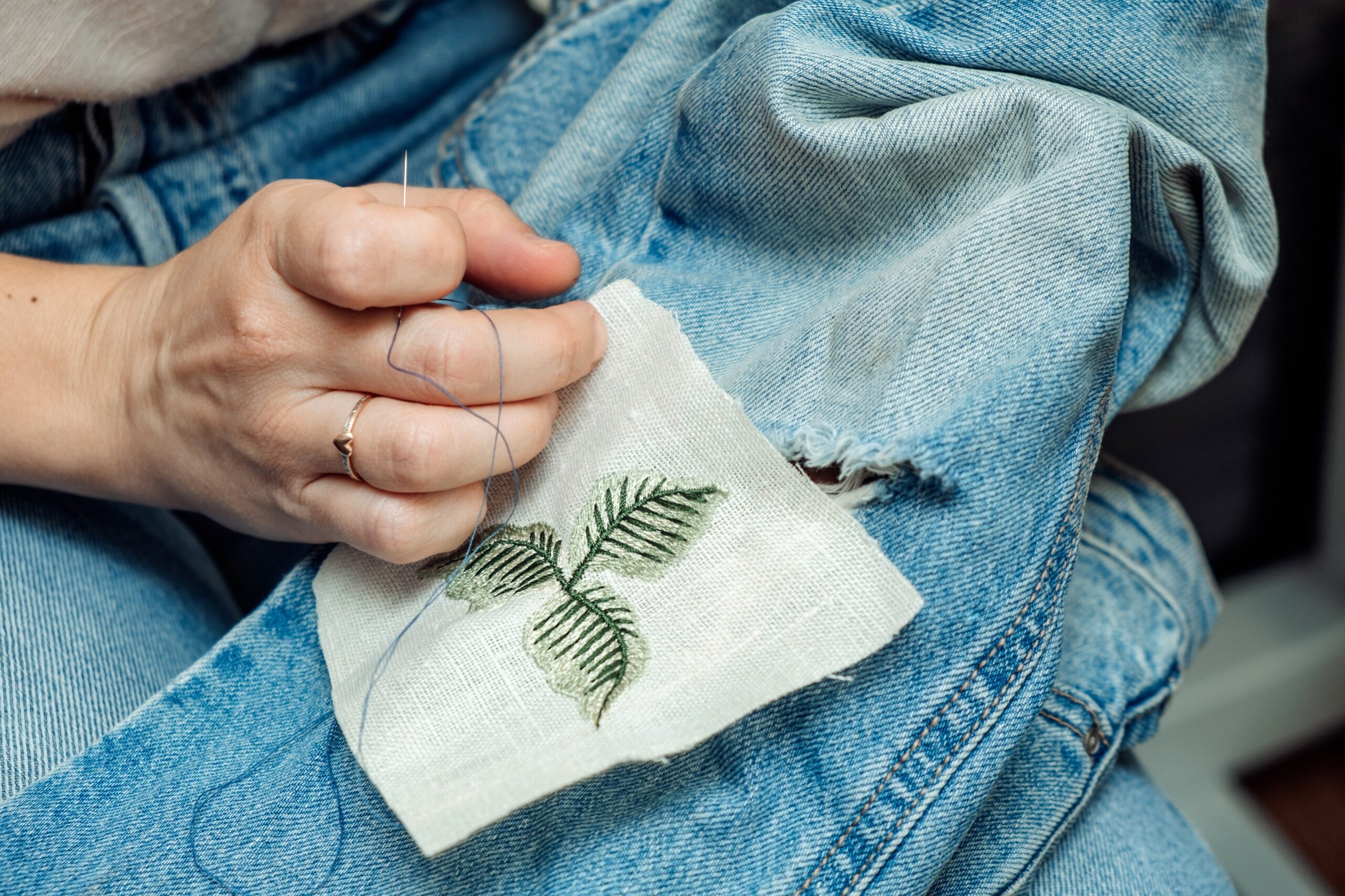
The fast-fashion cycle has convinced us that a loose thread or a missing button is a valid reason to discard a garment and buy a new one. However, the art of visible mending is making a massive comeback as people realize the environmental and personal cost of disposable clothing. Picking up a needle and thread allows you to extend the life of your favorite pieces while adding a unique, artisanal touch that no factory can replicate. It turns a chore into a creative act of resistance against a culture that demands constant consumption and waste.
Mending is not just about saving money; it is about developing a “kinship” with the objects we use every single day. When you repair a hole in a sweater, you are physically manifesting your values of sustainability and careful stewardship. This skill builds a level of practical resilience that makes you less dependent on the shifting whims of retail giants and shipping logistics. People are discovering that there is a deep, quiet satisfaction in knowing exactly how to fix the things they own. A mended sleeve is a badge of honor that says you value quality over the cheap thrill of a new purchase.
4. Preserve And Ferment Seasonal Foods

Canning, pickling, and fermenting were once essential survival skills that allowed households to enjoy the flavors of summer during the coldest months of the year. While we can now buy “fresh” berries in January, they often come at the cost of a massive carbon footprint and a total lack of flavor. Reclaiming the art of the mason jar allows you to capture the peak of the season when produce is most affordable and nutrient-dense. It turns your kitchen into a laboratory of flavor where you can control the salt, the sugar, and the quality of every single ingredient.
Fermentation, in particular, has seen a massive spike in popularity as we learn more about the vital importance of gut health and the microbiome. Dr. Elena Rossi noted in a 2025 culinary science report that “living foods” like homemade sauerkraut provide a diversity of probiotics that commercial versions often lack. This skill is a bridge to our ancestors who understood that food preservation was a form of “investing” in the future health of the family. It is a way to stop wasting the excess produce of the harvest and start building a pantry that is truly your own. A row of glowing jars on a shelf is a beautiful and practical insurance policy against the unpredictability of the world.
5. Cook For Nourishment

Social media has turned the act of making dinner into a competitive performance where the visual appeal of a dish often outweighs its actual utility. We have lost the art of the “boring” meal—the simple, repetitive, and nutritious staples that carry a family through a busy work week. Making a comeback is the philosophy of cooking to sustain yourself and your loved ones without the need for a filtered photo or a complicated recipe. It is about reclaiming the kitchen as a place of functional care rather than a stage for digital validation or culinary gymnastics.
This shift is a necessary correction to the “burnout” many home cooks feel when trying to live up to the impossible standards of food influencers. Bundjalung restaurateur Mindy Woods noted in a 2026 lifestyle essay that many cultures cook to nourish the spirit, not to win a “like” on a screen. When you cook a simple pot of beans or a tray of roasted vegetables, you are performing a vital act of self-care that requires no audience. It allows you to focus on the sensory experience of the food and the quiet company of the people at your table. Dinner is not a content opportunity; it is a foundational human ritual that deserves to be reclaimed for its own sake.
6. Choose To Walk

In our rush to optimize every second of our lives, we have turned “walking” into a scheduled exercise activity rather than a primary mode of moving through the world. Reclaiming the walk to the grocery store or the post office allows you to observe your neighborhood and your neighbors in a way that a car window never permits. It is the original “low-cost” travel that provides a natural reset for a brain that is constantly bombarded by digital noise and high-speed information. People are finding that the “liminal space” of a walk is where their best ideas are born and their greatest anxieties are diffused.
This return to the “pedestrian life” is being championed by urban planners and wellness experts who see it as a cure for modern isolation. A 2024 analysis of urban wellness found that residents of “walkable” communities reported a 25% higher rate of social trust and general happiness. Walking forces a human-scale interaction with the environment that is essential for our biological and psychological well-being. It is a form of “digital detox” that doesn’t require a special app or a locked box; you simply step outside and put one foot in front of the other. The sidewalk is the most democratic space we have, and it is time we started using it again for more than just getting to the parking lot.
7. Manage Their Money Without An App

We have offloaded the cognitive labor of financial management to “smart” apps that track our spending and nudge us toward better habits with colorful charts. While convenient, this has led to a “disconnection” from the actual flow of our money and a loss of the basic math skills required for financial literacy. Reclaiming the manual budget—using a ledger, a spreadsheet, or the “envelope system”—forces a visceral understanding of where your hard-earned cash is actually going. It turns the abstract numbers on a screen into a concrete set of choices and trade-offs that you are making for your future.
The act of manually recording your expenses creates a “friction” that naturally discourages impulsive or mindless spending. A 2025 financial psychology report noted that “manual trackers” are 40% more likely to stick to their long-term savings goals than those who rely on automated alerts. This is because the physical act of writing down a purchase forces you to confront the “why” behind the spending in real-time. It is a return to a form of “monetary mindfulness” that prevents the “leakage” of small, unnoticed subscriptions and fees. Taking control of your own ledger is the ultimate act of financial adulthood and personal sovereignty.
8. Entertain Themselves Without A Screen
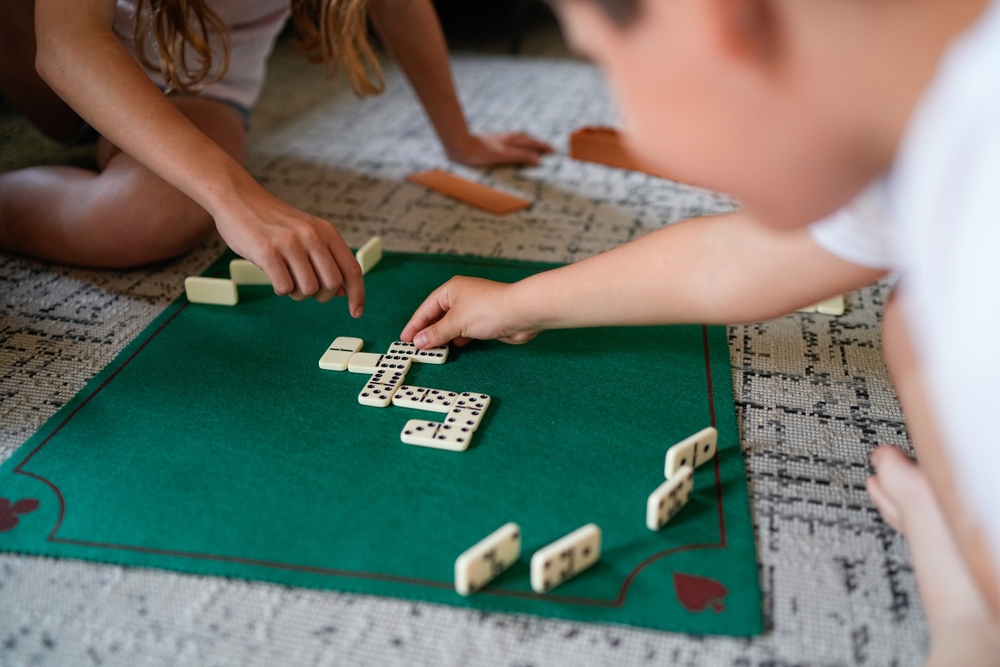
The moment we feel a hint of boredom, we reach for our phones to fill the void with an endless stream of algorithmically curated “content.” This has effectively killed our ability to engage in “deep play” or the kind of creative daydreaming that leads to genuine innovation and self-discovery. Reclaiming the art of “doing nothing” or engaging in a physical hobby like puzzles, cards, or sketching is a vital act of cognitive restoration. It allows the brain to enter the “default mode network,” where it can process emotions and organize memories without being constantly interrupted by external stimuli.
The “analogue maximalism” trend is a direct reaction to the “attention economy” that treats our focus as a commodity to be sold to the highest bidder. A 2024 study in Neurology Today found that people who engage in non-screen hobbies have a significantly higher “cognitive reserve” as they age. This is because these activities require a level of tactile and spatial reasoning that a scrolling thumb simply doesn’t provide. By putting down the phone, you are reclaiming the right to be alone with your own thoughts and your own imagination. Boredom is not a problem to be solved; it is a fertile ground for the next great version of yourself to grow.
9. Navigate With A Paper Map

The “blue dot” on our maps has made it nearly impossible to truly get lost, but it has also robbed us of our internal sense of direction and spatial awareness. Relying on a screen for every turn means we are no longer looking at the landmarks, the street names, or the cardinal directions that orient us in space. Reclaiming the “paper map” or simply learning to navigate by memory builds a level of confidence and environmental literacy that is essential for true independence. It turns a “trip” into an “exploration” where you are the pilot rather than just a passive passenger following a voice.
This loss of “mental mapping” has been linked to a decline in the size and health of the hippocampus, the part of the brain responsible for memory and navigation. Dr. Marcus Thorne noted in a 2025 neurological brief that “wayfinding” is one of the most complex tasks the human brain can perform. When we outsource this to an AI, we are essentially letting a vital “mental muscle” atrophy through disuse. Learning to navigate without a digital crutch is a way to re-engage with the physical reality of the world around you. It turns the city from a series of abstract turns into a coherent and familiar landscape that you truly understand.
10. Cut Their Own Hair

The “luxury” of the salon experience has become a major monthly expense that many people are realizing they can manage—or at least simplify—at home. During the isolation of the early 2020s, many people discovered that they were actually quite capable of maintaining their own bangs, fades, or “dustings” with a pair of sharp shears. Reclaiming this grooming skill provides a sense of bodily autonomy and a significant financial “win” that adds up over the course of a year. It is about moving away from the “perfectly polished” look and toward a more authentic and self-managed personal style.
This trend toward “DIY grooming” is part of a larger movement of “democratized beauty” where the individual defines their own standards of “good enough.” A 2024 survey of personal care habits found that 35% of respondents now perform at least one “professional” beauty service on themselves at home. This allows for a level of experimentation and personal expression that can feel stifled in a high-pressure salon environment. It is a return to the “kitchen haircut” tradition, updated with the help of high-quality tools and accessible online tutorials. Taking the scissors into your own hands is a small but powerful way to say that you are the ultimate authority on your own appearance.
11. Take Photos And Print Them

We take thousands of digital photos every year, yet most of them will never be seen again, lost in the “digital abyss” of a cloud server or a broken hard drive. Reclaiming the art of film photography and the physical print turns a “snapshot” into a “memory” that you can actually hold in your hand. The “slow” process of waiting for a roll of film to be developed adds a layer of anticipation and value to the image that a digital file simply doesn’t have. It forces you to be more selective about what you capture, focusing on the “soul” of a moment rather than just the visual data.
The rise of “analogue maximalism” has led to a massive resurgence in the sales of film cameras and darkroom supplies among younger generations. A 2025 report from the Global Photography Association noted that the “physicality” of a print is the number one reason people are returning to film. A printed photo on a refrigerator or in a frame has a “presence” that a screen can never replicate, acting as a constant and tangible reminder of your history. It is a way to preserve the legacy of your life for future generations who may not have access to your digital passwords. A shoebox of old photos is a treasure; a hard drive of 10,000 unsorted JPEGs is a chore.
12. Build And Fix Their Own Furniture
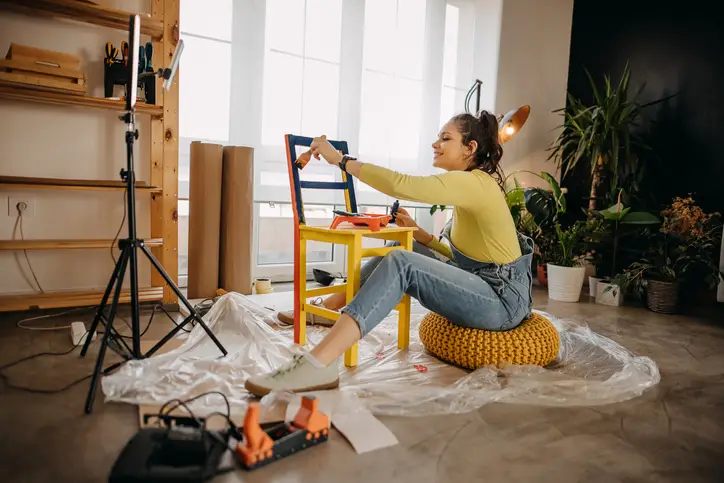
The “flat-pack” revolution has made furniture cheap and accessible, but it has also made it “disposable” and devoid of any personal or historical character. Reclaiming the basic skills of woodworking and furniture repair allows you to create pieces that are built to last for generations rather than just a few move-ins. It turns your home into a collection of stories and craftsmanship rather than a showroom for mass-produced particle board. There is a profound sense of pride that comes from sitting in a chair that you built or restored with your own two hands.
This “maker” culture is a direct challenge to the “planned obsolescence” of modern consumer goods that are designed to fail and be replaced. A 2024 analysis in Sustainable Living found that “DIY furniture” enthusiasts report a much higher level of “place attachment” to their homes. When you build something yourself, you are investing your time and your identity into the very fabric of your living space. This skill also makes you a more critical consumer, able to spot the difference between real quality and a clever marketing veneer. Your home should be a reflection of your own capabilities, not just your ability to follow a set of pictographic instructions.
13. Invite Guests Over To Enjoy Some Homegrown Fun
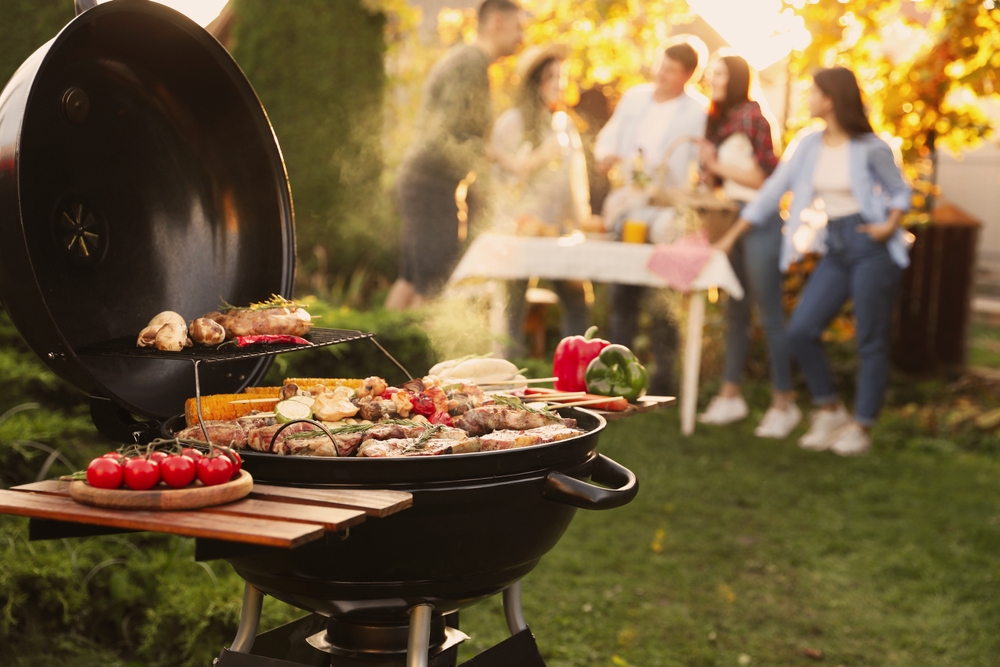
We have become a society that “goes out” for entertainment, paying for movies, concerts, and dining experiences that are curated by corporations. Reclaiming the “home-based” social life—dinner parties, board game nights, or even “song circles”—fosters a level of intimacy and community that a loud bar can never provide. It turns the host into a “community builder” who creates a safe and welcoming space for deep conversation and shared laughter. These “low-cost” gatherings are the original “social networks” that kept humans connected long before the internet existed.
The return to the “parlor culture” of the past is being driven by a desire for more meaningful and authentic social interactions. A 2025 study on social isolation found that people who host “analogue” gatherings at home report a 30% lower rate of loneliness than those who only meet in public spaces. This is because the “home” environment removes the distractions of noise, commerce, and performance that often plague modern social life. It allows for the “long-form” conversations that are the bedrock of true friendship and mutual support. Your living room is the most powerful “platform” you have; it is time to start using it again to bring people together.