
In the animal kingdom, the most successful warriors are often the ones who never have to throw a single punch. Evolution has favored species that can master the art of the “psychological flex,” using dramatic displays to convince an opponent that a physical battle would be a lethal mistake. These creatures have developed a high-stakes theater of flared manes, inflated chests, and terrifying vocalizations to settle disputes without spilling a drop of blood. In a world where a single scratch can lead to a fatal infection, being the scariest guy in the room is much more efficient than actually being the strongest. From deep-sea terrors to backyard birds, here are 14 species that have mastered the art of intimidation as a primary survival strategy.
1. The Frilled-Neck Lizard
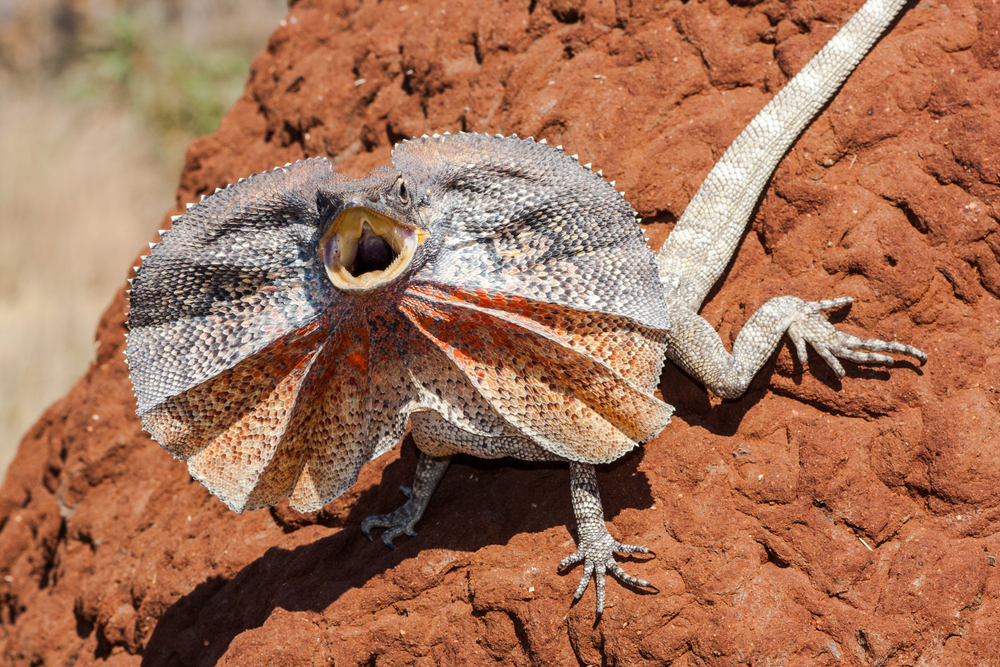
The frilled-neck lizard is the undisputed master of the “jump scare” in the Australian outback. When threatened, this reptile unfurls a massive, brightly colored skin flap around its neck that makes its head appear several times larger than its body. It pairs this visual explosion with a wide-open yellow mouth and a terrifying hissing sound to startle any potential predators. This sudden transformation is usually enough to send even the most determined hunters scurrying in the opposite direction out of sheer confusion.
This dramatic display is a classic example of “deimatic behavior,” intended to distract or frighten an adversary. A 2024 study published in the Journal of Evolutionary Biology found that the lizard’s frill size is directly correlated with its success in territorial disputes. The researchers noted that the lizard’s “bluff” is so effective that it rarely has to engage in physical combat to defend its space. By appearing like a much larger and more dangerous predator, it wins the fight before it even begins. This lizard proves that a bold wardrobe choice can be the ultimate defensive weapon in a hostile environment.
2. The Pufferfish
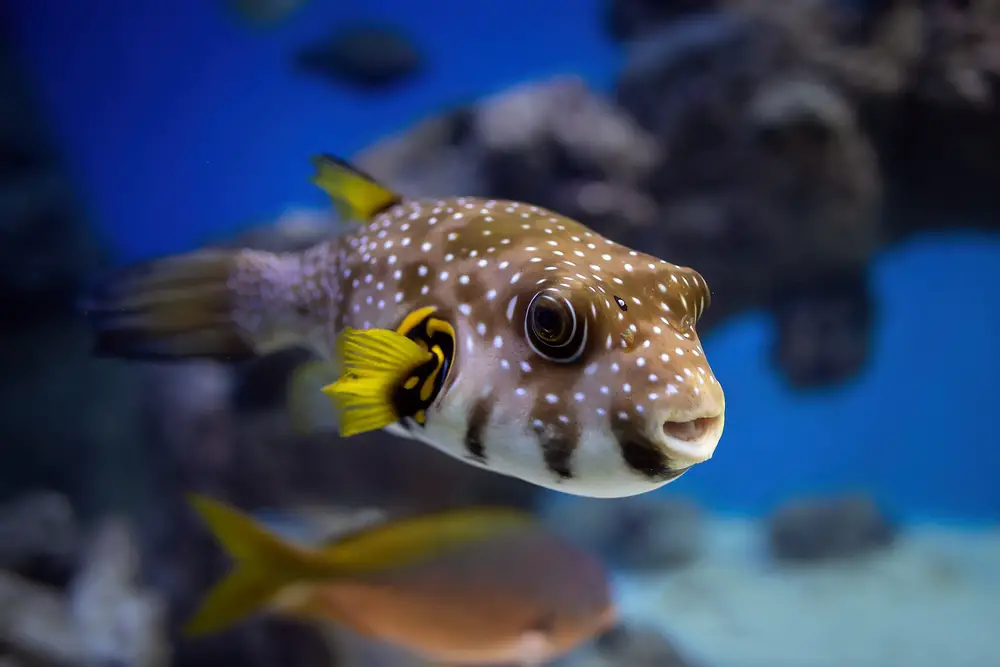
The pufferfish is a slow-moving target that looks like an easy snack until it decides to turn into a literal spiked ball of death. By rapidly gulping down massive amounts of water, it inflates its elastic stomach to several times its normal size in a matter of seconds. Most predators find it impossible to swallow a giant, prickly sphere, and the sudden change in shape is often enough to end the hunt immediately. It is a high-stakes game of “chicken” where the pufferfish uses its own body as a biological shield.
The intimidation factor is backed up by a chemical defense that makes the pufferfish one of the most poisonous vertebrates in the ocean. Dr. Kenji Ito noted in a 2025 marine toxicology report that the pufferfish’s “inflation response” serves as a primary visual warning to predators. The bright colors and sharp spines act as a clear signal that the creature is laced with lethal tetrodotoxin. Most fish have evolved to recognize this “inflated” state as a sign to stay far away. They judge the risk of a meal as being far lower than the risk of a swift and painful death.
3. The Blue-Ringed Octopus
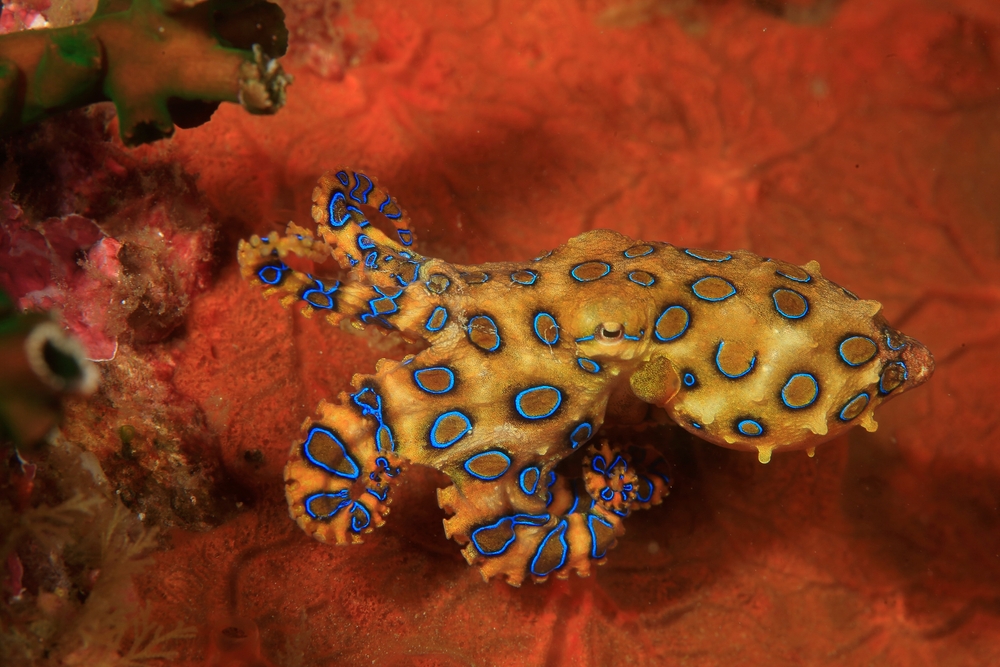
When it is relaxed, the blue-ringed octopus is a small, camouflaged creature that blends perfectly into the tide pools of the Pacific. However, the moment it feels threatened, its body flashes with brilliant, pulsating blue rings that serve as a high-definition warning light. This “aposematic” display is designed to tell the rest of the ocean that this tiny animal is one of the deadliest creatures on the planet. It doesn’t need to fight because its skin is already shouting that it can kill twenty humans in minutes.
The speed at which the octopus can change its appearance is a marvel of neurological engineering. A 2024 analysis in Marine Biology Today revealed that these cephalopods use specialized cells called chromatophores to signal their lethal intent. This visual intimidation is so effective that most predators will abandon their attack the moment the first blue ring appears. The octopus relies on the “reputation” of its venom to maintain its personal space without ever having to use its beak. It is the ultimate example of a small player using a big “keep out” sign to survive.
4. The Silverback Gorilla
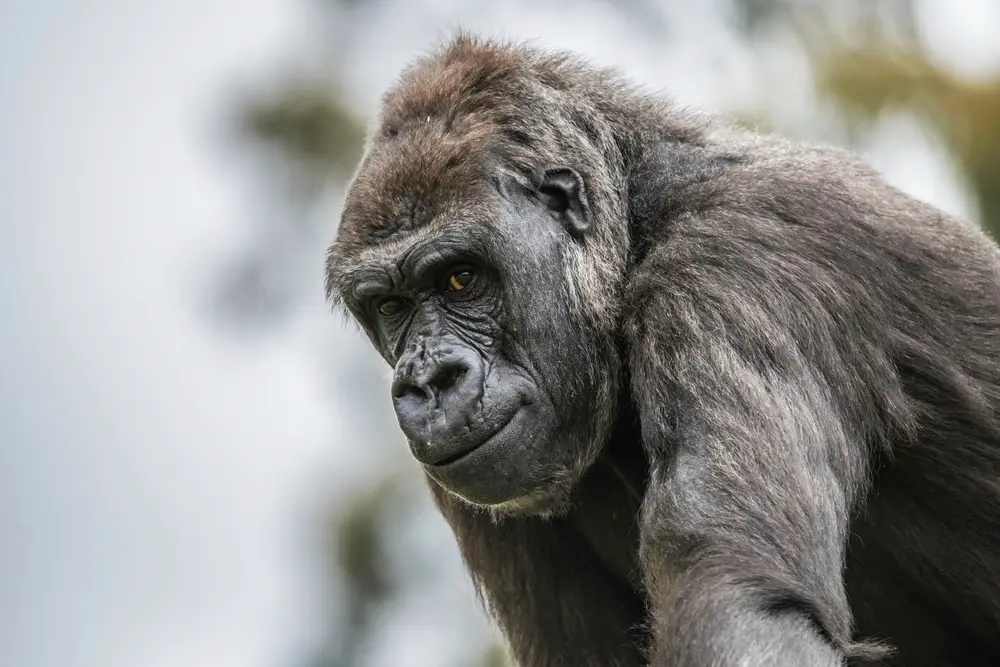
The silverback gorilla is the ultimate practitioner of the “chest-beat” routine, a display of raw power designed to prevent intra-group violence. When a rival approaches, the silverback will stand on its hind legs, rip up vegetation, and pound its chest with cupped hands to create a booming sound. This acoustic performance tells everyone in the forest exactly how big the leader is and how much energy he has to defend his troop. Most challengers will back down after hearing the sheer volume of the silverback’s internal percussion.
This performance is a sophisticated way of communicating strength without risking the health of the dominant male. A 2023 study by the Max Planck Institute found that the “beat frequency” of a gorilla’s chest corresponds perfectly to its body size and social status. This allow rivals to “measure” the silverback from a distance without ever having to come into physical contact. It is a highly civilized way of maintaining a social hierarchy through the use of purely atmospheric pressure. The silverback wins by making sure the “cost” of a fight is clearly understood by everyone involved.
5. The Hooded Cobra
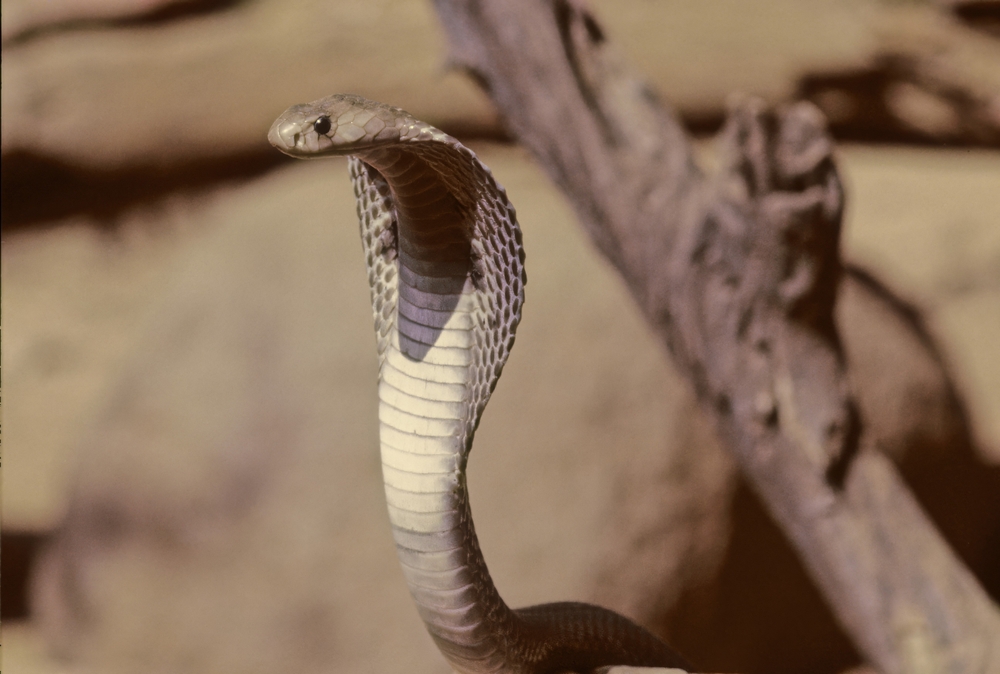
The hooded cobra is a master of theatrical suspense that uses its iconic hood to create a terrifying silhouette against the sun. By extending its cervical ribs, the snake transforms from a simple tube into a flared, imposing figure that stands vertically off the ground. It pairs this visual threat with a loud, rhythmic hiss and a series of “mock strikes” that stop just short of making contact. The goal is to convince the intruder that a single step forward will result in a lethal dose of neurotoxic venom.
This intimidation display is often the snake’s last resort before it is forced to waste its precious venom on a non-prey item. Dr. Rajesh Gupta noted in a 2025 herpetology brief that cobras use their “hooding” behavior to gauge the threat level of an opponent. If the intruder backs away, the cobra will quickly retreat, having successfully defended its territory without a strike. The fake-out is so convincing that few animals are willing to call the cobra’s bluff. It is a high-stakes performance where the snake uses its own body as a billboard for its lethal capabilities.
6. The Great Frigatebird
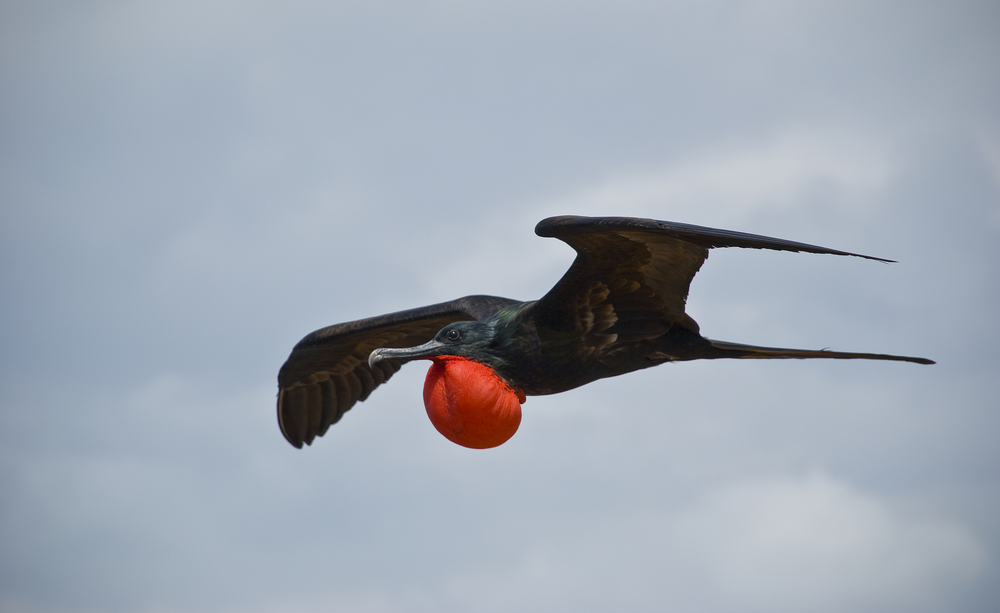
During the breeding season, the male great frigatebird uses a giant, red throat sac to intimidate rivals and impress potential mates. He inflates this “gular pouch” until it looks like a massive, heart-shaped balloon that is almost as large as his own body. This display makes the bird appear much larger and more formidable to other males who might be eyeing his nesting site. It is a purely visual competition where the bird with the biggest, reddest balloon usually gets to keep the best real estate.
This inflation is a taxing physical process that requires a significant amount of energy and “lung” capacity to maintain. A 2024 study in Avian Physiology found that males with the largest pouches also have the highest levels of testosterone and physical endurance. Rivals recognize the inflated sac as a signal of a “high-quality” male who is likely to win a physical altercation. By showing off his internal health on the outside, the frigatebird prevents the need for aerial dogfights over the colony. He wins the social game by being the most brightly colored “inflatable” on the beach.
7. The Mandrill
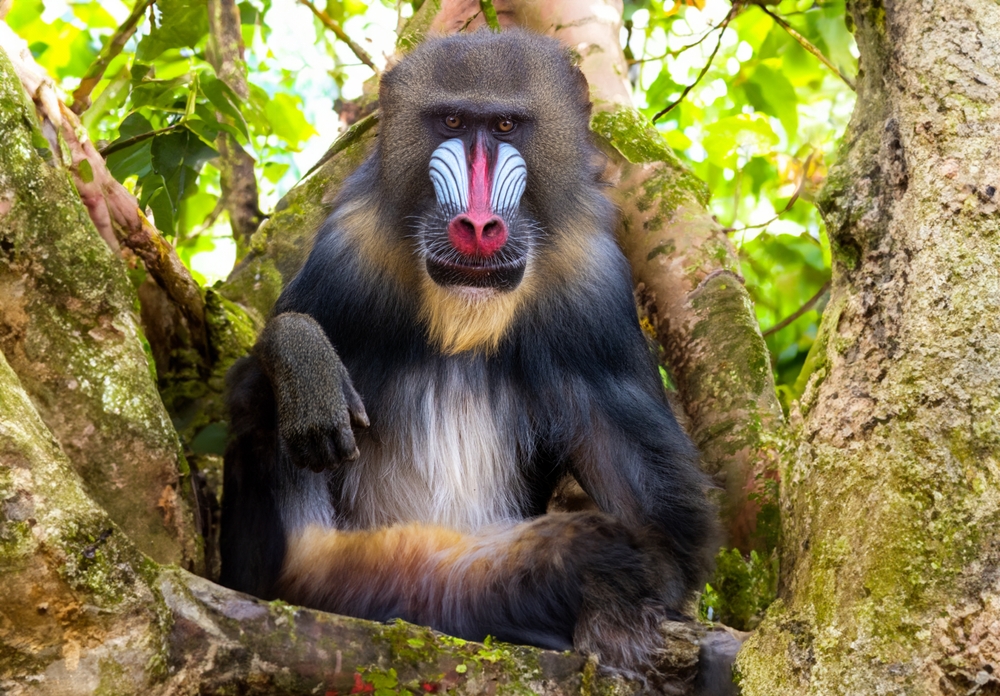
The mandrill is the most colorful primate on Earth, and it uses its vivid red and blue facial markings as a permanent “war paint.” These colors are not just for show; they are a direct signal of a male’s rank and his readiness to defend his position in the troop. When a mandrill feels threatened or challenged, it will bare its enormous canine teeth in a “yawn” that is actually a terrifying display of weaponry. Most rivals take one look at those teeth and the bright facial markings and decide that peace is the better option.
The intensity of a mandrill’s colors is a biological indicator of its current health and aggressive potential. A 2025 report from the Primate Research Group noted that “color flares” occur during periods of high social tension to warn off intruders. The subordinates in the troop constantly monitor the facial brightness of the dominant male to avoid accidental confrontations. This visual “ranking system” allows the group to function with very little actual physical violence between members. The mandrill is the ultimate example of using a “loud” appearance to keep the peace in a crowded social environment.
8. The Hissing Cockroach
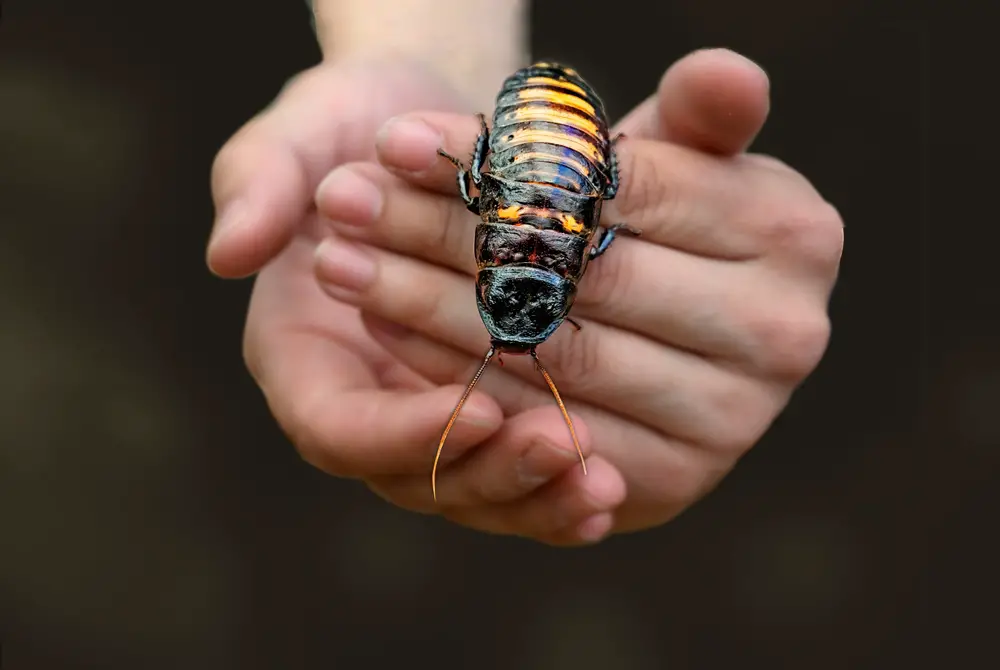
The Madagascar hissing cockroach is a giant of the insect world that relies on a unique vocalization to keep predators at bay. Unlike most insects that rub their legs together to make noise, this roach forcefully exhales air through its respiratory holes to create a loud, snake-like hiss. This sound is surprisingly effective at startling birds and small mammals that would otherwise consider the roach an easy meal. The roach also uses this hiss during territorial battles with other males to establish dominance without having to bite.
This acoustic intimidation is a specialized evolutionary trait that mimics the sound of more dangerous animals. A 2024 study in Insect Behavioral Ecology found that predators are 60% more likely to drop a hissing cockroach than a silent one. The “shock” of the sound gives the insect just enough time to scuttle away to safety while the predator is still confused. It is a low-cost, high-reward strategy that turns a defenseless bug into a noisy and intimidating opponent. The roach wins by being the loudest thing on the forest floor at the exact right moment.
9. The Red-Winged Blackbird
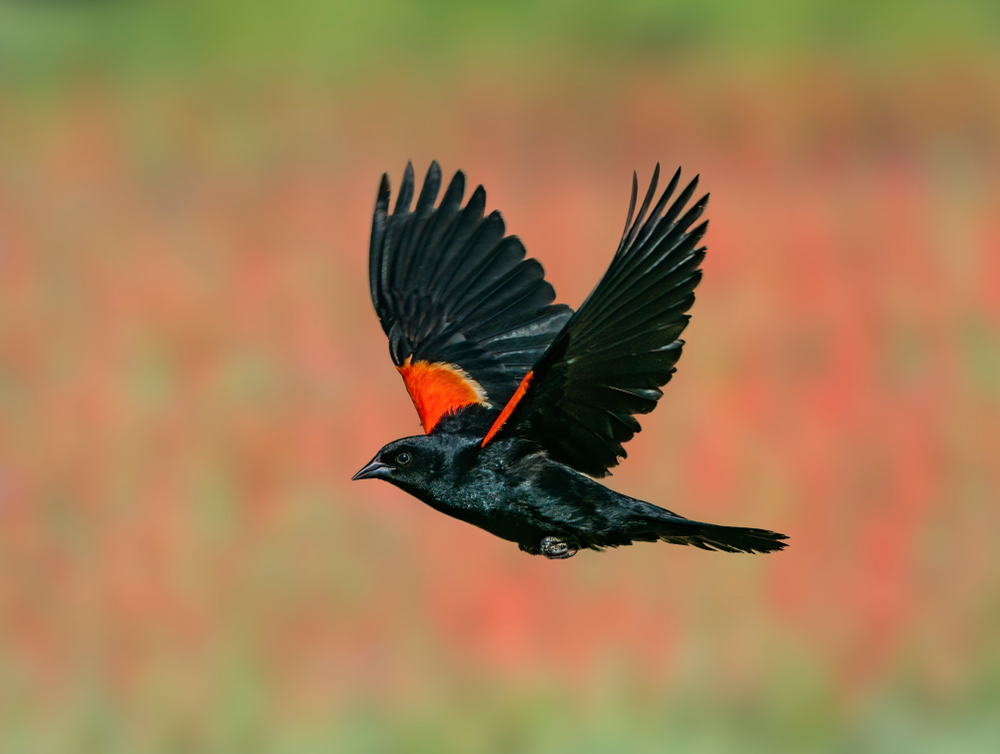
The red-winged blackbird is a fierce defender of its marshland territory and uses its bright shoulder patches, or “epaulets,” as a visual warning. When a rival male enters his space, the blackbird will hunch his shoulders and puff out the red feathers while singing a loud, buzzing song. This display makes the red patches look significantly larger and more vibrant, signaling his intent to defend his nest at all costs. Most wandering males will see the “red light” and steer clear of the occupied territory to avoid a fight.
This visual signaling system is a highly efficient way of managing a crowded and competitive breeding ground. A 2025 analysis by the Ornithology Lab found that blackbirds with more “concealable” red patches are actually better at managing social tension. They only show the full extent of their red “war paint” when they are prepared to back it up with physical force. This allows them to “negotiate” boundaries with neighbors without having to engage in constant, exhausting aerial battles. The blackbird is the ultimate suburban tough guy who uses his outfit to keep the peace.
10. The Bullfrog
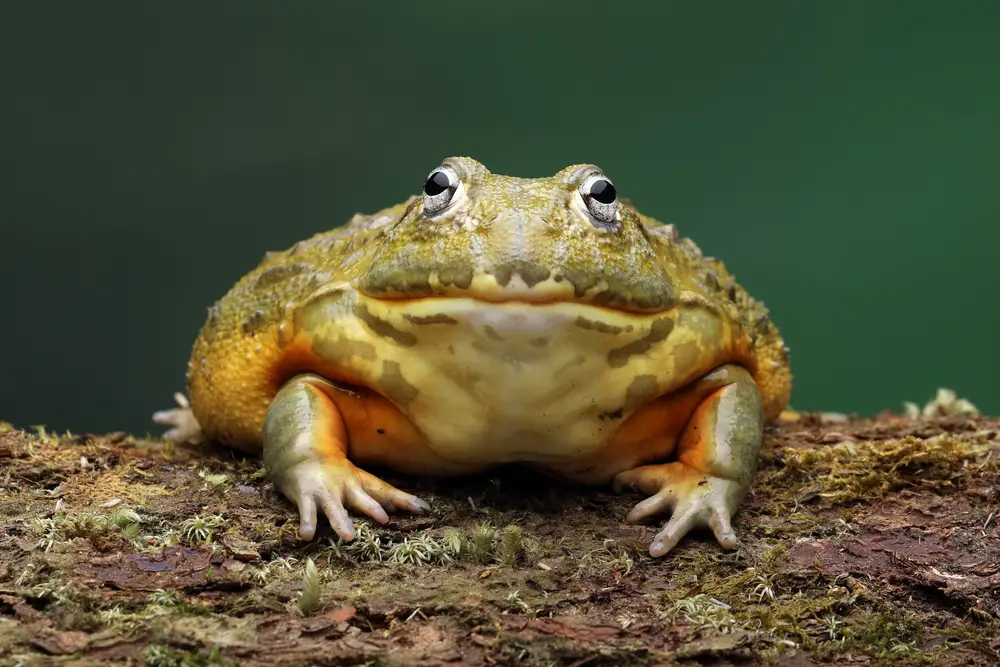
The American bullfrog uses its massive size and a deep, resonating croak to intimidate any males that dare to enter its breeding pond. This “jug-o-rum” sound is not just a mating call; it is a sonic territory marker that tells rivals exactly how big the resident frog is. Because the pitch of the croak is tied to the frog’s physical size, a smaller male can “hear” that he is outmatched before he even sees the owner. Most smaller frogs will stay silent or leave the area rather than face a larger opponent in a wrestling match.
This acoustic intimidation allows the largest frogs to maintain the best breeding spots with minimal physical effort. A 2024 report in Amphibian Research showed that bullfrogs can distinguish the calls of “neighbors” from those of “strangers” to minimize unnecessary drama. They use their voices to establish a stable social order where everyone knows their place in the pond. This “shouting match” prevents the frogs from having to engage in dangerous physical combat that could attract predators. The bullfrog wins by having the deepest bass in the entire ecosystem.
11. The Elk
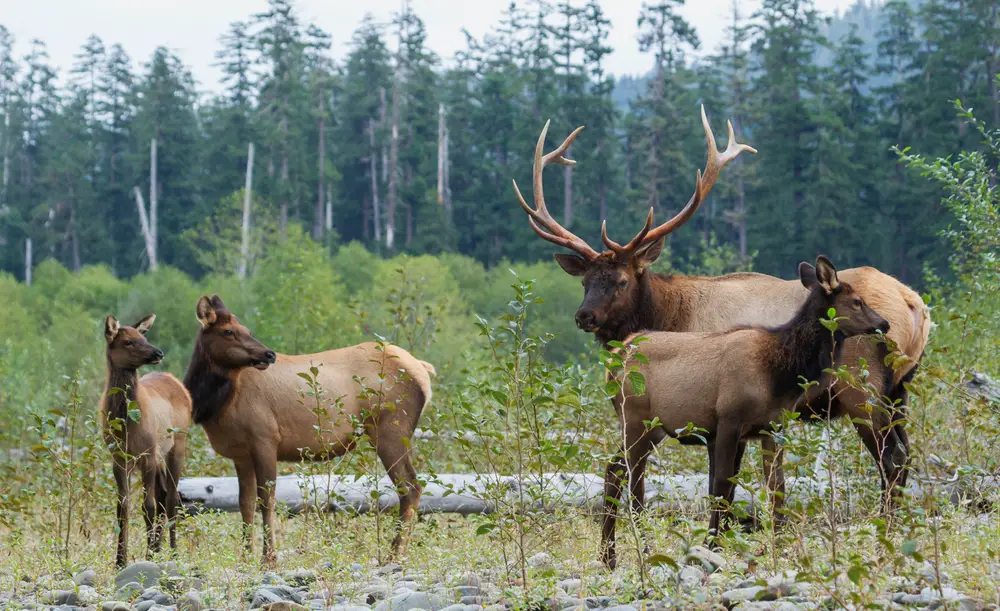
During the autumn rut, male elk engage in one of the most famous intimidation rituals in the animal kingdom: the bugle. This high-pitched, eerie scream is meant to announce the elk’s presence, size, and dominance to any other males in the area. It is a display of lung capacity and stamina that tells rivals that the resident bull is ready for a marathon of defense. Along with the bugle, elk will thrash bushes with their antlers to make themselves look even more massive and destructive.
The “antler-wrestling” that follows is often more about pushing and shoving than actual injurious combat. A 2025 study on ungulate behavior found that 90% of elk “fights” are settled through visual and acoustic posturing alone. The bulls are highly attuned to the “sparring” cues of their opponents and will often walk away if they feel they are outclassed. This prevents the species from suffering the massive population losses that would occur if every dispute ended in a duel. The elk is a master of the “long-distance flex” that keeps the herd safe from unnecessary bloodshed.
12. The Mantis Shrimp
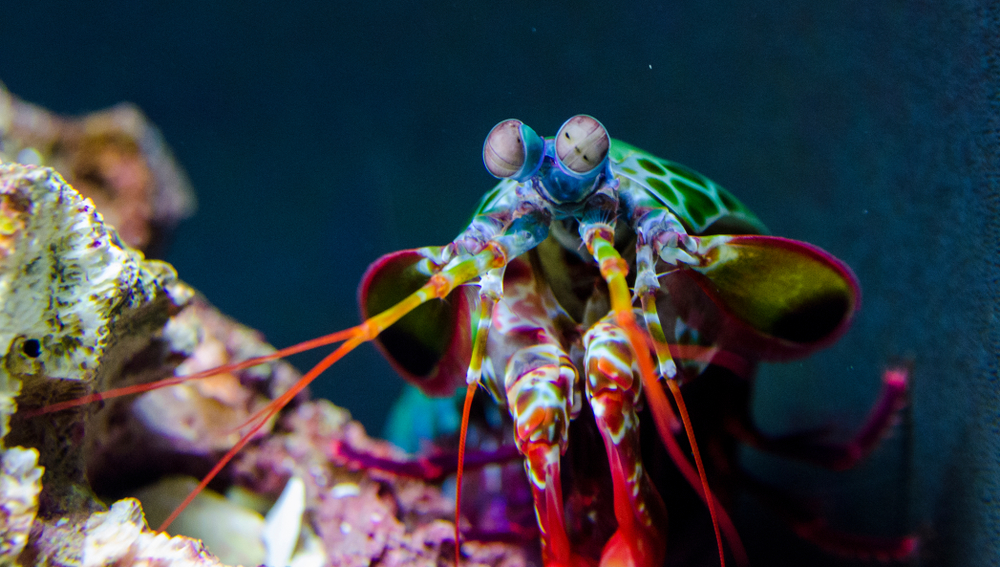
The mantis shrimp is a small but terrifying inhabitant of the coral reef that uses a “punch” that can break glass to intimidate its enemies. However, before it resorts to its legendary strike, it uses its brightly colored appendages to perform a “threat display” that warns others to back off. It will spread its raptorial claws and wave its antennae in a rhythmic dance that showcases its speed and lethal potential. Most other crustaceans are smart enough to recognize this “ready” stance as a sign that they should leave immediately.
This visual intimidation is backed up by one of the most powerful “weapons” in the animal world. A 2024 marine biology report highlighted that the mantis shrimp’s punch is as fast as a .22 caliber bullet. Because the cost of a fight is so high for both parties, the “threat display” is the preferred method of conflict resolution. The shrimp uses its colorful “shield” to communicate that it is armed and dangerous at all times. It wins by being the most intimidating “lightweight” in the entire ocean.
13. The Howler Monkey
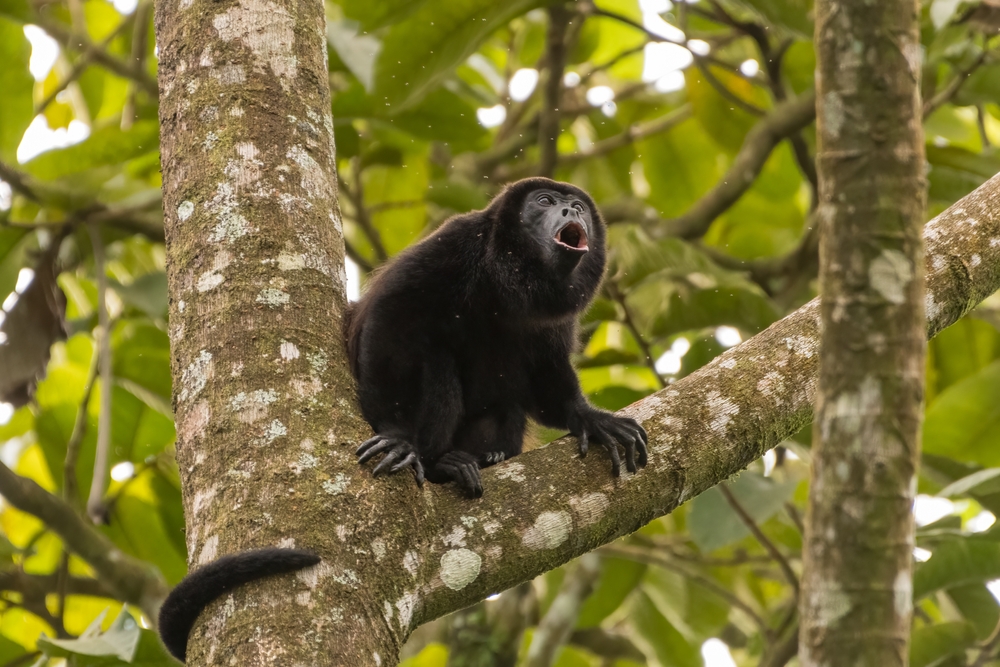
The howler monkey is the loudest land animal in the world, and it uses its voice to create a “sonic wall” around its family’s territory. By using a specialized hyoid bone in its throat, the male can produce a roar that can be heard up to three miles away through dense jungle. This roar tells other troops exactly where the family is and how many males are ready to defend the canopy. Most troops will simply adjust their route to avoid a physical encounter with a group they can already hear from miles away.
This vocal intimidation is an incredibly efficient way of managing territory in a thick forest where visibility is low. A 2025 study in the Journal of Mammalogy found that howler monkeys spend more time “vocalizing” than any other form of social interaction. This “shouting from the treetops” prevents the need for dangerous and exhausting physical battles over fruit trees. The troop stays safe by making sure they are the loudest presence in their section of the forest. The howler monkey proves that sometimes the best way to win a fight is to never let the opponent get close enough to see you.
14. The Porcupine
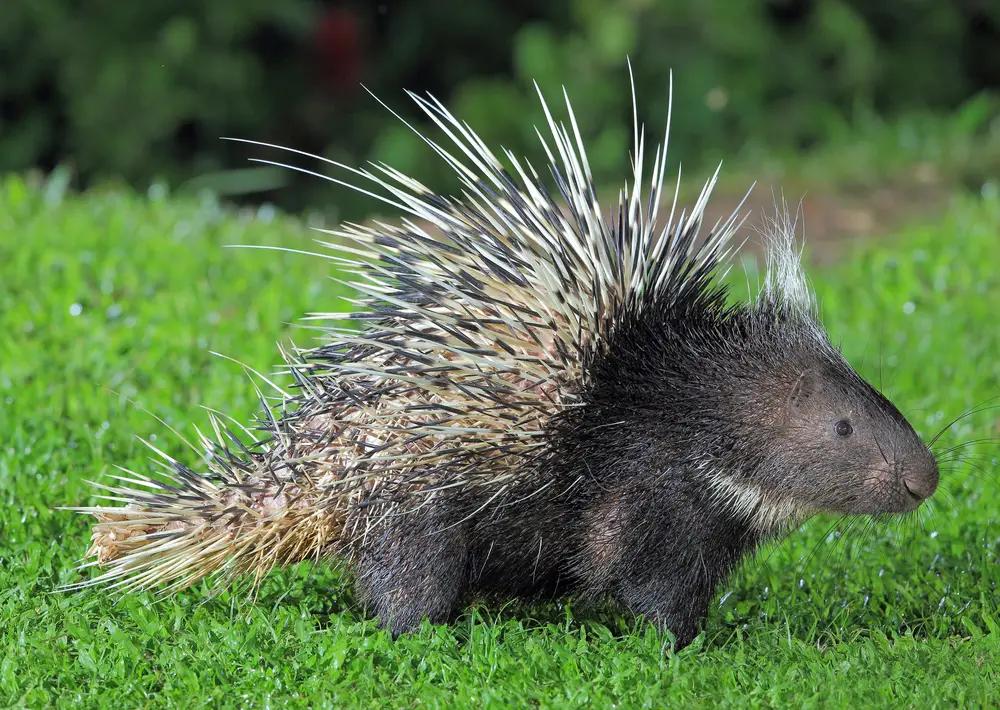
The porcupine is a slow-moving, peaceful herbivore that becomes a terrifying “pincushion” the moment it is cornered by a predator. When threatened, it will turn its back, rattle its hollow tail quills to make a metallic sound, and release a pungent warning odor. This “multi-sensory” intimidation tells the attacker that a single bite will result in hundreds of painful, barbed quills being stuck in their face. It is a passive-aggressive defense that is so effective that few animals ever try to attack a porcupine twice.
The “rattle” and the “stink” are the porcupine’s way of saying “don’t make me do this” to a potential hunter. Dr. Linda Carter noted in a 2024 wildlife defense report that the porcupine’s warning signals are highly effective at deterring young, inexperienced predators. The animal relies on the “reputation” of its quills to maintain its slow-paced and solitary lifestyle. It is a master of the “defensive intimidation” strategy, where the threat of retaliation is much more powerful than any offensive move. The porcupine wins by making it very clear that it is more trouble than it is worth.