
What starts as a “quick hike” has a way of turning into a full-body lesson in humility. Across hiking forums, outdoor Facebook groups, and comment threads under search-and-rescue stories, people keep describing the same whiplash: one minute you’re chasing fresh air, the next you’re bargaining with the universe. These aren’t spooky campfire tales—they’re the kinds of mistakes and close calls that make you change how you pack, plan, and trust your own instincts. Here are 13 outdoor trips people say they’ll never stop thinking about.
1. “Our Campsite Turned Into a River While We Slept.”
People who’ve lived through flash flooding describe the same sick detail: you don’t wake up to “rain,” you wake up to water grabbing your gear like hands. One moment your tent is cozy, the next it’s floating, and your brain can’t process why the floor is moving. They talk about scrambling barefoot in darkness, trying to find higher ground while the campground becomes a current. The scariest part isn’t even the cold—it’s how fast “normal” disappears.
Afterward, a lot of people say the fear sticks because it feels so unfairly random. You can be careful, experienced, and still get hit if weather upstream dumps water into your valley like a trapdoor. Survivors often mention clinging to trees, losing cars, or watching other tents get swallowed in seconds. It’s the kind of event that makes you check elevation maps before you even think about a “cute riverside spot.”
2. “A ‘Short’ Day Hike Became an Overnight Survival Situation.”
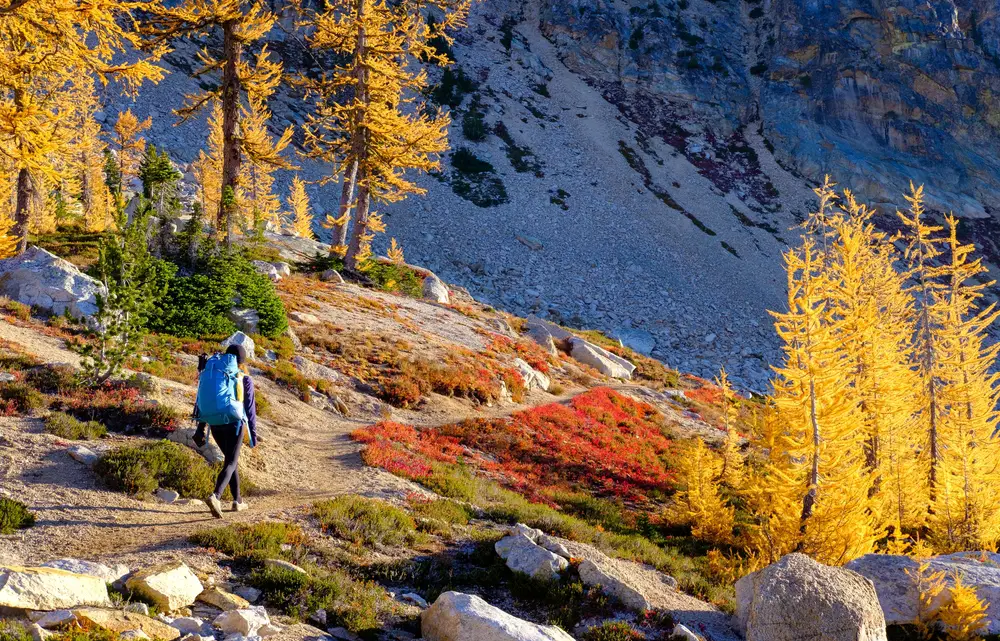
This is the classic domino chain: you start late, take “one more viewpoint,” and suddenly it’s dusk and you’re still miles from the car. People describe the moment the light shifts as the moment your confidence collapses, because the trail you knew in daylight becomes unfamiliar and weirdly hostile. Then your phone dies or loses service, and the silence gets louder than your thoughts. You realize your daypack is basically a purse with snacks, not a plan.
In rescue reports, the emotional theme is always the same: they weren’t trying to be reckless—they were trying to be optimistic. But optimism doesn’t replace insulation, a headlamp, or a clear turnaround time. When people do make it through the night, they describe shivering as a full-body punishment and feeling embarrassed by how quickly things spiraled. The next time they hike, they overpack on purpose and stop caring if anyone thinks it’s dramatic.
3. “We Followed a GPS Pin… Straight Into the Wrong Canyon.”
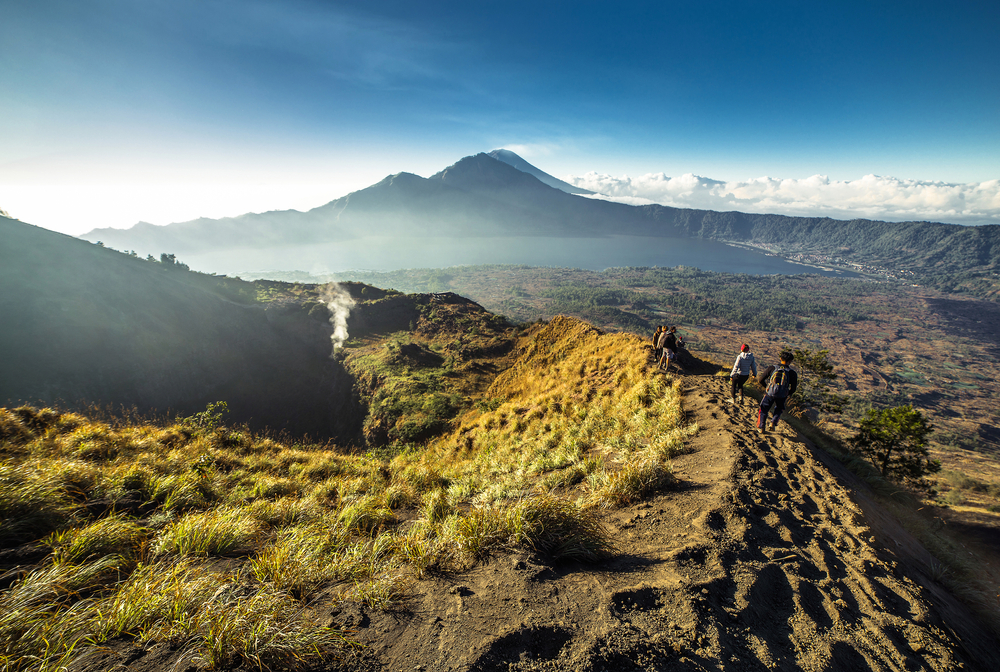
A lot of terrifying stories aren’t about getting lost—they’re about being confidently wrong. People describe trusting a downloaded route or a “shortcut” on an app, only to realize they’ve walked into a drainage that turns steeper, rockier, and harder to reverse with every step. The worst part is the sunk-cost mindset: you keep going because turning around feels like failure. Then you look up and realize the walls are higher than your options.
When this goes bad, it’s rarely a single dramatic mistake—it’s a series of small “this is probably fine” decisions. Folks describe scrambling down slick rock, losing the faint trail, and feeling panic rise when they can’t see a safe way back. Even if they get out, they say the canyon taught them something brutal: navigation apps don’t feel fear, and they don’t have to hike back. After that, they start treating “pins” like suggestions, not truth.
4. “The Wind Slab Cracked, and Suddenly We Were in Avalanche Math.”
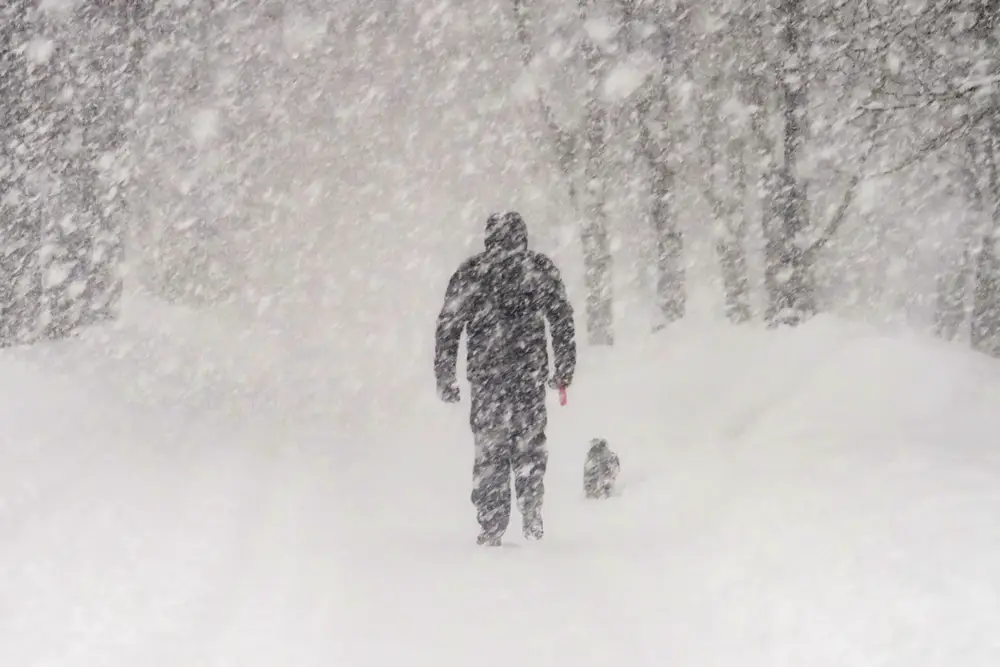
Skiers and splitboarders describe the sound first: a hollow “whumpf,” then the crack that spreads like a zipper. The world goes from scenic to clinical, and everyone’s brain starts doing calculations—slope angle, runout, who has eyes on whom. Even when it doesn’t slide big, that moment changes you because it proves the mountain is listening. People say it’s like realizing the floor can move.
What makes avalanche stories extra haunting is how many involve people doing “a lot right” and still getting punished. Increased backcountry traffic, tricky conditions, and fast-changing weather patterns keep showing up in expert warnings, especially in winter incident coverage. The line between “safe enough” and “absolutely not” can be thinner than anyone wants to admit. After a near miss, people either get radically more conservative—or they stop going without a beacon, shovel, and partner they actually trust.
5. “A Rock Came Out of Nowhere.”
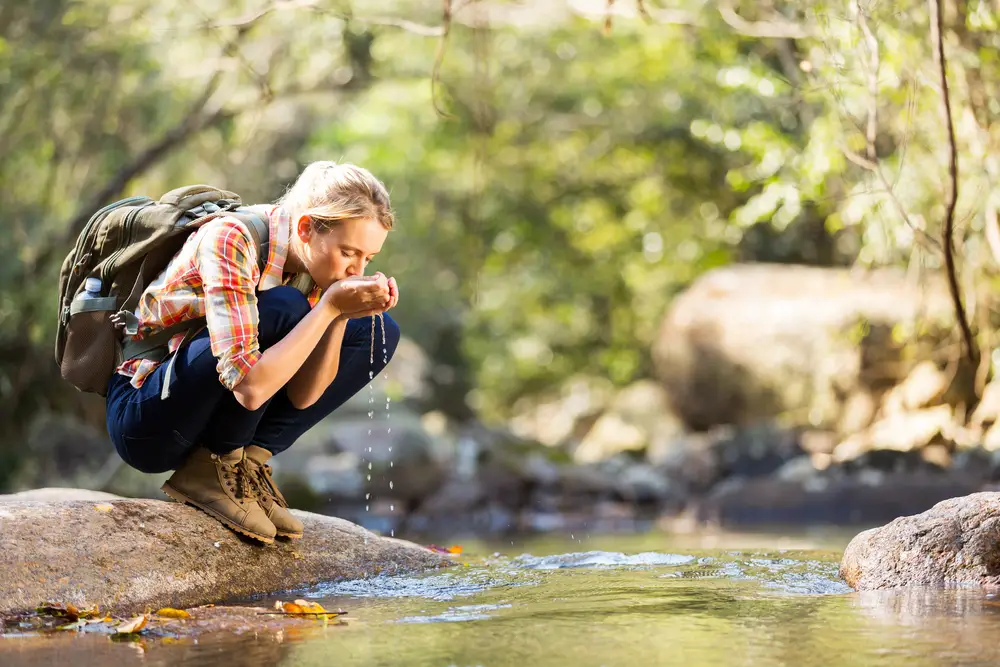
Climbers and scramblers talk about rockfall like betrayal, because it can happen on a “normal” day with no warning. They’ll describe hearing a sharp clack above them, looking up, and realizing they have about one heartbeat to react. Sometimes there’s no time to move—only time for your body to flinch and hope. The terror is that you can do everything “safely” and still be in the wrong place at the wrong second.
Afterward, a lot of people say the psychological shift is permanent. They start reading the mountain differently—listening for movement, avoiding gullies, spacing out from partners, and getting strict about helmets even on “easy” terrain. The story usually ends with the same blunt takeaway: you don’t get to negotiate with gravity. And once you’ve felt a rock whistle past your head, you stop treating protective gear like optional aesthetics.
6. “The Lake Flip Was Instant, and the Cold Hit Like a Weapon.”
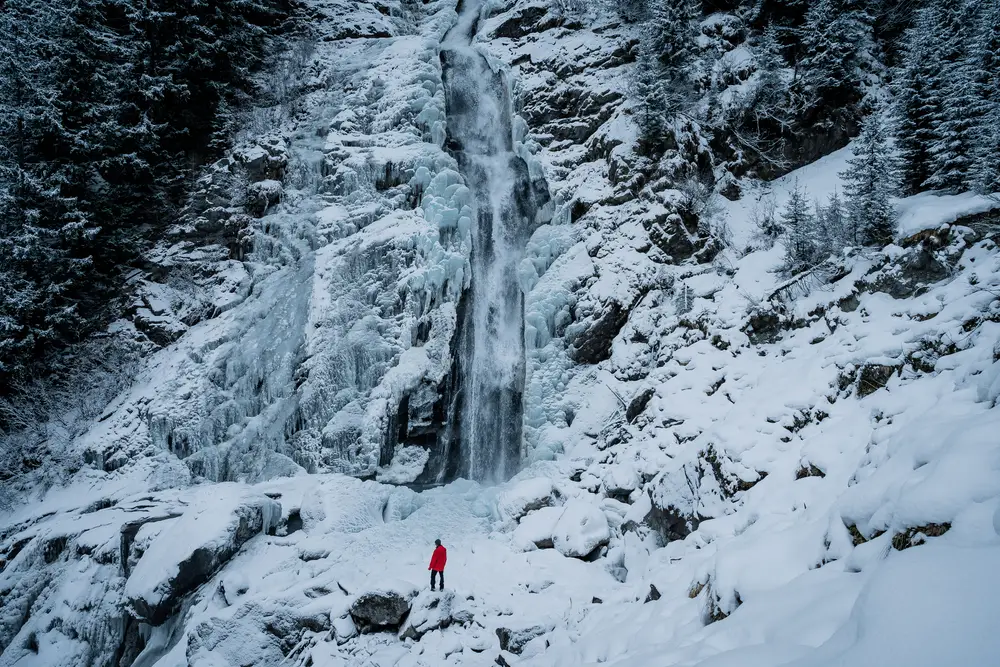
People who capsize in cold water say the surprise isn’t the water—it’s what the water does to their body. Your breath catches, your limbs feel clumsy, and suddenly your brain can’t focus on anything except “air.” They describe trying to grab a kayak or paddle while their hands stop cooperating. The panic isn’t dramatic; it’s biological.
If they make it out, the story usually includes one small miracle: a buddy close enough to help, a PFD actually worn, a shoreline reachable. Afterward, they talk about how quickly “fun day” became “survival event,” especially when wind pushes you away from land. It’s the kind of scare that makes people stop posting aesthetic paddle pics and start posting life-jacket lectures. And honestly, fair.
7. “We Thought It Was a Calm Creek Crossing—Then Someone Slipped.”
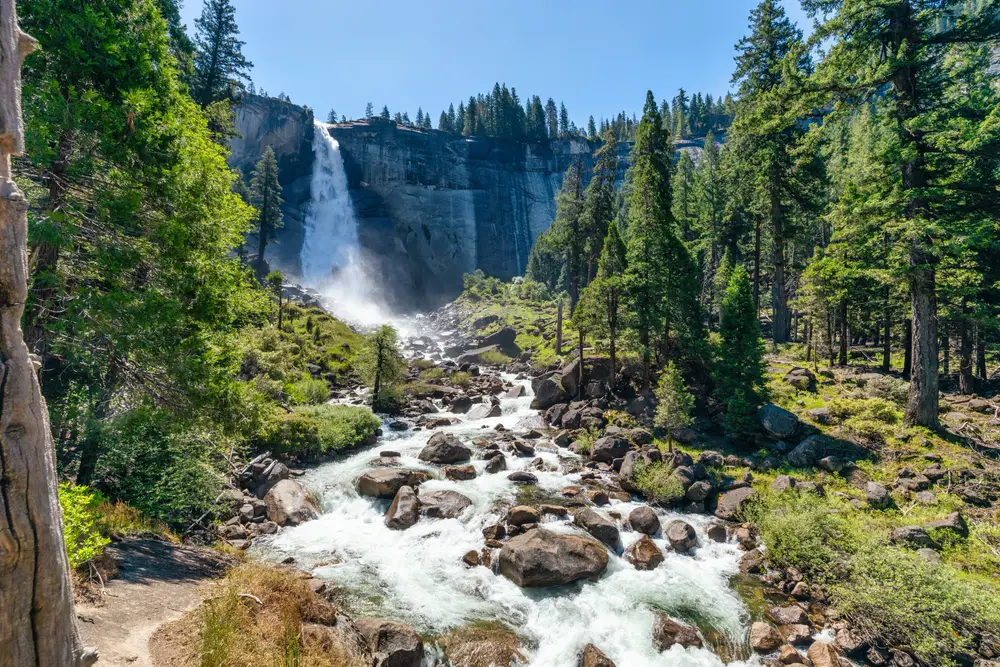
This one shows up in so many accounts because water looks harmless right until it isn’t. People describe stepping onto a “stable” rock, feeling it roll, and suddenly being sideways in a current that’s stronger than it appears. The cold can steal your breath, and the force can pin your legs or sweep you downstream fast. Everyone remembers the same thought: “I can’t believe this is happening over something that looked easy.”
Afterward, survivors usually say they stopped trusting their eyes. They learn to check depth, speed, and exit points like it’s a ritual, not a vibe. A lot of them talk about the humiliation too—because they didn’t feel reckless, they felt normal. But nature doesn’t care what you intended. It only cares what actually happens.
8. “We Were Sure We Were Alone… Until We Realized Someone Was Mirroring Our Moves.”
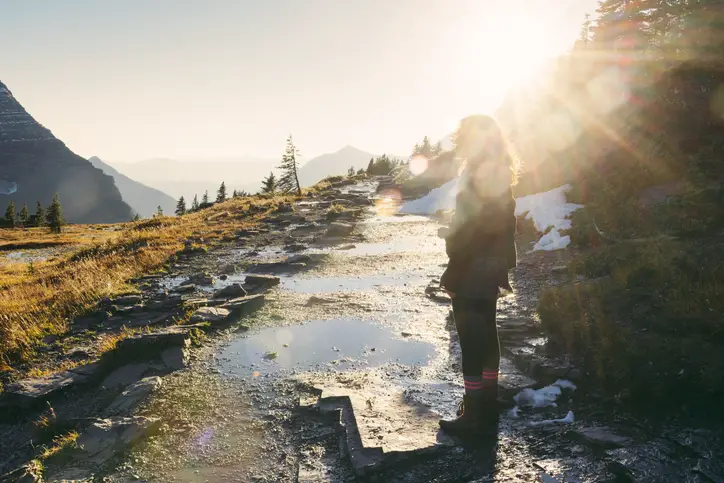
Some of the most unnerving stories aren’t animal-related—they’re human. People describe noticing a figure behind them at a distance that never closes, but never disappears either. Every time they stop, the person stops too. And that’s when the hike stops being about nature and becomes about exits, signal bars, and where the next group of people might be.
What’s consistent in these accounts is the body logic: your nervous system decides before your brain does. People leave the trail, change direction, call someone even if it won’t connect, or head toward busier areas without “waiting for proof.” Later, they often replay the guilt—was it nothing, did I overreact—until they remember the one truth that matters: you got home. And you don’t owe anyone a perfectly rational story.
9. “My Headlamp Died, and the Dark Felt Like a Wall.”
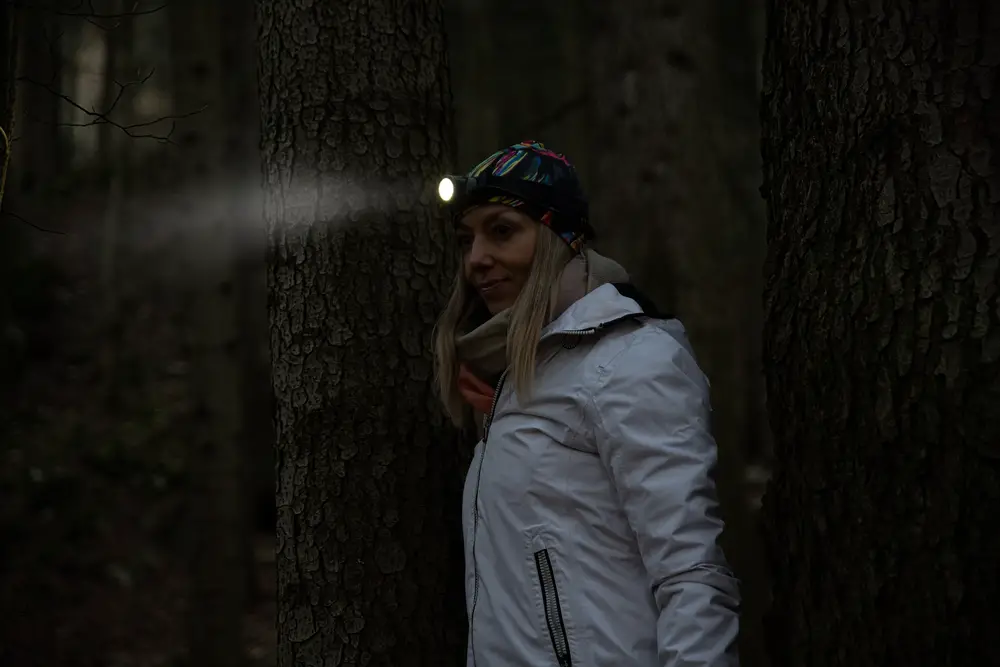
Outdoor dark isn’t “dim,” it’s absolute. People describe the instant their light fails as an identity shift: from hiker to tiny mammal who suddenly understands why fear exists. Sounds get sharper, distances get confusing, and you can’t tell if you’re on-trail or one step from a drop. Your imagination starts narrating worst-case scenarios like it’s trying to keep you alive.
A lot of people make the smartest choice and still feel embarrassed: they stop moving. They sit tight, layer up, and wait for dawn because stumbling in pitch black is how small problems become permanent ones. Afterward, they become militant about redundancy—backup headlamp, extra batteries, a tiny emergency light they never used to respect. It’s not paranoia. It’s memory.
10. “A ‘Friendly’ Animal Charged, and We Had Nowhere to Go.”
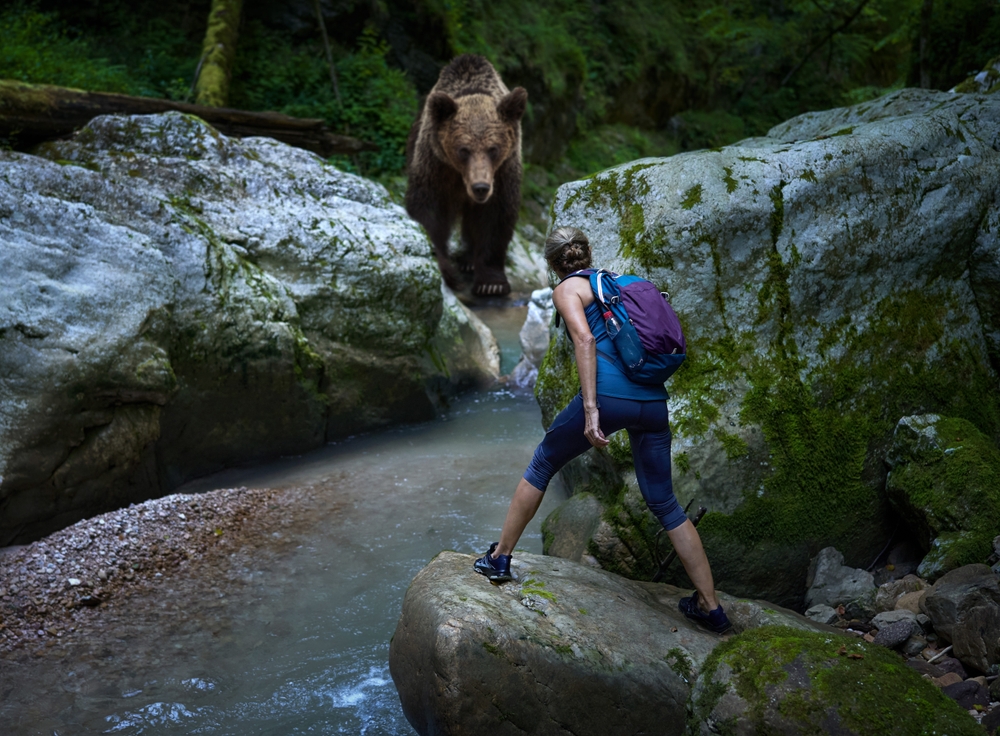
People love wildlife until wildlife reminds them it’s not a mascot. Stories about moose, elk, or even cows turning aggressive often include the same detail: there wasn’t time to think. One second it’s a cool sighting, the next it’s ears back, hooves moving, and your body trying to teleport. If you’re on a narrow trail, you realize how bad your options are.
Afterward, people describe the fear as weirdly humiliating because the animal isn’t a “predator,” it’s just powerful and done with you. They start keeping more distance, respecting calves, and not treating binocular moments like photo ops. The encounter sticks because it’s such a clean lesson: you’re not the main character out there. You’re a visitor who can get dismissed.
11. “We Pushed for the Summit… and the Altitude Hit Like a Switch.”
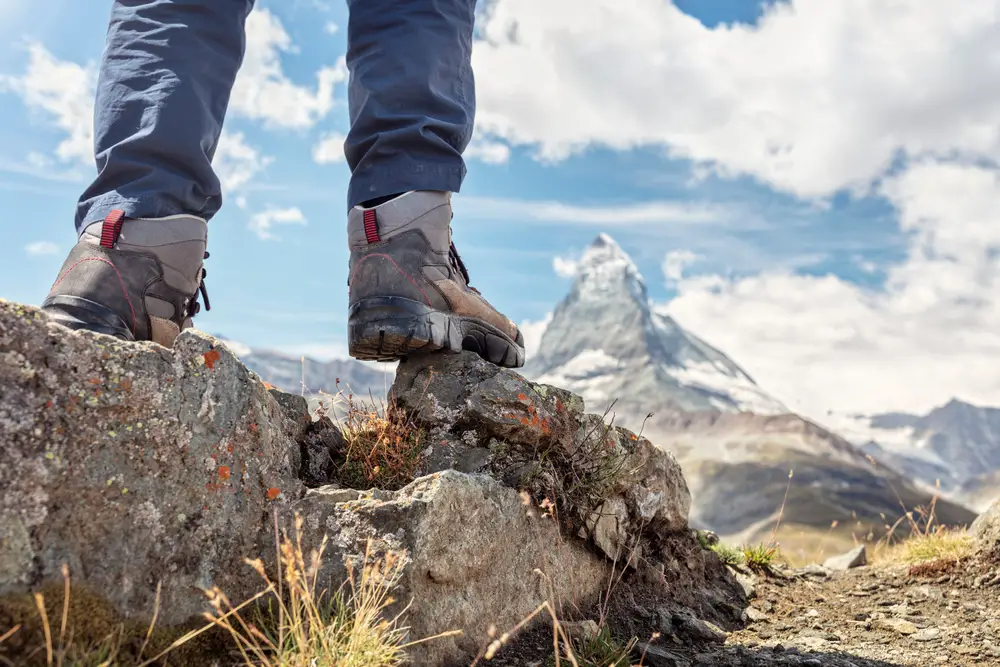
Altitude stories are brutal because they mess with your brain while you’re still trying to act “tough.” People describe nausea, dizziness, pounding headaches, and a sudden sense of doom that feels emotional but is actually physical. You start making dumb decisions because your body is literally under-oxygenated. And that’s when the mountain gets dangerous.
The people who scare you (in a good way) are the ones who turn around early without negotiating. They treat symptoms as information, not weakness, and they don’t let ego drive the route. Afterward, they say the lesson wasn’t “I’m not fit enough”—it was “my body has limits I need to respect.” The mountain doesn’t care if you’re stubborn. It only cares if you’re smart.
12. “Our Ski Run Became a Whiteout, and We Lost the Boundary in Seconds.”
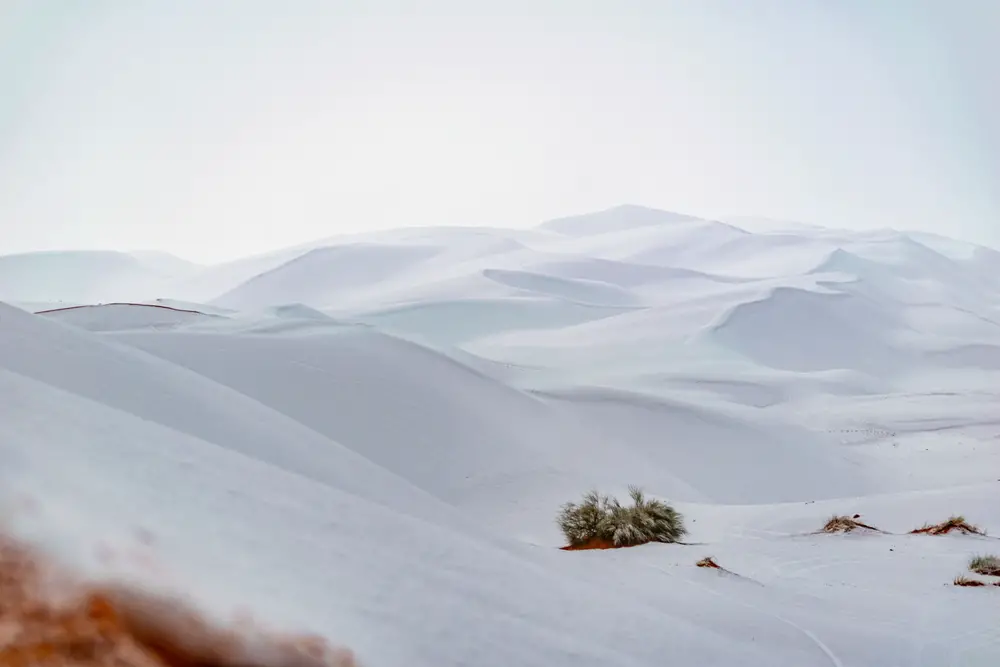
People who’ve been caught in sudden ski whiteouts describe the same nightmare: the horizon disappears. You can’t tell snow from sky, slope from flat, or safe from cliff-y. Your speed becomes guesswork, and stopping can feel as dangerous as moving. Even familiar terrain turns alien, like someone erased the map while you were still on it.
The most rattling part is how fast you can drift into a bad line. Folks talk about following tracks that led nowhere good, or assuming they were near a marker and realizing they weren’t. Afterward, they become the person who checks weather obsessively, carries navigation tools, and doesn’t “just send it” because the vibes are fun. It’s not about fear. It’s about not gambling with visibility.
13. “Search and Rescue Found Us, and the Rescuer Said the Line We’ll Never Forget.”
The most haunting stories often end with a calm sentence from a rescuer—because calm is what makes it land. People describe being cold, wet, lost, or exhausted, still trying to “make it work,” until a SAR team arrives and suddenly the reality is undeniable. It’s not that rescuers shame them; it’s that rescuers have seen enough to speak in facts. And facts are sobering.
Afterwards, survivors often become evangelists for the unsexy stuff: earlier turnarounds, telling someone your route, carrying layers, not letting pride drive the plan. They stop treating preparedness like anxiety and start treating it like respect. The real trauma isn’t that they got rescued—it’s how close they were to not being rescued. And once you’ve felt that, you hike like a different person.