
While we like to imagine animals living in a perpetual state of “now,” many of them are actually walking around with a mental burn book filled with every person who has ever crossed them. Scientists are discovering that facial recognition isn’t just a human trait; it is a vital survival mechanism used to distinguish a friend with a snack from a foe with a net. Whether it is a bird on your balcony or a giant of the savannah, these creatures are watching, remembering, and waiting for the right moment to settle the score. Here are 15 animals that remember faces and are more than happy to act on that information.
1. The American Crow
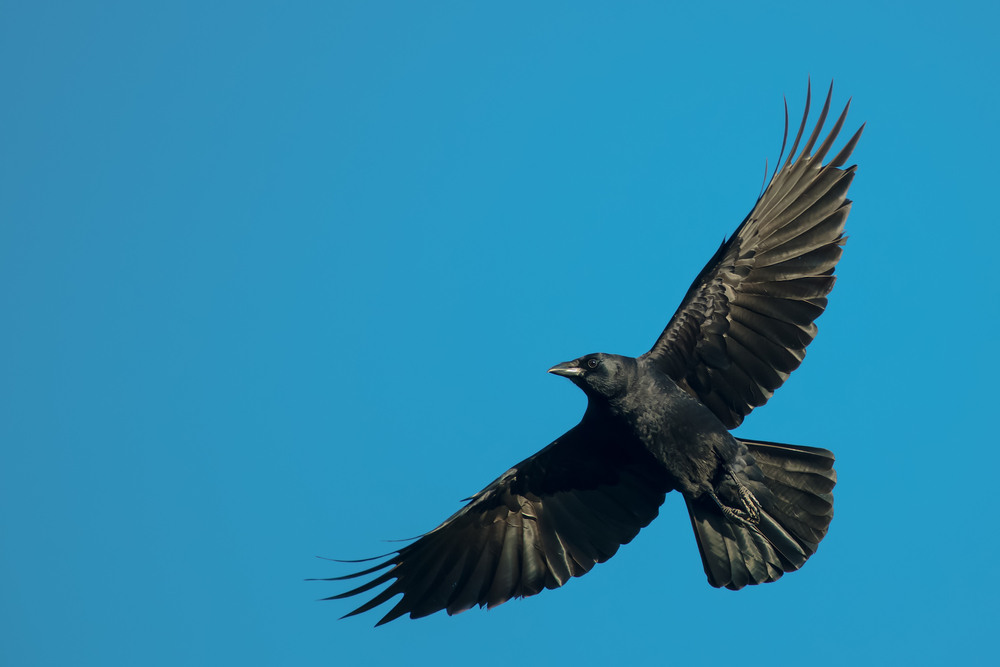
Crows are the undisputed kings of the avian underworld when it comes to remembering a face that did them wrong. Researchers at the University of Washington demonstrated this by wearing specific masks while trapping and banding crows to assess their subsequent responses. The birds didn’t just remember the “dangerous” face for a few days; they remembered it for several years and taught their offspring to hate it too. If you ever find yourself being dive-bombed by a murder of crows, you might want to consider what you did to their ancestors.
This behavior is a sophisticated form of social learning that allows the flock to stay safe without every individual having to experience a threat firsthand. A 2023 study published in the journal Animal Behaviour confirmed that crows can maintain these facial memories for over half a decade. When they spot a “bad” human, they emit a specific alarm call that brings in the rest of the squad for a coordinated harassment session. It is a level of petty that most humans can only aspire to achieving in their own social lives.
2. The Honeybee
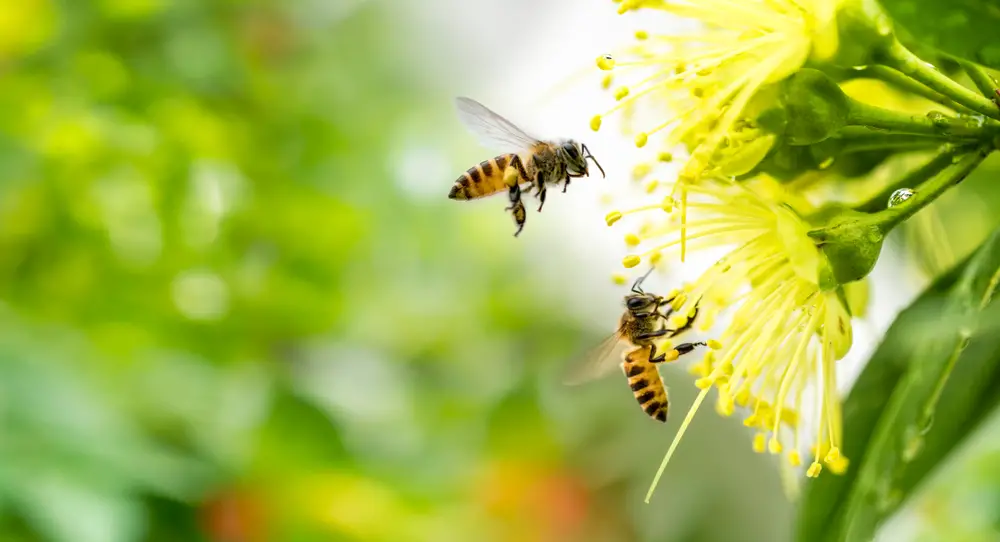
It might seem impossible for a creature with a brain the size of a grass seed to recognize a human face, but honeybees are surprisingly gifted at it. They use a method called “configural processing,” which is the same way humans recognize facial features as a unified whole rather than a collection of parts. If you are the person who regularly refills their favorite sugar water station, they will likely give you a pass when you walk by. However, if you have a history of swiping at them, they might just decide to prioritize you during their next defensive maneuvers.
Bee experts have noted that these insects can be trained to associate specific human faces with high-value rewards or negative experiences. A 2024 report from the Institute of Apicultural Research showed that bees could distinguish between similar human faces even when the features were slightly altered. This allows a hive to effectively “profile” the inhabitants of their immediate environment to determine who is a threat to the queen. They are essentially tiny, flying security guards with a very long memory for your specific bone structure.
3. The African Elephant
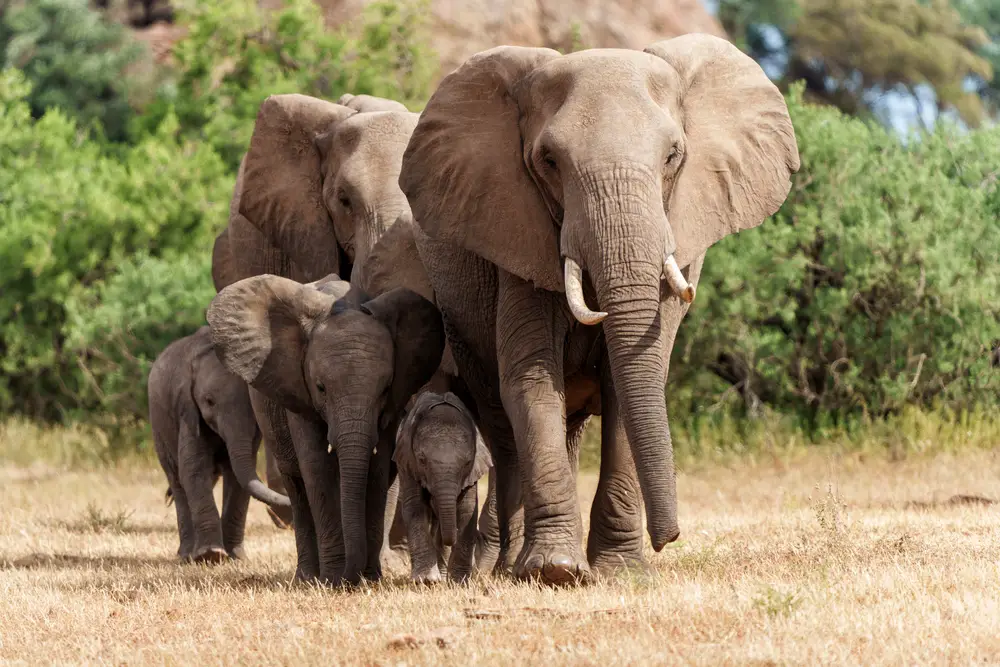
Elephants are famous for their long memories, but this extends far beyond just finding watering holes in a desert. They can distinguish between different groups of humans based on their clothing, scent, and most importantly, the way their faces look. If an elephant has a negative encounter with a specific person, they have been known to track that individual down even years after the initial incident. They are not just acting on instinct; they are acting on a deeply held personal grievance that they refuse to forget.
This level of facial recognition is part of their highly evolved social intelligence that rivals that of primates. Dr. Joyce Poole noted in a 2025 conservation report that elephants can identify “hostile” humans even when those individuals are not actively showing aggression. They have even been documented raiding the specific villages of people who participated in culls or poaching incidents. When an elephant looks at you, they aren’t just seeing a shape; they are checking their internal database to see if you are a friend or a foe.
4. The Chimpanzee
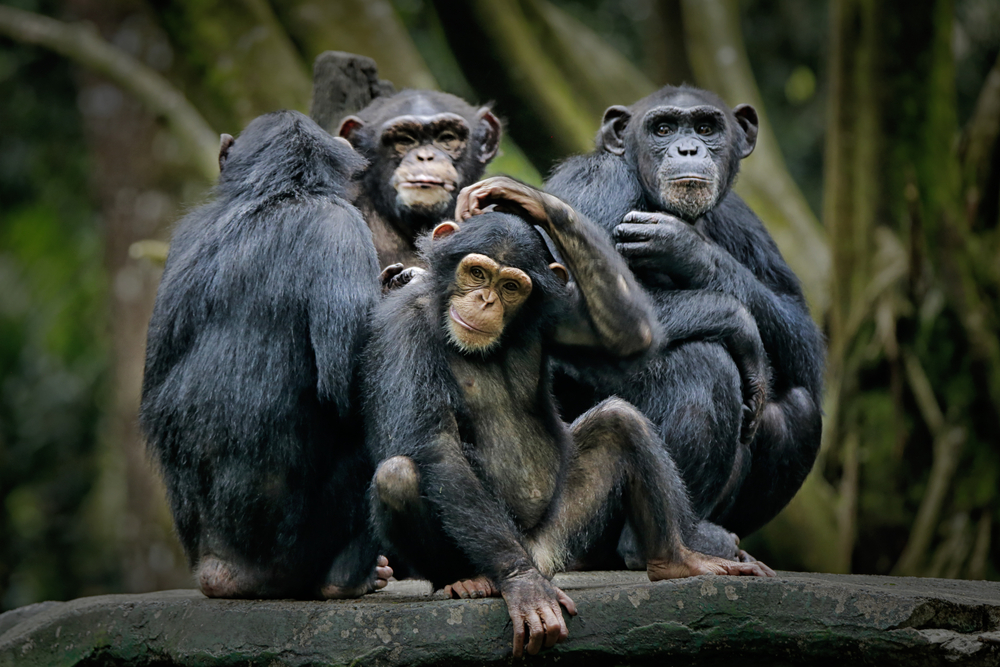
As our closest relatives, it makes sense that chimpanzees are experts at reading human faces and remembering how we treat them. They use these memories to navigate the complex politics of their interactions with researchers, zookeepers, and even casual tourists. If a chimpanzee feels that a human has been unfair or stingy with food, they will often hold a grudge that manifests as a well-aimed projectile. Conversely, they are known to show genuine affection and “greet” humans they haven’t seen in over a decade.
Their ability to recognize faces is so precise that they can even identify the relatives of people they know by looking for similar facial structures. A 2024 study in Cognitive Science revealed that chimps process faces in the same “top-down” manner that humans do to ensure accuracy. This allows them to build long-term alliances with humans they trust while completely ostracizing those they find suspicious or rude. If a chimp gives you the cold shoulder, it is probably because you didn’t live up to their social standards years ago.
5. The Giant Pacific Octopus
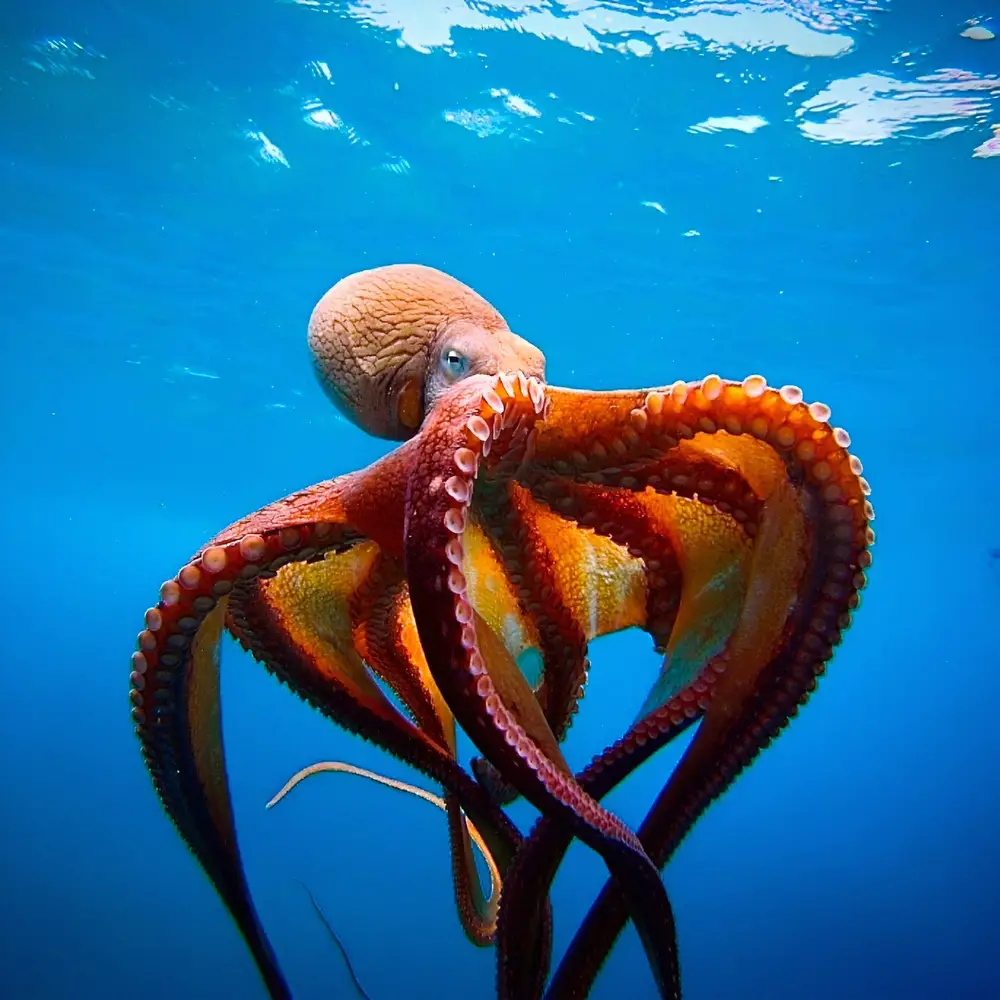
Despite living in a completely different environment, octopuses are remarkably good at identifying individual humans who visit their tanks. In aquarium settings, they have been observed spraying water at specific keepers they dislike while remaining perfectly calm with others who feed them. They don’t just react to the color of a uniform; they look at the person’s face to make sure they are targeting the correct individual. This shows a level of “person-specific” behavior that is incredibly rare in the world of invertebrates.
The octopus brain is distributed throughout its body, but its central nervous system is highly capable of complex visual processing. A 2023 research project at the Seattle Aquarium found that an octopus could recognize its primary caretaker even after that person had been away for months. They will often change their skin color or texture based on who is standing in front of their glass. If an octopus decides to give you a “squirt” of cold water, take it personally because they definitely intended it for you.
6. The Pig
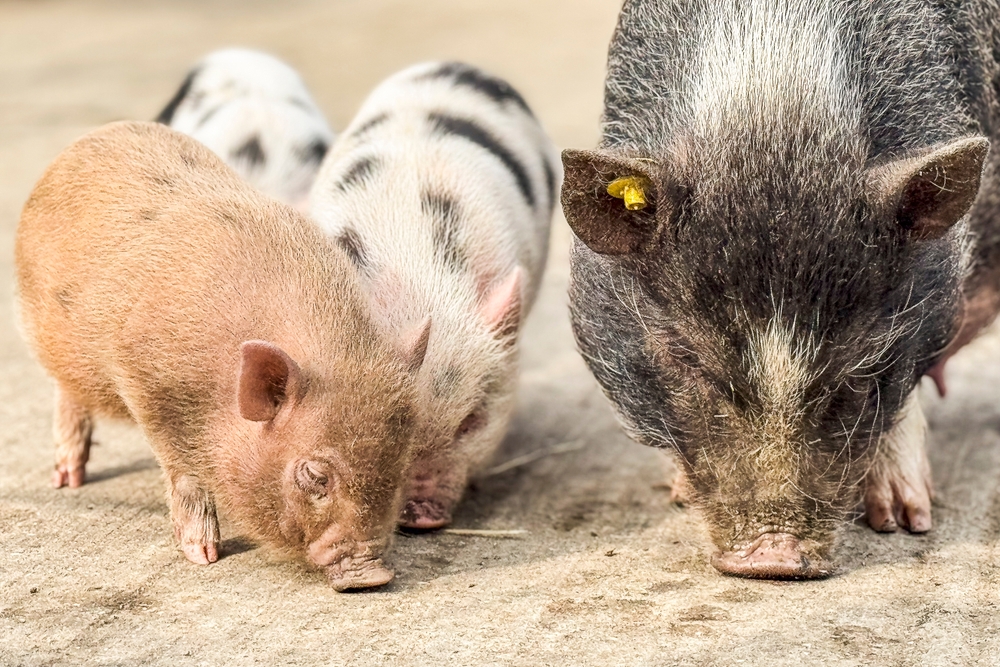
Pigs are often ranked among the most intelligent animals on the planet, and their ability to remember humans is a major part of that. They can distinguish between people who treat them well and those who cause them stress, often reacting with excitement or fear before a person even speaks. On farms, pigs have been known to actively avoid specific workers who they associate with unpleasant tasks like vaccinations. They are incredibly observant and will use their memory of your face to decide whether to approach you for a scratch.
This social memory is essential for their survival in the wild, where they must keep track of a complex hierarchy. In 2024, a behavioral study by the Animal Welfare Institute showed that pigs can remember up to thirty different individual humans. They use a combination of visual cues and facial geometry to ensure they aren’t making a mistake about who is who. If you’ve ever been chased by a pig, there is a very good chance they remembered exactly who you were from a previous encounter.
7. The Bengal Tiger
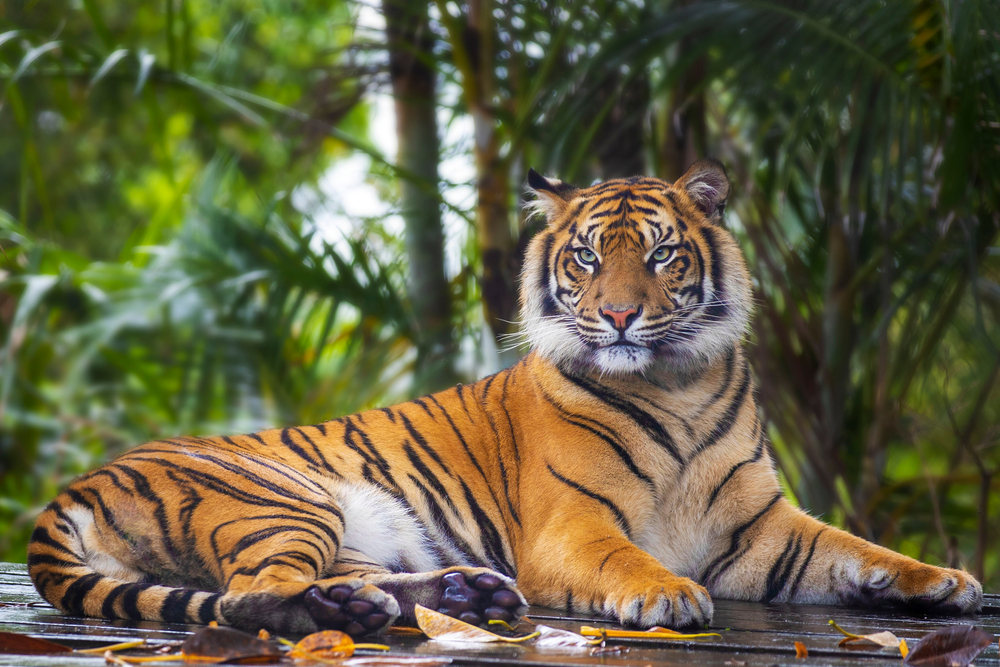
In the jungles of India, woodcutters have long used a clever trick to avoid tiger attacks: they wear a mask on the back of their heads. Tigers are ambush predators that prefer to attack from behind, and they can be deterred if they think they are being watched by a human face. However, some tigers are smart enough to figure out the ruse and will begin to recognize the specific faces of individual villagers. If a tiger identifies a person as a persistent threat, they may begin to stalk that specific individual with terrifying precision.
This ability to recognize individual humans is a survival trait for apex predators living in fragmented habitats near human settlements. Dr. Anish Andheria noted in a 2025 wildlife report that “problem tigers” often develop a specific focus on certain human activities and the people involved in them. They learn the routines and the appearances of the people who inhabit their territory to better navigate the risks of the landscape. It is a chilling reminder that while you are watching the tiger, the tiger is busy memorizing everything about you.
8. The Raven
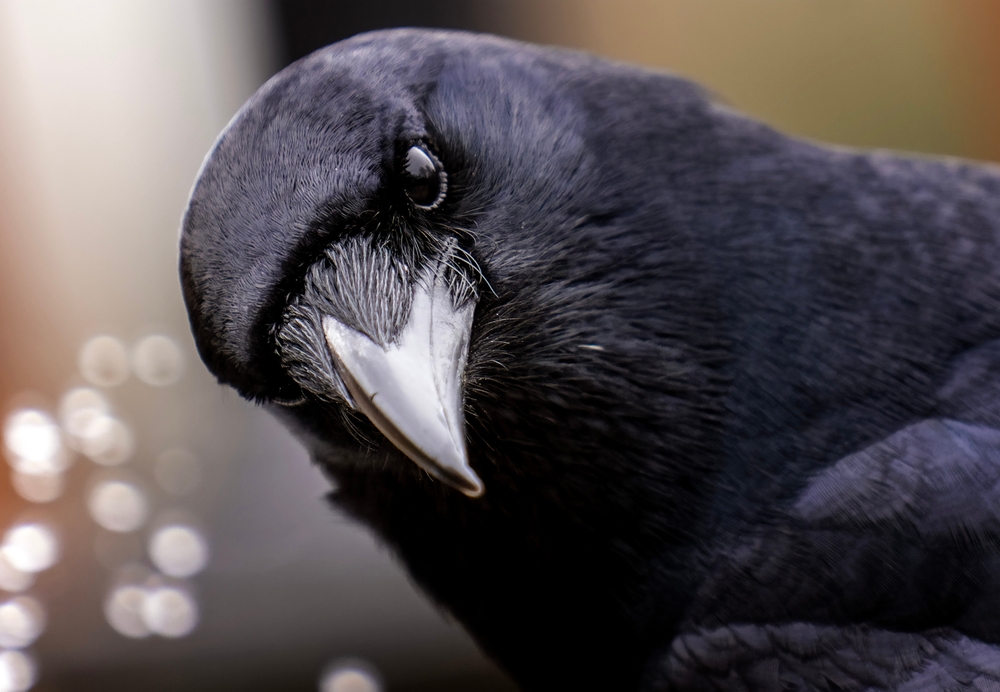
Ravens share the incredible cognitive abilities of their crow cousins and are equally capable of maintaining a lifelong grudge against a human. They have been observed “scolding” people who have previously bothered their nests or interfered with their food sources. This isn’t just a momentary reaction; the raven will remember that person’s face and repeat the behavior every time they see them. They are also known to share this information with other ravens, creating a neighborhood-wide “blacklist” for certain unfortunate individuals.
Their intelligence allows them to understand the concept of fairness and reciprocity in their interactions with humans. A 2023 experiment in Scientific Reports showed that ravens would refuse to “trade” with a human who had previously cheated them in a food exchange. They would remember the face of the “cheater” for at least a month after just one negative interaction. If you want to stay on a raven’s good side, you had better make sure your first impression is a generous and honest one.
9. The Bottlenose Dolphin
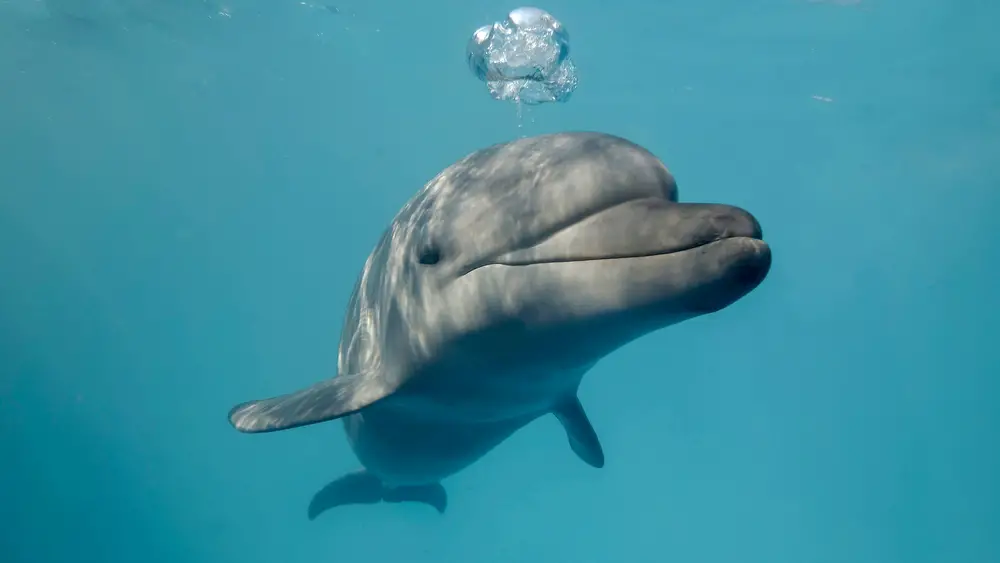
Dolphins are world-renowned for their high intelligence, so it is no surprise that they can identify and remember individual humans over long periods. In the wild, dolphins have been known to seek out specific divers they have interacted with before, even after several years have passed. They don’t just recognize a boat or a wetsuit; they look for the specific facial features that define their human friends. This memory helps them maintain “cooperative” relationships with humans, such as the famous fishing dolphins of Brazil.
Their visual memory is bolstered by their sophisticated sonar, which may help them recognize “internal” structures that are unique to individuals. A 2024 study by the Dolphin Research Center found that dolphins could remember the signature whistles and faces of their companions for over twenty years. This long-term memory allows them to build complex social bonds that transcend their own species. If a dolphin swims up to you with a “smile,” there is a chance they remember you from a previous summer vacation.
10. The Goat
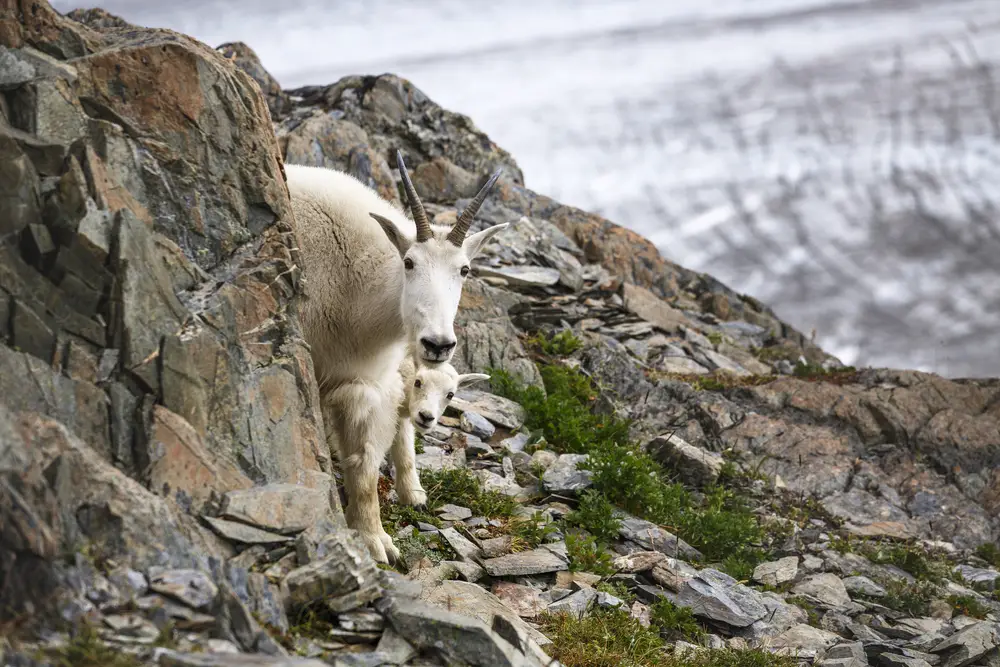
Goats are much more than just the “chaos agents” of the farm; they are actually highly sensitive to human facial expressions and identities. They have a preference for people who look happy and will actively avoid those who appear angry or aggressive. If you have been the one to provide them with treats or grooming, they will recognize you from across a field and come running. However, if you have a reputation for being the “hoof trimmer,” they will likely disappear the moment they see your face.
This ability to read faces is a key part of how they integrated into human society over thousands of years of domestication. In 2023, a study from Queen Mary University of London found that goats could distinguish between photos of happy and angry human faces. They are constantly “scanning” the humans in their lives to determine the current emotional climate of the farm. If a goat is giving you a skeptical look, they are probably just checking your face against their database of previous interactions.
11. The Macaque Monkey
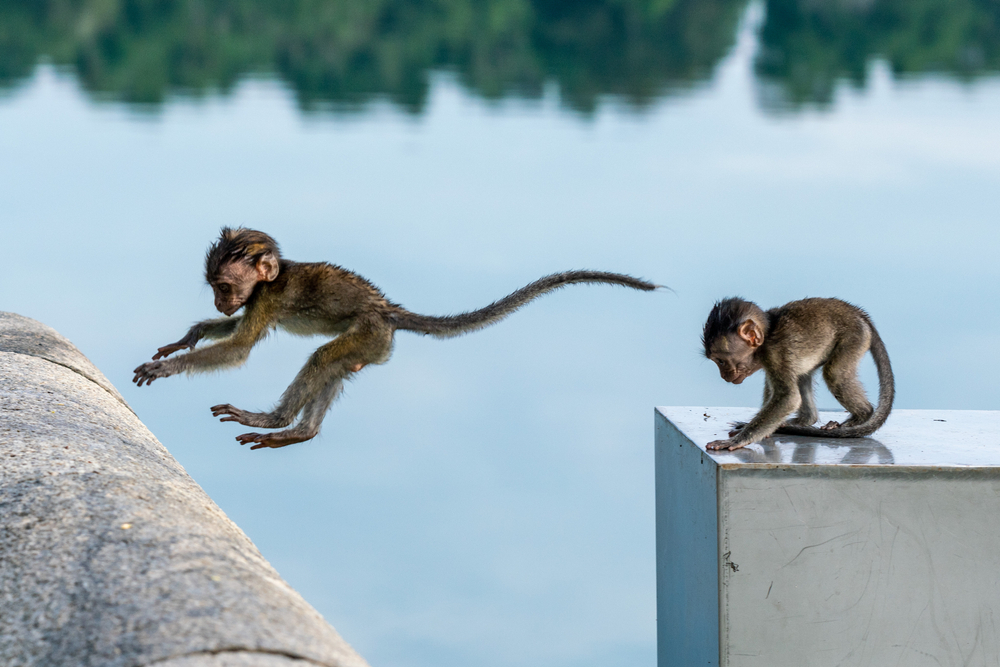
Macaques live in large, competitive societies where knowing “who is who” is the most important skill an individual can possess. They easily transfer this skill to the humans they encounter, especially in areas where they live in close proximity to people. If a tourist is known for carrying bags of fruit, the macaques will remember that person’s face and target them specifically for a “shakedown.” They are also incredibly quick to recognize—and avoid—local officials who might be carrying nets or tranquilizer guns.
Their memory for faces is vital for avoiding conflict and maintaining their status within the troop. A 2025 analysis in the Journal of Primate Research showed that macaques use the same facial-recognition neurons that humans do to process social information. This allow them to keep track of a “who’s who” of the local human population with surprising accuracy. If a macaque steals your sunglasses, it might be because they’ve identified you as a “soft target” from your previous visits.
12. The Scrub Jay
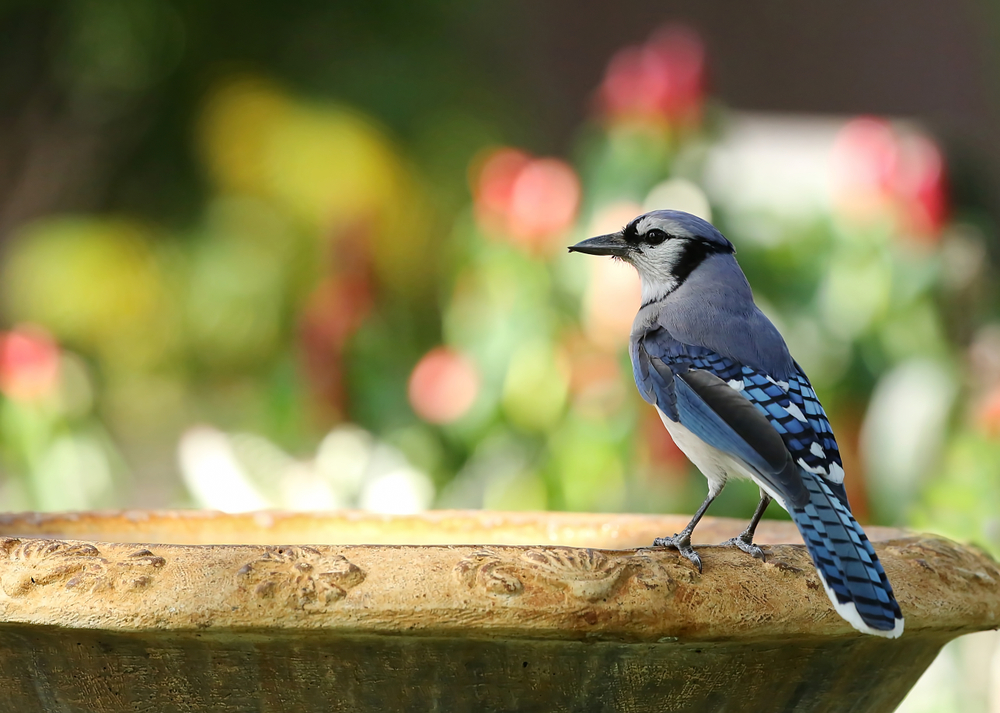
Scrub jays are the “detectives” of the bird world, constantly monitoring their surroundings to protect their hidden stashes of food. They have been observed watching humans to see if they are being followed, and they can remember which humans are likely to “thieve” their caches. If a scrub jay recognizes a person who has previously stolen their food, they will wait until that person leaves before they continue caching. They are essentially running a counter-intelligence operation against the people in their neighborhood.
Their ability to plan for the future based on past experiences with specific people is a sign of high-level cognition. A 2024 report from the Avian Cognition Lab found that these birds could remember the faces of “competitor” humans for several weeks. They change their behavior based on the specific identity of the person watching them at any given moment. If a scrub jay seems to be staring at you, they are probably just making sure you aren’t a threat to their winter snacks.
13. The Dog

It is common knowledge that dogs love their owners, but their ability to remember and act on facial recognition is actually quite advanced. Dogs can distinguish their owners’ faces from a crowd of strangers using only visual cues, even if the person isn’t speaking or moving. They also remember the faces of “friends” and “enemies” they have met at the park, often reacting before the other dog or person is even close. This memory is what allows them to form such deep, lasting bonds with humans over a lifetime.
Their brains have a specialized area for processing faces, much like the “fusiform face area” found in the human brain. According to a 2025 study by Eötvös Loránd University, dogs can remember a “new” human face after just a few brief interactions. They use this information to decide whether to wag their tail or give a protective growl when someone approaches the house. Your dog isn’t just smelling you; they are looking at you and confirming that you are indeed their favorite person.
14. The Pigeon
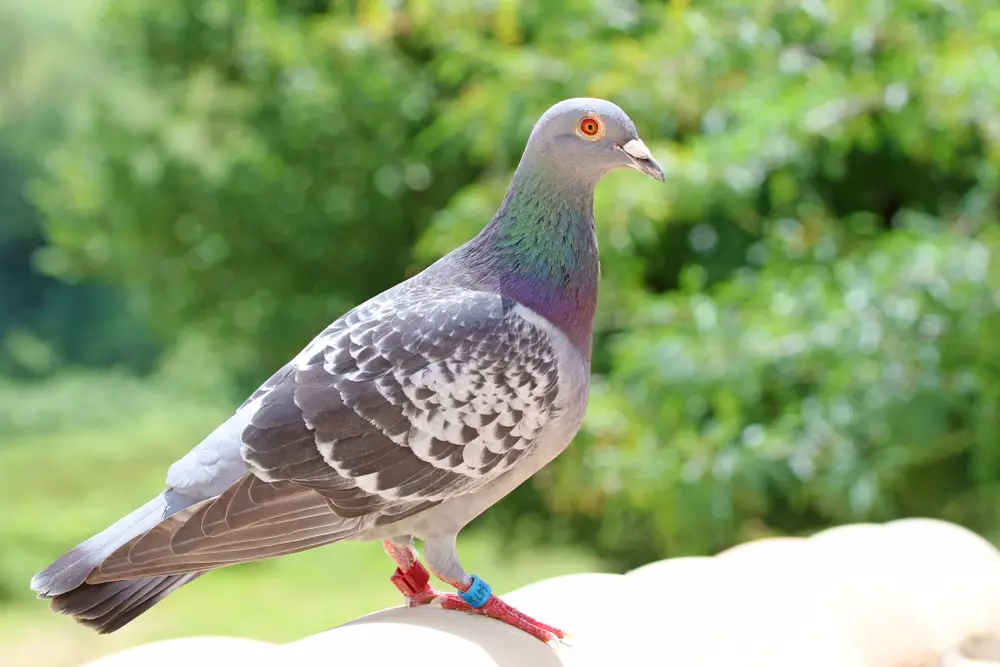
Pigeons are often dismissed as “rats with wings,” but they are actually remarkably good at telling individual humans apart. In a famous study in Paris, researchers had two people dress in similar lab coats, with one being friendly and the other being “hostile.” The pigeons quickly learned to avoid the hostile person’s face, even when they swapped coats or tried to confuse the birds. They are able to focus on the unique features of a face rather than just the clothing or the general shape of a person.
This skill helps them navigate urban environments where they must constantly decide which humans are likely to drop crumbs and which are likely to shoo them away. A 2024 report in Psychonomic Bulletin & Review highlighted that pigeons can remember hundreds of different human faces over a long period. They are much more observant than we give them credit for, often “tagging” the regular visitors to a park for special attention. If a pigeon lands on your head, it’s probably because they recognize you as a reliable source of snacks.
15. The Great White Shark
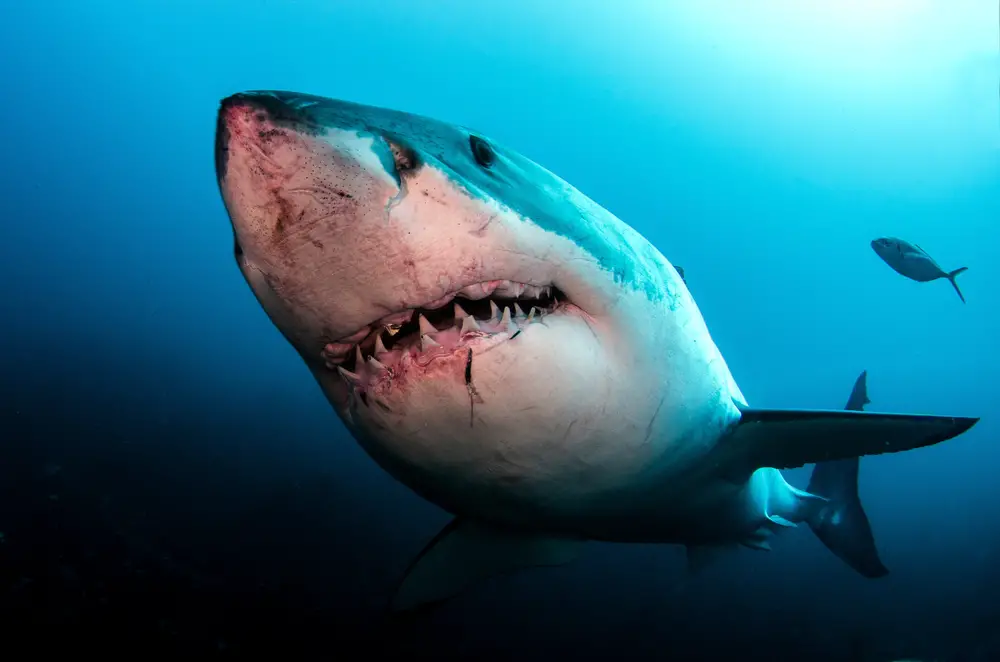
While we often think of sharks as mindless eating machines, evidence suggests that Great Whites can recognize individual humans, particularly regular divers. Some sharks have been known to show “curiosity” toward specific people they have encountered before, showing a much calmer demeanor than with strangers. They aren’t looking for a meal; they are identifying a “known entity” in their territory. While you should never test this theory, it shows that even the ocean’s most feared predators have a capacity for recognition.
Researchers have noted that sharks may use facial and body symmetry to identify individuals in the water. A 2025 marine biology report suggested that “resident” sharks in certain areas develop distinct behavioral patterns toward regular research vessels and their crews. This suggests a level of cognitive mapping that includes the “faces” of the boats and the people on them. If a shark gives you a “pass,” they might just be acknowledging that you’ve been in their neighborhood before.