
The world is filled with sights so surreal and remote that they feel like they belong on another planet. From underground crystal forests to volcanic light shows, these wonders are protected by extreme geography or political isolation. They represent the “last frontiers” of Earth that remain untouched by the masses, and we may not ever travel to see them, or worse, they may be wiped out by climate change.
1. The Cave Of Crystals In Mexico
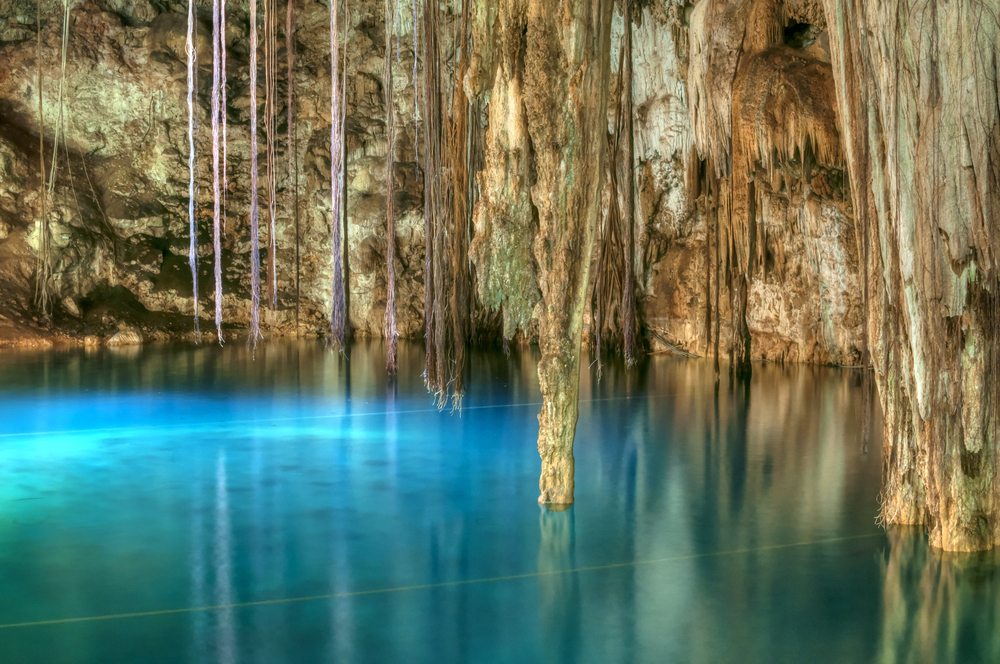
Located nearly 1,000 feet below the surface, this cave contains some of the largest natural crystals ever found on Earth. Some of the gypsum beams are over 36 feet long and weigh up to 55 tons, resembling a forest of giant swords. The cave is almost impossible to visit because the humidity is 90% and the temperature is a stifling 58°C. Without specialized cooling suits, a human can survive inside for only about 10 minutes before their lungs begin to fail.
2. The Door To Hell In Turkmenistan
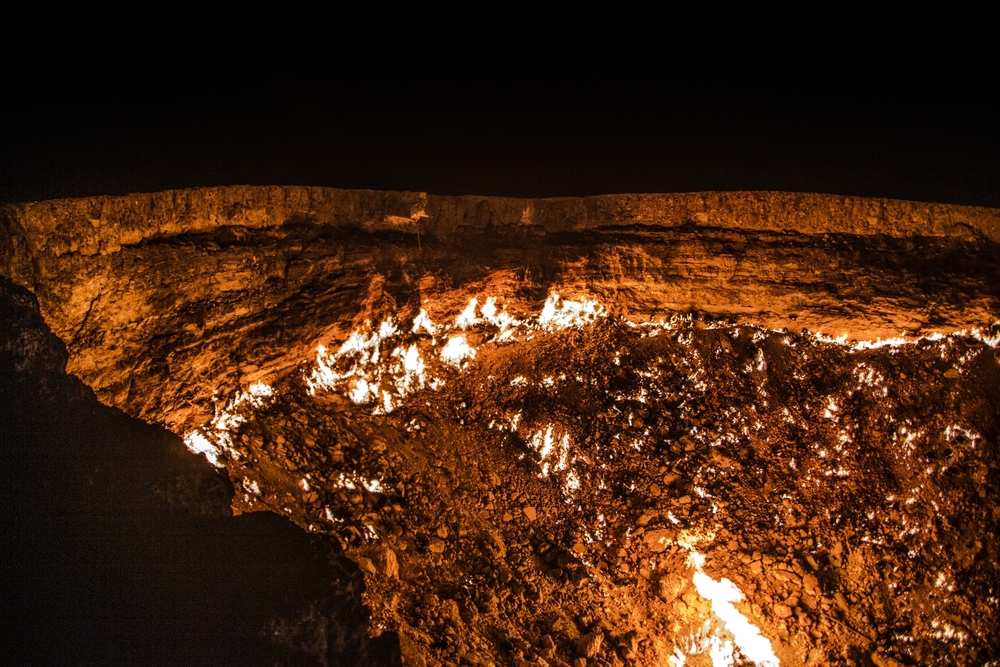
This massive, fiery crater in the middle of the desert has been burning continuously since a Soviet drilling accident in 1971. The ground literally collapsed into a natural gas cavern, and scientists lit it on fire, hoping it would burn out in a few days. Instead, it has created a permanent, glowing pit of flames visible from miles away in the dark. Because of its remote location and the country’s strict travel laws, it remains one of the least visited wonders on the planet.
3. The Blood Falls Of Antarctica
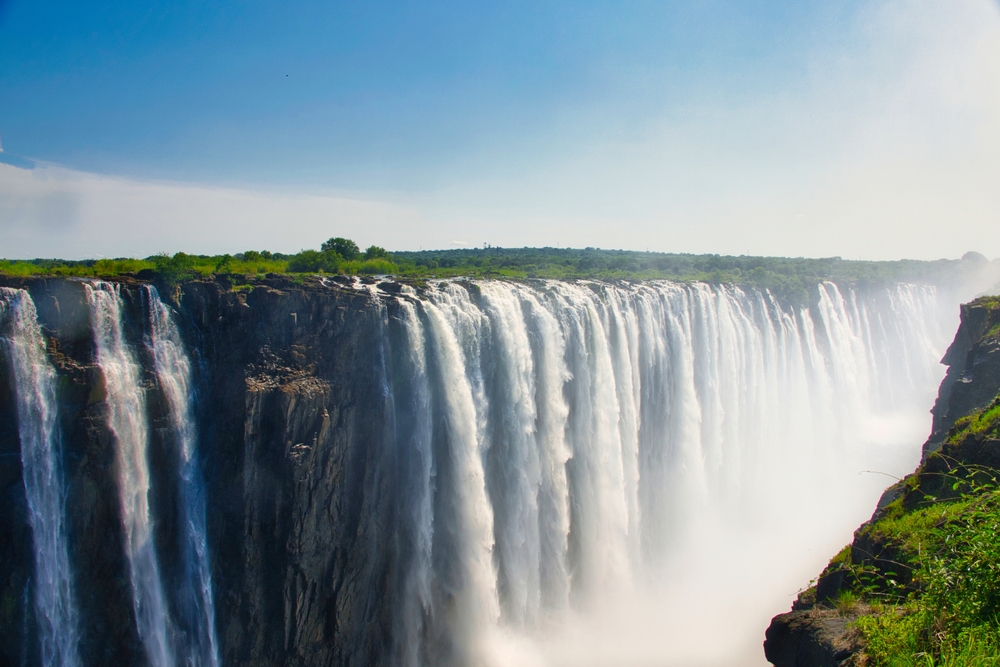
Oozing from the side of the Taylor Glacier, a five-story waterfall of deep crimson liquid flows into the white snow. While it looks like the glacier is bleeding, the “blood” is actually hyper-salty water trapped under the ice for two million years. When the iron-rich water finally hits the oxygen in the air, it “rusts” instantly, turning the water a bright, macabre red. Since it is located in one of the most remote parts of Antarctica, only scientists and high-end explorers ever see it.
4. The Sea of Stars In The Maldives
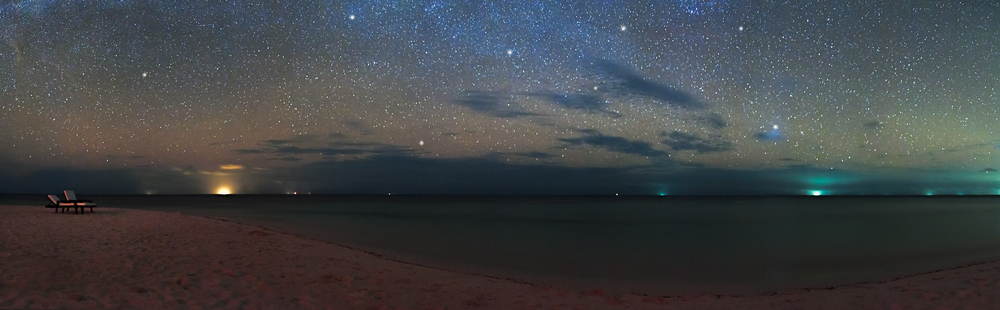
At certain times of year, the beaches of Vaadhoo Island glow with a brilliant, neon-blue light that looks like a reflected galaxy. This is caused by bioluminescent phytoplankton that emit light when they are agitated by the crashing waves. Seeing the water light up under your footsteps is a sensory experience that most tourists miss by just a few days. Dr. Sarah Jenkins noted in a recent brief that the blue light acts as a “burglar alarm” to attract larger fish to eat the plankton’s attackers. They consider the “Sea of Stars” one of the most complex biological light shows in the natural world.
5. The Danakil Depression In Ethiopia
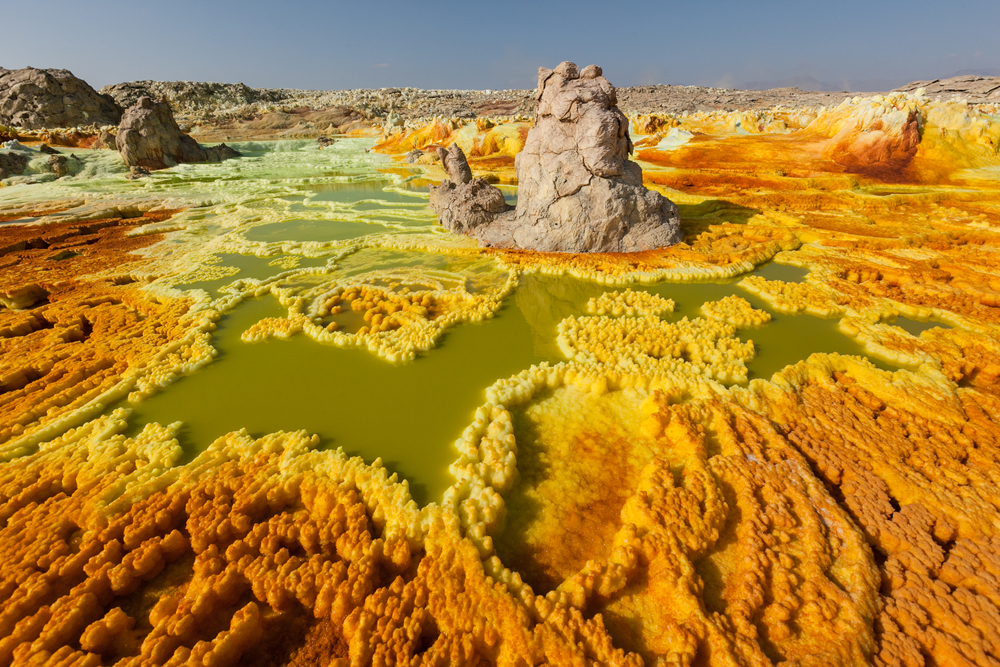
This is widely considered the hottest and most inhospitable place on Earth, featuring neon-yellow acid ponds and sulfur-encrusted volcanoes. The landscape looks like a psychedelic version of Mars, with salt flats and bubbling lava lakes that create a sensory overload. The air is thick with toxic fumes, and the ground can reach temperatures that would melt a standard hiking boot. It is a beautiful, lethal environment that only the bravest adventurers and local salt miners ever traverse.
6. The Blue Holes of the Bahamas
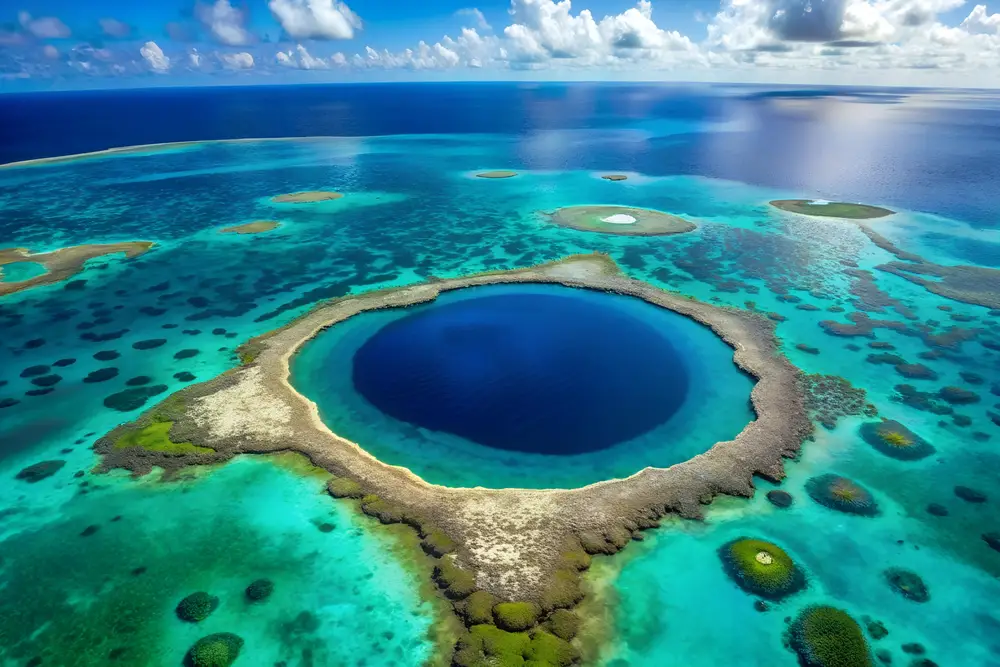
From the air, these look like perfect, deep indigo circles cut into the turquoise water of the Caribbean. They are actually underwater sinkholes that can reach depths of over 600 feet, leading into a maze of prehistoric caves. Divers who enter these holes describe them as “silent cathedrals” filled with ancient stalactites and species found nowhere else. Because of the extreme depth and the risk of “nitrogen narcosis,” only elite technical divers will ever see the bottom.
7. The Painted Dunes Of Lassen Park
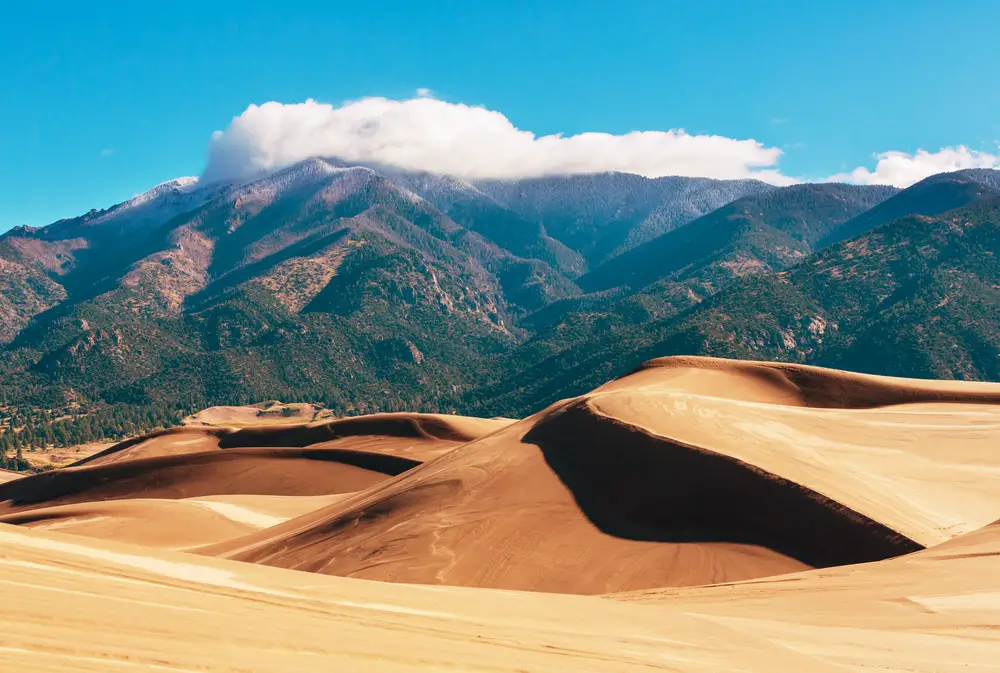
Deep within a remote corner of Northern California lies a field of volcanic ash that has oxidized into vibrant shades of pink, orange, and red. These dunes were formed during an eruption in the 1600s and have remained undisturbed and perfectly colored for centuries. The area is difficult to reach, requiring a grueling hike through jagged lava beds and thick forest. Those who make it are rewarded with a landscape that looks like a surrealist painting come to life. A 2026 geological survey by the National Parks Board found that the “Painted Dunes” are uniquely preserved due to the area’s low foot traffic. Researchers found that the pumice layers are incredibly fragile and could be destroyed by a single season of mass tourism.
8. The Stone Forest Of Madagascar
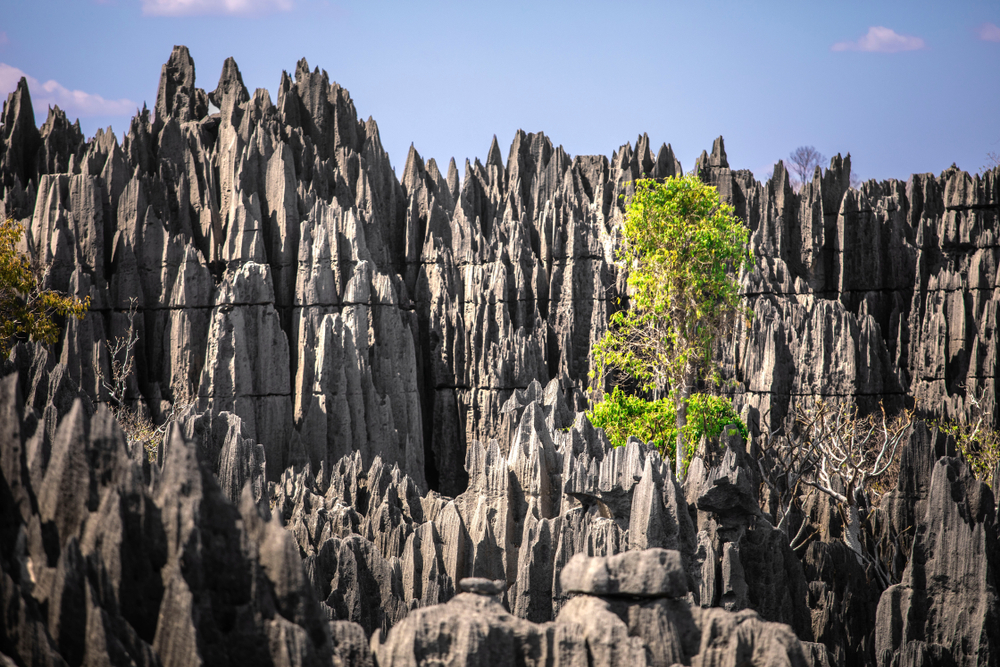
The Tsingy de Bemaraha is a massive “forest” of razor-sharp limestone needles that can reach up to 300 feet in height. Navigating the area requires scaling vertical rock faces and crossing narrow rope bridges suspended over deep canyons. It is home to several species of lemurs that hop across the sharp peaks with an ease that humans could never replicate. Because of the technical difficulty of the terrain, large parts of this stone labyrinth have never been explored.
9. The Eternal Lightning Of Catatumbo
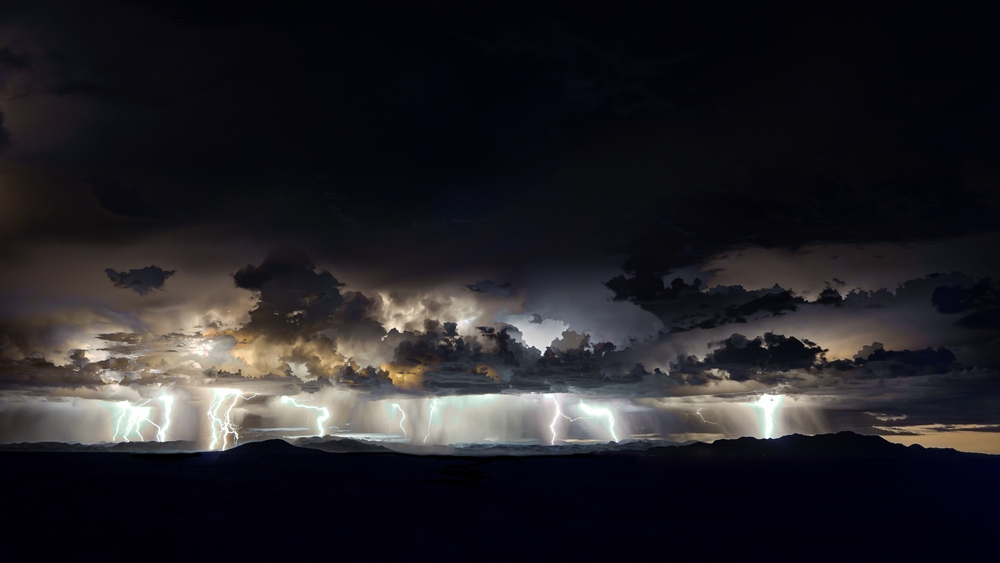
In a specific spot in Venezuela, lightning strikes up to 28 times per minute for nearly ten hours every night. This “never-ending storm” is fueled by the collision of mountain winds and methane gas rising from the surrounding marshes. It creates a silent, strobing light show that has acted as a natural lighthouse for sailors for hundreds of years. Due to the region’s political instability, the number of foreigners who have witnessed this storm has plummeted to nearly zero.
10. The Rainbow Mountains Of Peru
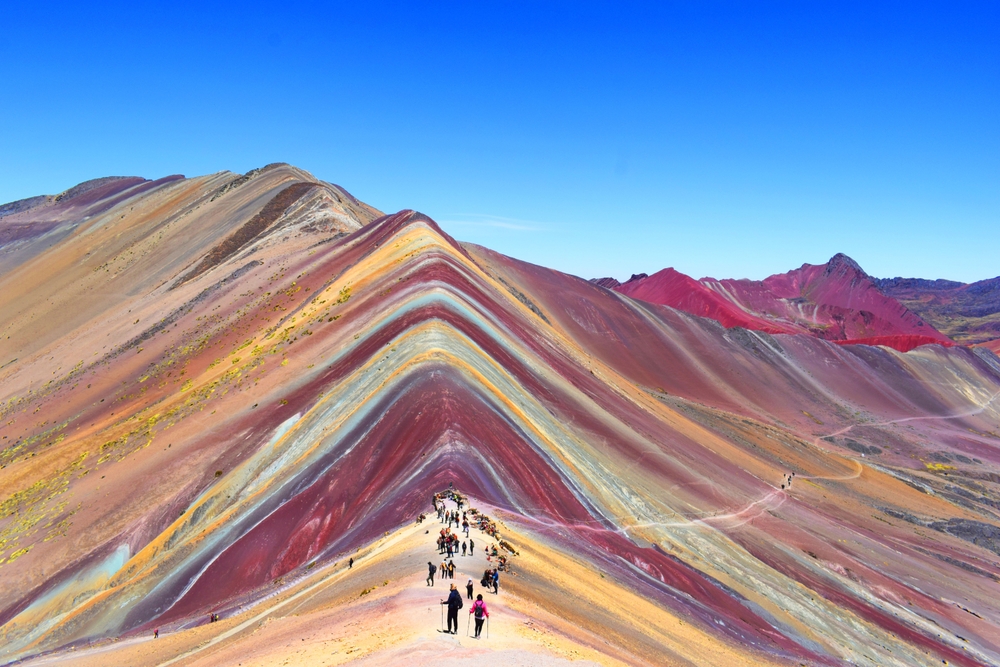
Hidden deep in the Andes, these mountains feature stripes of turquoise, lavender, and gold created by unique mineral deposits in the soil. For centuries, they were hidden under a layer of permafrost, and only recently became visible due to shifting climate patterns. Reaching the summit requires a multi-day trek at altitudes so high that supplemental oxygen is often necessary for visitors. It is a breathtaking reward for those who can endure the physical toll of the “Thin Air” climb.
11. The Enchanted River Of Hinatuan
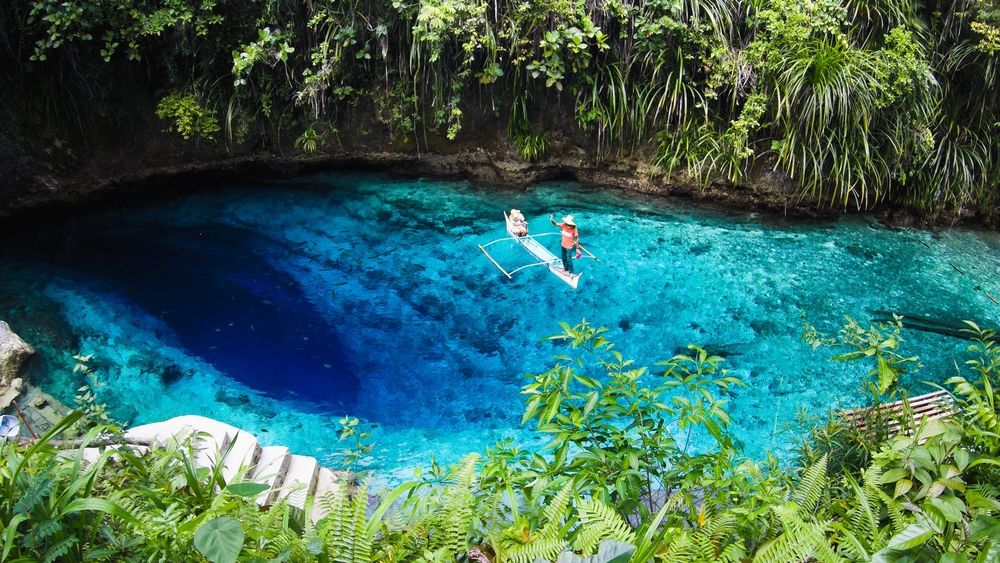
This deep blue river in the Philippines appears to pop out of nowhere, flowing from an underground cave system with no clear source. The water is so clear that it looks shallow, but it is actually so deep that divers have yet to reach the bottom of the main cavern. At exactly 12:00 PM every day, a bell is rung, and the fish are fed, creating a shimmering swirl of color in the indigo water. It feels like a mystical portal, hidden in the heart of a dense, tropical jungle.
12. The Cano Cristales River Of Five Colors
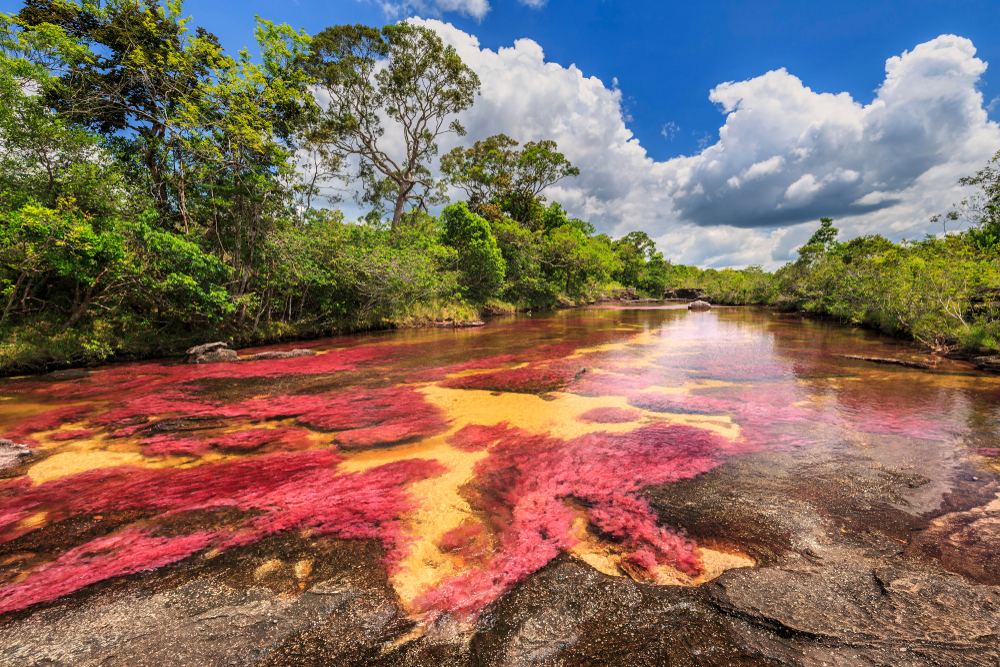
For a few weeks each year, this Colombian river turns into a liquid rainbow of red, yellow, green, blue, and black. This happens when the Macarenia clavigera plants on the riverbed bloom in a specific stage between the wet and dry seasons. The water must be at the perfect depth, and the sunlight must hit at the correct angle for the colors to “pop.” Because the window is so short and the area is remote, very few people ever see it at its peak.
13. The Aurora Australis Over Antarctica
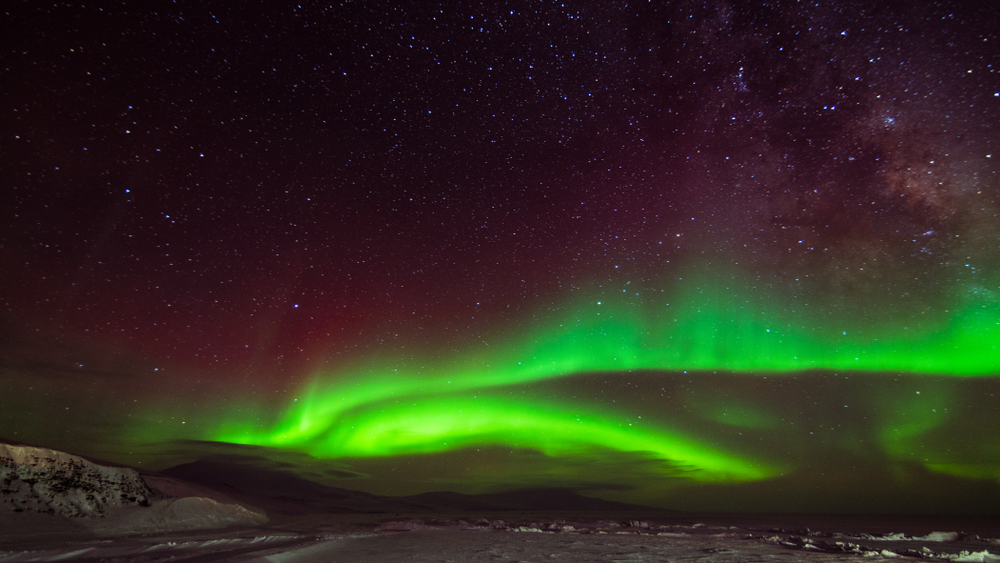
While the Northern Lights are famous, their southern counterpart is much more difficult to see because there are no permanent human settlements in its path. The “Southern Lights” feature vibrant curtains of neon green and purple that dance over the vast, white ice sheets of the Antarctic. To see them, you must be on the continent during the six months of total darkness in the dead of winter. A 2025 astronomical brief revealed that the “Southern Lights” are often more intense than the Northern ones due to the Earth’s magnetic tilt. The absence of light pollution in the Antarctic interior makes the colors appear 40% more vivid to the naked eye. For most of us, this spectacular display will exist only as a series of stunning satellite photos.