
Long before cities, locks, or weapons, the human body itself was a survival tool. Many of the traits we barely notice today were once critical defenses against animals that could outrun, overpower, or ambush us. These features weren’t designed for comfort or convenience — they evolved to keep early humans alive in hostile environments. Even now, your body still carries the blueprint of a species that had to stay alert to survive.
1. Forward-Facing Eyes

Humans evolved with forward-facing eyes to improve depth perception, which was essential when tracking moving threats or navigating uneven terrain. Being able to judge distance accurately helped early humans know when a predator was too close to escape or when it was safe to move. This visual setup made it easier to spot subtle movement in tall grass or low light. Survival often depended on seeing danger seconds earlier than prey animals could.
Evolutionary biology research shows binocular vision gave early humans a major advantage in predator-rich environments. While herbivores focused on wide peripheral vision, humans needed precision to plan escape routes or coordinate group defense. This feature also supported tool use, which became another survival extension of vision. What now helps you park a car once helped your ancestors avoid becoming dinner.
2. Peripheral Vision Sensitivity

While humans don’t have the widest field of vision in the animal kingdom, we are extremely sensitive to movement at the edges of our sight. This allowed early humans to detect predators approaching from the sides or rear before direct confrontation occurred. Peripheral motion detection triggered alertness even when the threat wasn’t fully visible. That early warning could mean the difference between escape and ambush.
Neuroscience research shows the human brain prioritizes sudden peripheral movement as a potential threat signal. This system evolved specifically to notice what you weren’t directly looking at. In predator-heavy landscapes, danger rarely came head-on. Peripheral awareness gave humans time to react instead of freeze.
3. Fight-or-Flight Response
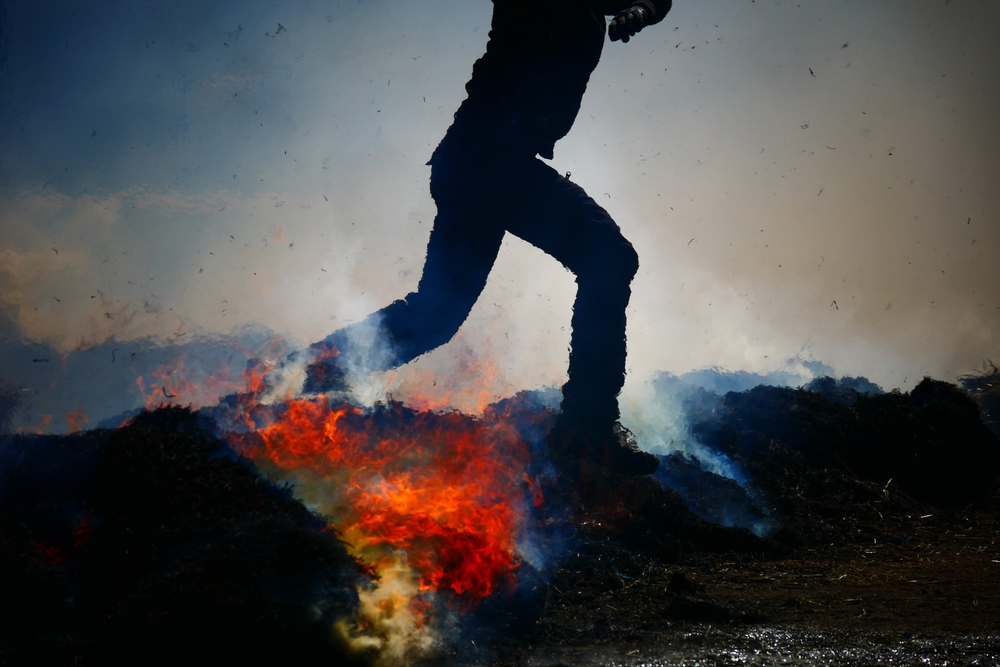
The human stress response floods the body with adrenaline in moments of danger, increasing strength, speed, and pain tolerance. This response allowed early humans to sprint longer, fight harder, or ignore injuries long enough to escape. It also sharpened focus by narrowing attention to immediate survival tasks. The body temporarily sacrificed comfort for survival.
Physiology studies confirm that adrenaline dramatically boosts short-term physical performance. While modern life triggers this response unnecessarily, it originally evolved for real threats like predator attacks. This surge helped compensate for humans’ lack of claws or fangs. In critical moments, adrenaline turned vulnerability into opportunity.
4. Sweating and Endurance Cooling

Humans are uniquely efficient sweaters, allowing us to regulate body temperature during prolonged physical exertion. This ability made endurance hunting possible, where humans could chase animals until they overheated and collapsed. While predators relied on short bursts of speed, humans could keep going. Over time, stamina became a survival weapon.
Anthropological research shows persistence hunting played a key role in early human survival. Sweating prevented overheating during long pursuits under the sun. This adaptation favored patience over raw power. Humans didn’t need to outrun predators — they needed to outlast them.
5. Upright Posture and Height Advantage

Standing upright gave humans a visual advantage in open landscapes, allowing them to see over tall grass and detect distant movement. Height made it easier to spot predators early and assess escape routes. It also made humans appear larger and more intimidating to some animals. Being upright changed how humans interacted with danger.
Evolutionary anatomy research suggests bipedal posture improved long-distance awareness. This visibility mattered when predators relied on stealth. Seeing first often meant surviving. Upright posture wasn’t just about walking — it was about scanning the horizon for threats.
6. Goosebumps and Hair Follicles
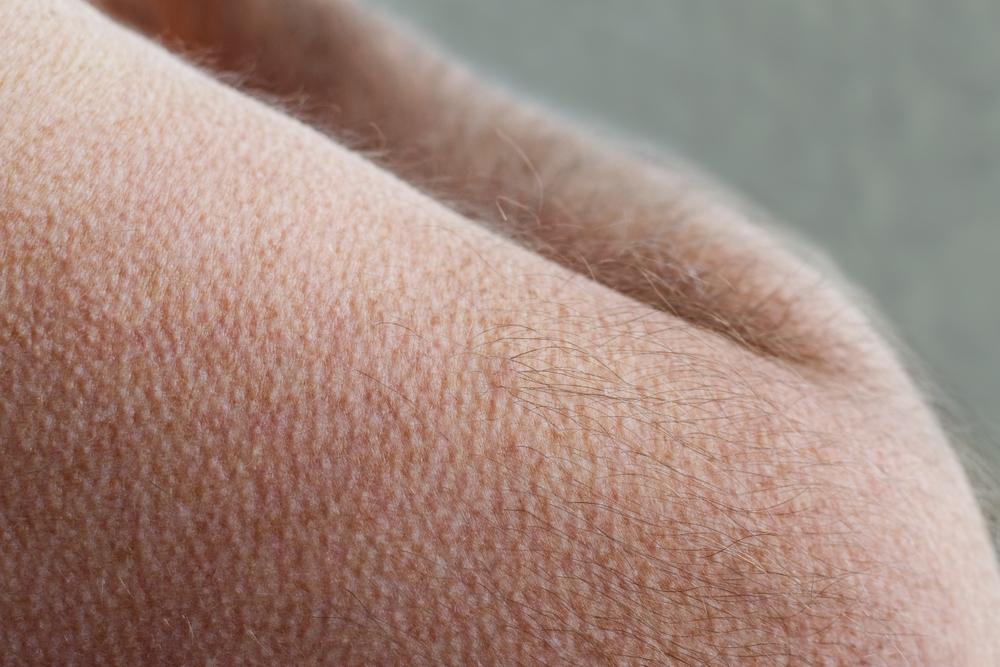
Goosebumps are the remnants of a defensive response that once made early humans appear larger when threatened. Raised body hair could intimidate predators or signal readiness to fight. Although modern humans lack dense fur, the reflex remains. The body still prepares for threat even when the threat has changed.
Physiological research confirms piloerection evolved as a fear response across mammals. In early humans, this reaction enhanced visual size and readiness. Today, it activates during fear, awe, or stress without serving its original purpose. It’s a fossilized survival reflex.
7. Startle Reflex

The startle reflex causes immediate movement before conscious thought kicks in. This automatic response helped early humans dodge sudden attacks or falling objects. Speed mattered more than accuracy in those moments. The body reacted before the brain could debate.
Neurobiology studies show the startle reflex bypasses higher reasoning entirely. This fast-track response reduced reaction time during predator encounters. In dangerous environments, hesitation was deadly. Reflex saved lives long before logic arrived.
8. Fear as a Survival Signal

Fear is often misunderstood as weakness, but it evolved as an early warning system. It heightens awareness, sharpens memory, and encourages caution. Early humans who feared unfamiliar sounds or shadows were more likely to survive. Fear wasn’t irrational — it was protective.
Psychological research shows fear increases risk assessment accuracy. It pushes humans to scan environments more carefully and avoid unnecessary exposure. Those who ignored fear often didn’t live long enough to pass on genes. Fear helped shape human survival instincts.
9. Pattern Recognition

Humans evolved to recognize patterns quickly, especially those associated with danger. Subtle changes in sound, movement, or animal behavior signaled potential threats. Recognizing these patterns allowed early humans to anticipate attacks. Learning from past encounters improved survival odds.
Cognitive science research shows humans excel at detecting anomalies in familiar environments. This skill helped distinguish safety from danger. Predicting predator behavior reduced surprise. Memory became a weapon.
10. Social Bonding and Group Defense

Humans survived better in groups than alone. Shared vigilance meant more eyes watching for predators. Group members could warn each other, coordinate defense, or protect the vulnerable. Social bonding reduced individual risk.
Anthropological studies confirm early human survival depended heavily on cooperation. Groups deterred predators through numbers and noise. Lone humans were easy targets. Community was protection.
11. Vocal Alarm Responses

Humans developed vocal alarm systems to warn others of danger. Loud sounds alerted group members instantly. These vocalizations triggered collective movement or defense. Sound spread faster than sight.
Evolutionary linguistics research links early communication to survival efficiency. Warning calls reduced reaction time across groups. Sharing danger information saved lives. Language grew from fear.
12. Curiosity Balanced by Caution

Curiosity allowed humans to learn environments, track animals, and find resources. However, it evolved alongside caution to prevent reckless exposure. This balance helped humans explore safely. Knowledge reduced danger over time.
Evolutionary psychology suggests curiosity increased survival by improving environmental mastery. Understanding predator habits reduced risk. Exploration without learning was deadly. Curiosity needed restraint.
13. Memory of Dangerous Places

Humans evolved strong spatial memory to remember where danger occurred. Avoiding certain locations reduced repeated risk. Remembering predator territory kept groups safer. Memory shaped movement.
Neuroscience research shows emotional experiences enhance memory retention. Dangerous encounters stuck vividly. That memory guided future behavior. Survival favored remembering fear.